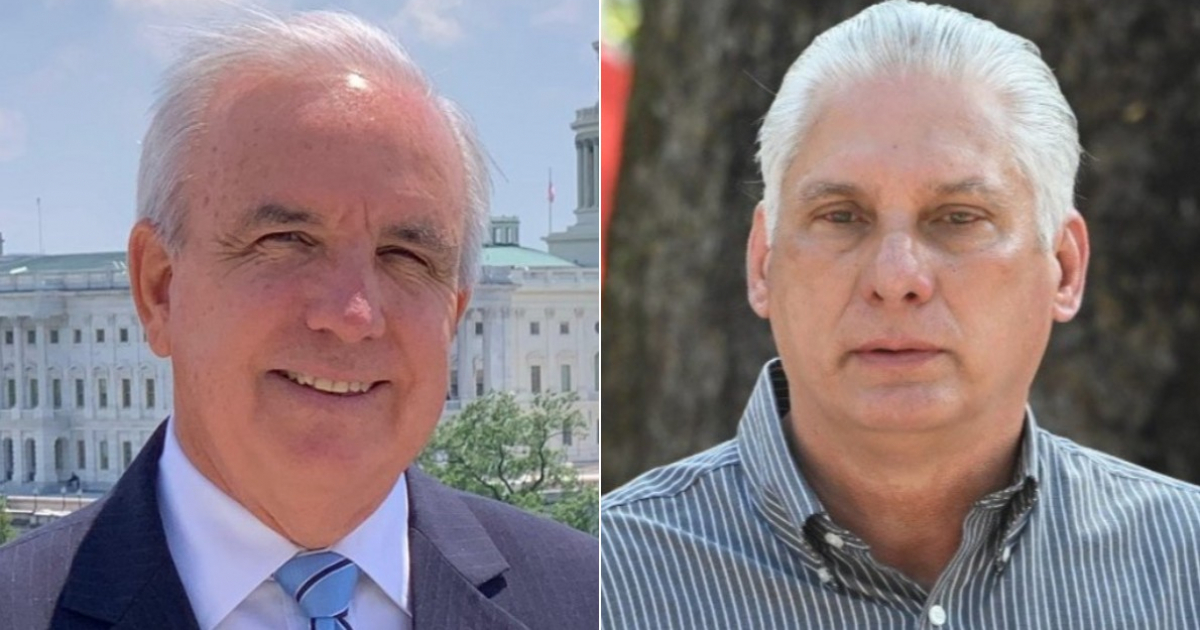
Republican Congressman from Florida, Carlos Giménez, made a bold statement on Thursday regarding the future of the Cuban regime amid recent developments in Venezuela, shared through his X account.
Responding to a post by OSINTdefender, which depicted the movement of an Ilyushin Il-96-300 aircraft operated by the state-run Cubana de Aviación off the Venezuelan coast—likely awaiting clearance to land in Caracas before returning to the island—Giménez emphasized, "Let me be clear: the days of the Cuban regime colonizing #Venezuela and oppressing its people are over!"
This declaration comes at a time of heightened political and geopolitical tension in the region, following a U.S. operation in Venezuela that led to the capture of President Nicolás Maduro and his extradition to New York to face narcoterrorism charges.
Giménez, known as a staunch voice of the conservative wing in the U.S. Congress on hemispheric issues, has frequently argued that authoritarian regimes in Latin America, including Cuba, should be challenged as part of Washington's foreign policy strategy.
The lawmaker's statement bolsters the narrative that recent shifts in Venezuelan power dynamics, along with an apparent reshaping of the political landscape in the area, might weaken Havana's longstanding presence in Caracas, where Cuba has played a political, military, and economic role for decades.
Giménez's post adds to a surge of comments from American politicians who view the downfall of chavismo as a turning point for allied regimes, with a particular focus on the future of Cuba's government.
Impact of Political Shifts in Venezuela on Cuba
What recent events in Venezuela have influenced Carlos Giménez's statement?
Giménez's statement was influenced by a U.S. operation that led to the capture of Venezuelan President Nicolás Maduro, who was extradited to New York on charges related to narcoterrorism.
How does Carlos Giménez view the role of authoritarian regimes in Latin America?
Carlos Giménez believes that authoritarian regimes in Latin America, such as Cuba, should be actively confronted as part of the United States' foreign policy.