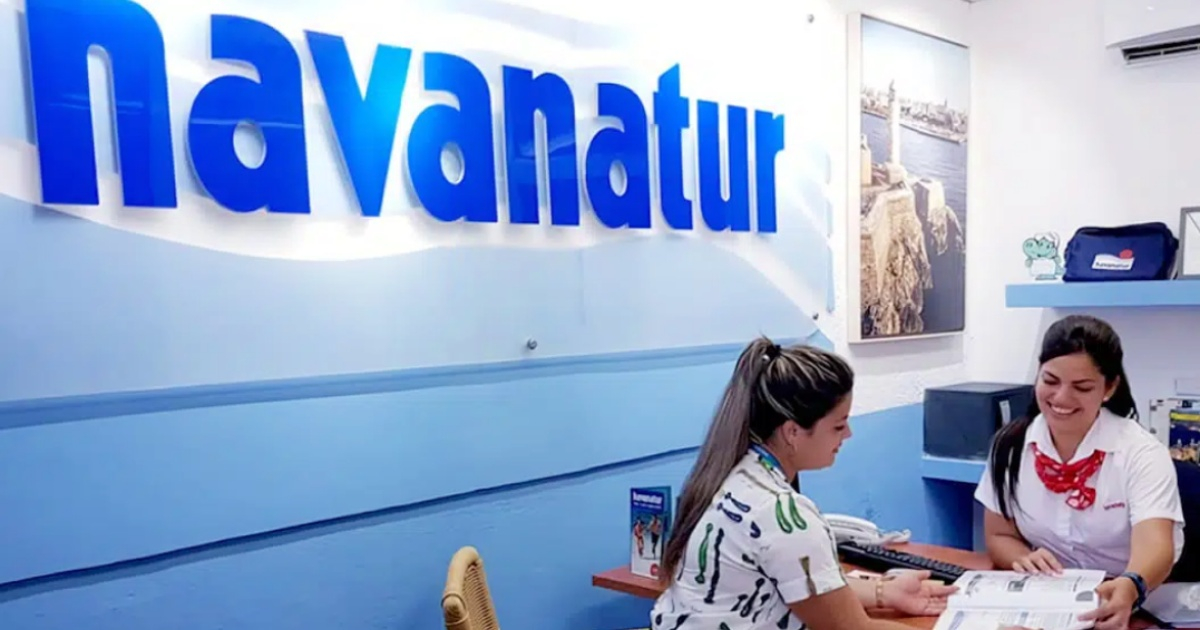
On January 1, 2026, Havanatur officially closed its office in France, a pivotal branch of Cuba's state-run tour operator.
The announcement, which began circulating among European travel agencies in late December, highlights not only the downfall of this particular office but also a broader and more profound crisis within the Caribbean island's tourism framework.
Several specialized media outlets have confirmed the news.
A Financial and Operational Breakdown
According to L’Echo Touristique, Havanatur ceased operations in France after losing its insurance contract with Hiscox and failing to secure another insurer willing to take on the risk. This left the company in an unsustainable legal position within the French market, where professional liability insurance is mandatory for operation.
"Had they found a new insurer, they would have continued their operations," stated Emmanuel Toromanof, the General Secretary of the Professional Association of Tourism Solidarity (APST), the entity's financial guarantor in France, to the aforementioned media outlet.
However, the company formally informed its partners of its intention to declare insolvency before the Paris Commercial Court.
The Selectour agency network was among the first to alert its members of the closure through a letter dated December 23, informing them of the termination of the insurance policy and the upcoming start of insolvency procedures.
Immediate Impact on Agencies and Clients
Havanatur's French branch operated exclusively through travel agencies, ensuring direct clients are protected by the APST. However, the logistical and financial complexities now faced by agencies are significant.
The tour packages to Cuba for 2026 sold by Havanatur have been canceled, requiring agencies to either provide viable alternatives to their customers or issue full refunds. If a customer accepts a new offer, they must pay the difference if the price is higher. If declined, a formal cancellation and complete refund must be processed.
"It's complicated for travel agencies," acknowledged Toromanof, emphasizing that responsibility now falls on intermediaries to resolve each case individually.
A Sign of Cuba's Tourism Collapse
While there is no confirmation yet of other Havanatur branches closing, media like Preferente warn that "it's logical for all to face economic hardships" due to the decline in tourism on the island.
Since 2018, when Cuba reached a record 4.7 million visitors, numbers have steadily decreased. In 2025, the Cuban government projected receiving 2.6 million international visitors. However, only about 1.9 million travelers arrived, which is 73% of the official estimate. Furthermore, revenue was significantly lower than expected: $917.4 million, just 75.8% of the anticipated amount.
Causes: Epidemics, Power Outages, and Toxic Diplomacy
The downturn cannot be understood without considering the national context. Throughout 2025, Cuba experienced multiple health crises, compounded by the deterioration of basic infrastructure: prolonged power outages, water shortages, garbage accumulation, and a healthcare system unable to respond.
In December, Spain updated its health alert, advising against travel to Cuba without prior vaccination and warning of the precarious hospital conditions. Canada, Cuba's main tourist source, reduced its visitor numbers by 20%. Other countries and airlines have recommended taking precautions or even altering itineraries.
On a geopolitical level, the region is also facing heightened tensions. The military escalation in Venezuela, coupled with the capture of Nicolás Maduro by U.S. forces, has increased the perception of risk in the Caribbean.
Destinations like Cancun or Punta Cana have not only bounced back from the pandemic but also boast high hotel occupancy levels and expanding air routes. In contrast, Cuba offers an experience marked by uncertainty, scarcity, and deterioration.
The lack of competitiveness is exacerbated by the limited flexibility of Cuba's highly centralized tourism model, which struggles to adapt to the new profile of the post-pandemic traveler.
The situation of Havanatur in France illustrates how the country's structural issues directly impact its already beleaguered leisure industry. Havanatur presents itself as "the leading international group of tour operators and travel agencies promoting and marketing Cuba's tourism products." However, its closure in France demonstrates that this leadership is now unsustainable.
From abroad, the case might seem like a simple office closure. From within, it reveals the exhaustion of a model that bet on tourism as an economic lifeline, only to face financial, health, and political suffocation today.
FAQs on Havanatur's French Closure and Cuban Tourism
Why did Havanatur close its French office?
Havanatur's French office closed due to losing its insurance contract with Hiscox and failing to find another insurer, which left it in a legally untenable position in France.
What impact does Havanatur's closure have on travel agencies?
Travel agencies face logistical and financial challenges, needing to provide alternatives or refunds for canceled 2026 Cuba tour packages and addressing each customer's situation individually.
What are the broader implications for Cuban tourism?
The closure is a symptom of Cuba's deeper tourism crisis, marked by declining visitor numbers, inadequate infrastructure, and geopolitical tensions affecting its competitiveness.