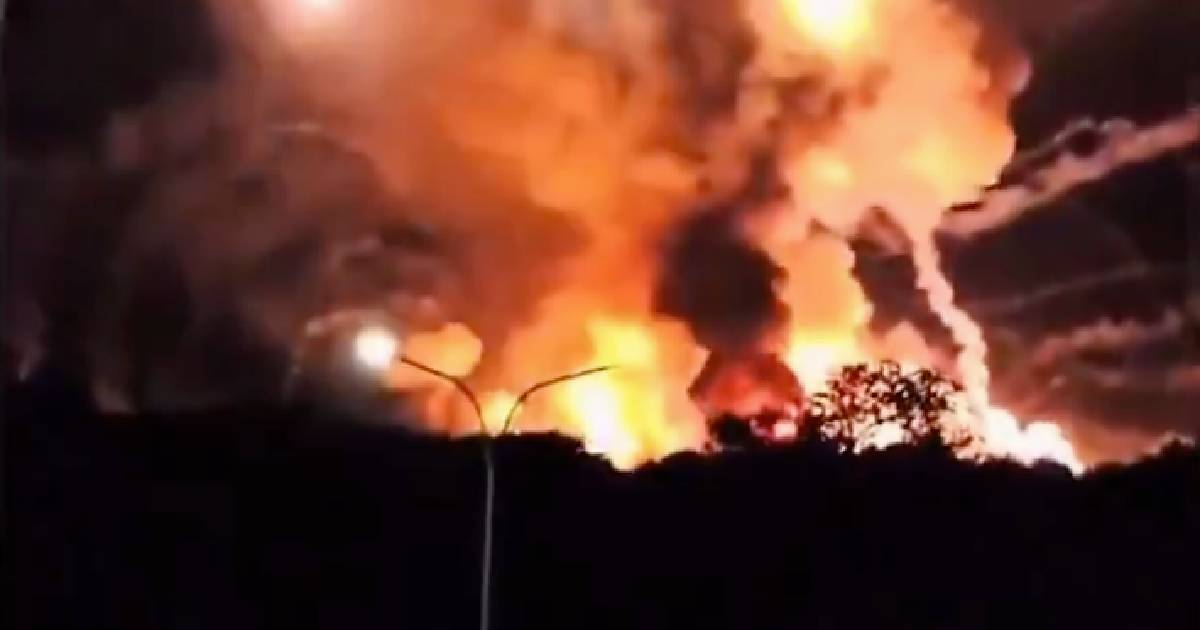
In the early hours of January 3, the usually bustling streets of Caracas turned into scenes reminiscent of a war movie as U.S. military operations led to the capture of Venezuelan dictator Nicolás Maduro. The area around Fuerte Tiuna was particularly affected, with residents recounting their harrowing experiences.
The thunderous explosions that shook the Venezuelan capital resulted in the deaths of at least 32 Cuban soldiers and 23 Venezuelans. According to reports from El Diario and EFE, the assault was concentrated near the Miraflores Palace, the Vice Presidency, and La Carlota Air Base, all strategic points for the Chavista defense forces.
"It was pitch black, gunfire was everywhere, and the blasts felt incredibly close. Many apartment windows shattered," a resident from the military complexes in Fuerte Tiuna described.
An atmosphere of chaos ensued as people screamed, children cried, and families scrambled down staircases. Tragically, some known and beloved individuals were injured or killed in the turmoil.
In the heart of Caracas, a 57-year-old woman living near Miraflores recounted how the explosions jolted her awake. "My bed shook violently. I heard blasts and the windows rattled. I warned my son to stay away from the windows—they were bombing us," she recounted with fear.
She expressed her terror, fearing she might have to say goodbye to her loved ones, uncertain of what the night would bring. She and her son sought refuge in the kitchen, lying low until the noise subsided, before rushing to her daughter's home farther away.
In the desolation of the streets, neighbors descended stairs in panic, shouting for evacuation. Some fled on motorcycles, while elderly residents sat on the building floors, overwhelmed.
In the Catia La Mar sector, west of Caracas, a 56-year-old woman named Georgina compared the experience to the bombings in Gaza. "Now I know what the people of Gaza feel. My granddaughter asked, 'Grandma, where do we run?' It was horrifying," she told EFE.
Georgina recalled hearing a buzzing sound followed by a massive explosion at around 1:50 a.m., which she initially mistook for an earthquake. "I saw fire and smoke near a naval school, and then another bomb hit a nearby building. One person died, and another was injured," she recounted.
Another local, Jesús Linares, a 48-year-old firefighter, described being knocked to the ground by the shockwave. "I hid in a closet and didn't emerge until I heard my neighbors' cries. Later, I assisted an 82-year-old woman who was injured. Debris and scattered belongings covered everything," he narrated.
Official reports indicated that the attacks spread to the states of Miranda, La Guaira, and Aragua. Although interim government officials like Delcy Rodríguez have yet to release exact figures, local media confirm both civilian and military casualties.
The operation, directed by U.S. President Donald Trump, aimed to dismantle key command centers of the Chavista regime before capturing Maduro.
In the aftermath, hundreds of Chavista supporters marched through central Caracas, demanding the release of Maduro and his wife, Cilia Flores, who now face charges in a New York federal court for narcoterrorism and international drug trafficking conspiracy.
For many Venezuelans, the night of January 3 will be remembered as one of the most violent in recent history. "We awoke to bombs, screams, and smoke. It felt like the end of the world," a witness summarized.
Despite the chaos, countless Venezuelans, both domestically and abroad, celebrated Maduro's ousting, expressing their exhaustion with the Chavista regime.
Impact of the Caracas Bombings
What were the main targets during the Caracas bombings?
The bombings primarily targeted areas around Miraflores Palace, the Vice Presidency, and La Carlota Air Base, which were key locations for the Chavista defense forces.
How did the local residents react to the bombings?
Residents were in a state of panic, with many seeking shelter and evacuating. There were reports of shattered windows, screams, and families attempting to find safety.
What was the purpose of the U.S. military operation in Caracas?
The U.S. military operation aimed to dismantle the main command centers of the Chavista regime and facilitate the capture of Nicolás Maduro.
What legal proceedings are Maduro and his wife facing?
Nicolás Maduro and his wife, Cilia Flores, are facing charges in a New York federal court for narcoterrorism and international drug trafficking conspiracy.