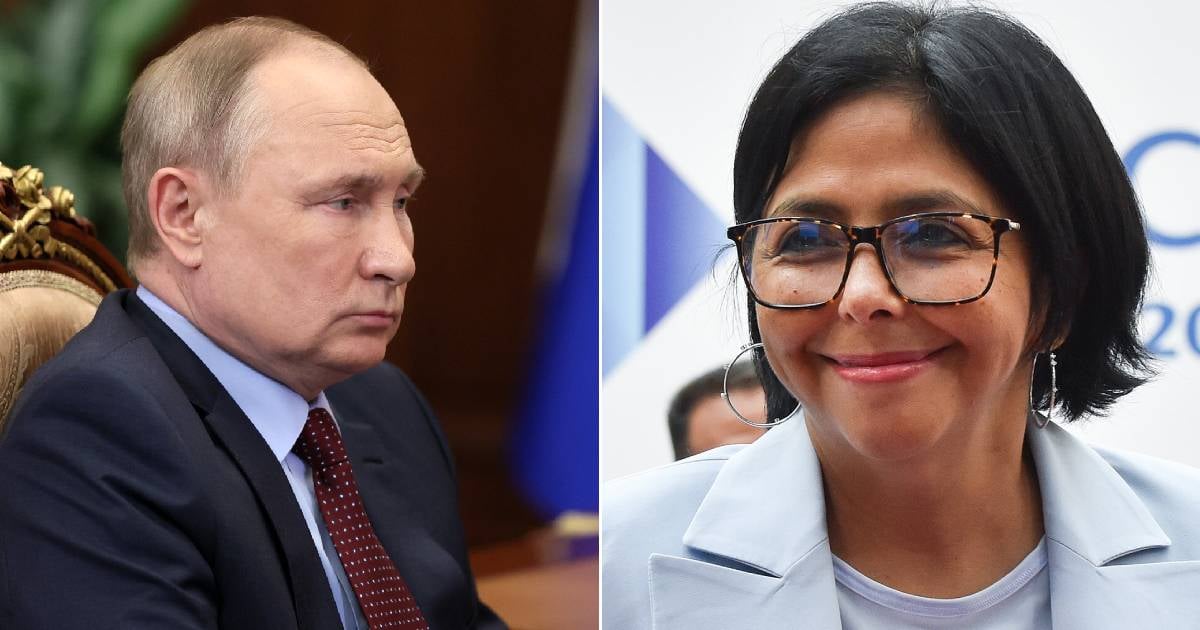
On Tuesday, the Russian government officially expressed its support for Delcy Rodríguez, recognizing her swearing-in as the interim president of Venezuela. This move follows the capture of Nicolás Maduro in a U.S. military operation on January 3rd.
In a statement from Russia's Foreign Ministry, Moscow emphasized Rodríguez's assumption of power as a significant step by the Bolivarian government to ensure unity and maintain the structure of authority. The statement also highlighted the aim to mitigate the risks of a constitutional crisis and foster conditions for Venezuela’s peaceful and stable development.
The statement, published on Russian diplomatic channels, described the decision by the Venezuelan National Assembly and the Supreme Court as a demonstration of sovereignty against what it termed "neocolonial threats and external armed aggression."
"We reaffirm Russia's unwavering solidarity with the people and government of Venezuela. We wish interim President Delcy Rodríguez success in addressing the challenges facing the Bolivarian Republic," the communiqué declared.
The Kremlin reiterated its commitment to providing necessary support to its ally, Venezuela, advocating for a de-escalation of the current situation through constructive dialogue and adherence to international law.
The Russian endorsement comes shortly after U.S. officials cautioned Rodríguez that she might "face the same fate as Maduro" if she opposes U.S. interests. This divergence in positions highlights the evolving geopolitical struggle concerning Venezuela’s immediate future following the apparent downfall of chavismo.
Analysts suggest that the Kremlin's backing aims to preserve its strategic influence in Latin America and safeguard Russia's economic and military interests in Venezuela, including energy projects and defense agreements.
Meanwhile, Washington has not publicly clarified its stance on Rodríguez’s provisional leadership. However, President Donald Trump emphasized that his priority is to ensure regional stability and prevent external actors—such as Russia or Cuba—from expanding their political and military control in the South American nation.
In contrast, Havana has reaffirmed its "steadfast solidarity" with chavismo, supporting the institutional continuity declared by Rodríguez. This comes amidst growing criticism within Cuba over the death of 32 Cuban soldiers during the operation that led to Maduro's capture.
Key Questions About Venezuela's Political Situation
What is Russia's stance on Delcy Rodríguez's leadership in Venezuela?
Russia supports Delcy Rodríguez as the interim president of Venezuela, recognizing her leadership as a move to ensure unity and stability in the country.
How has the United States responded to Delcy Rodríguez's interim presidency?
The United States has warned Delcy Rodríguez that she might face consequences similar to Maduro if she challenges U.S. interests, but has not yet publicly defined its official position on her leadership.