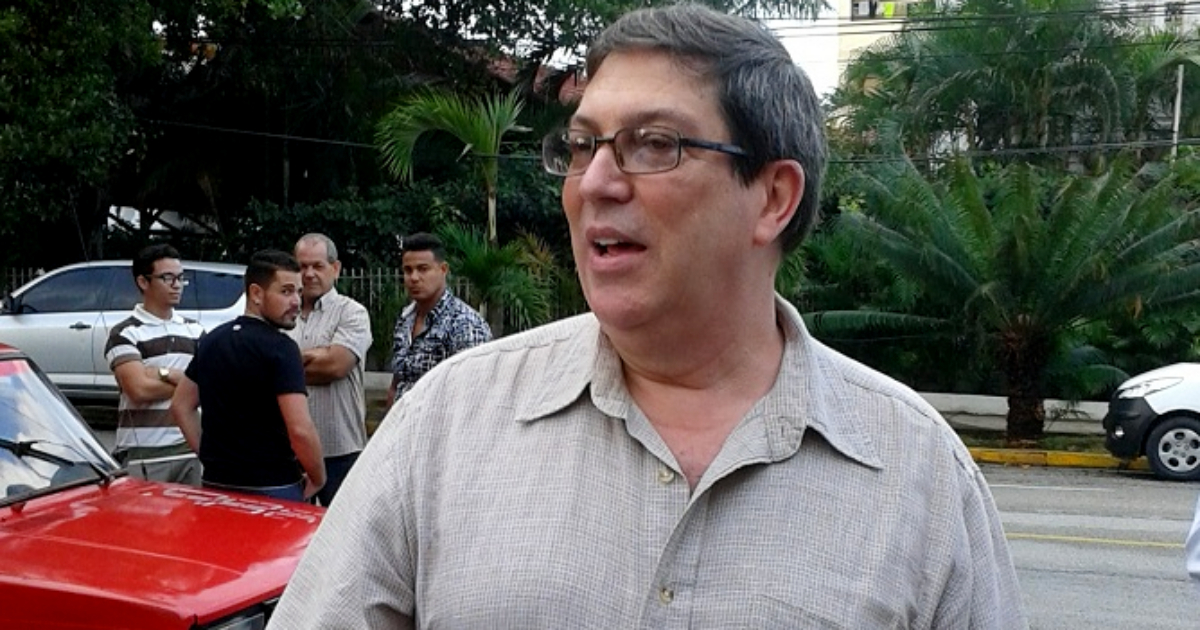
The recent remarks by Cuban Foreign Minister Bruno Rodríguez Parrilla have ignited a storm of criticism on social media. Claiming that the "brave Cuban people will defend their nation against any imperialist aggression" and are "willing to lay down their lives for this land," Rodríguez's statements have been met with skepticism and backlash.
In forums such as CiberCuba News, where his comments quickly went viral, thousands of Cubans expressed doubts about the regime's and its foreign minister's authority to speak on behalf of the nation.
His militaristic rhetoric, released following U.S. President Donald Trump's comments on potential action against the Havana regime, sparked a debate that transcended ideological lines, garnering over 30,000 interactions.
The consensus among the comments was clear: the Cuban people are weary, not of imperialism, but of their own government.
"Who told them that the Cuban people are loyal to their history of struggle? The average Cuban isn't thinking about dying for the homeland; they're worried about food and electricity," one reader commented.
Another user was more direct: "Don't speak for me, Bruno. The people won't defend poverty, blackouts, or repression. Defend yourselves, you're the ones well-fed and in air-conditioned comfort."
The stark contrast between the foreign minister's epic language and the everyday reality for Cubans became the focal point of the debate. "If he loves the country so much, he should be the first to don a uniform and stand on the front line," quipped several commentators, echoing a common sentiment: leaders demand sacrifice from others, not themselves.
Some used humor to vent their frustrations. "At the first sign of trouble, Bruno will run faster than a tourist with WiFi," joked one user. Others turned to political satire: "The same old speech: homeland or death. But the homeland is in ruins, and death is a daily reality for us all."
Among the more thoughtful voices, several exiled Cubans highlighted the complete disconnect between the political elite and the populace. "They speak for a people who didn't choose them and lack even basic necessities like light, water, and hope. If the government truly loved its nation, it wouldn't plunge it into hunger," wrote an émigré from Miami.
The debate also revealed deep moral fatigue. Many noted that the rhetoric of resistance, once effective during times of confrontation with Washington, now rings hollow to an exhausted population. "After 67 years of demanding sacrifice, the people aren't willing to die for slogans. They want to live, and that's already an act of rebellion," stated another comment, receiving hundreds of likes.
There was, however, a small group defending the foreign minister. "Imperialism won't defeat us," declared a regime supporter, while another echoed classic slogans: "Homeland or Death, We Will Win!" But even these messages were swiftly overshadowed by civic and sarcastic replies. "We will win… but first fix the blackouts," mocked a reader.
The overwhelming sentiment can be summed up in the phrase most repeated among users: "The people are tired, but tired of you."
Beyond the memes and mocking, this torrent of reactions underscores an unprecedented political divide: a regime that speaks collectively ("we, the people") versus a citizenry increasingly disconnected from that narrative.
While the regime clings to the language of war and resistance, Cubans reply with daily struggles, irony, and fatigue. The gap between official discourse and real life has never been more apparent—or more publicly shared—than in this wave of comments.
What the foreign minister saw as a challenge to Washington, many Cubans heard as the hollow echo of a bygone era.
As a young commenter put it: "The people you claim to represent only want one thing: to stop surviving and start living. And that, Bruno, isn't imperialism. It's dignity."
Key Questions About the Cuban Political Climate
Why did Bruno Rodríguez's statement provoke such a strong reaction?
His comments were perceived as out of touch with the realities faced by everyday Cubans, highlighting the disconnect between the government and its citizens.
What were the main criticisms from Cubans in response to Rodríguez's remarks?
Critics argued that the government should address domestic issues like poverty, blackouts, and repression instead of focusing on external threats.
How did the Cuban diaspora respond to the statement?
Exiled Cubans emphasized the disconnect between the political elite and the struggling population, criticizing the lack of basic necessities and hope.