Even though the United States continues to press charges of drug trafficking and narcoterrorism against Nicolás Maduro, the Department of Justice has removed the direct reference to the Venezuelan leader as the head of the so-called "Cartel of the Suns." This label has been a significant part of Washington's political and judicial narrative against the Chavismo regime in recent months.
The New York Times reports that the new indictment from U.S. prosecutors tones down the language from 2020 when a grand jury accused Maduro of "helping to manage and ultimately leading" the alleged drug trafficking network.
In the updated document, the cartel is no longer depicted as a structured criminal organization. Instead, it's described as a "patronage system" operating within a culture of corruption at the highest levels of Venezuelan power.
The revised legal document outlines that drug trafficking profits were channeled to civilian and military officials operating within a patronage network, identified as the Cartel of the Suns, but it no longer presents Maduro as the direct leader.
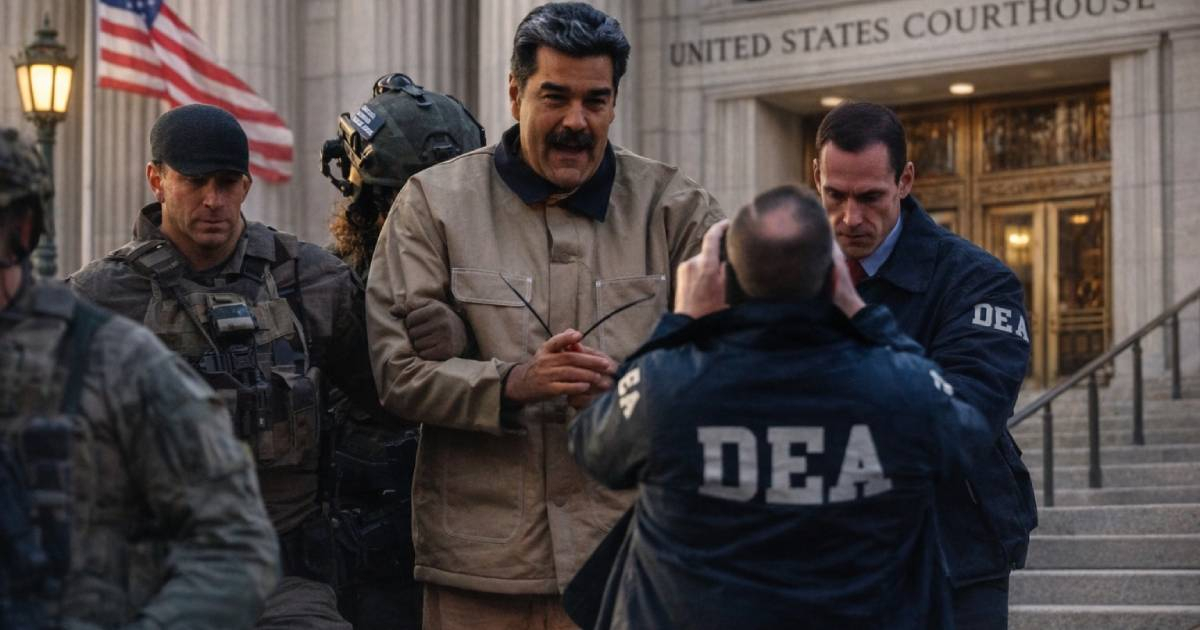
This adjustment comes just hours after Maduro's appearance in a federal court in New York, a politically symbolic event. Under federal agent custody, with simultaneous translation, the Chavista dictator pleaded not guilty and declared before Judge Alvin Hellerstein, "I was captured. I remain the president of my country."
Although the revised text significantly reduces references to the Cartel of the Suns, with only two mentions compared to the original indictment's numerous references, the allegations of cocaine trafficking remain unchanged.
The prosecution asserts that Maduro "participates in, perpetuates, and protects a culture of corruption" where political and military elites have enriched themselves through drug trafficking, with institutional protection and economic benefits flowing to Venezuelan state officials, according to an EFE report.
The contrast with the original indictment is striking. In 2020, U.S. prosecutors explicitly claimed that Maduro rose to lead the Cartel of the Suns as he gained power in Caracas, portraying it as a drug trafficking organization comprising high-ranking Venezuelan state officials and linked to armed groups and international cartels.
Despite this legal language adjustment, the core charges remain. The prosecution continues to accuse Maduro of conspiracy to traffic cocaine, narcoterrorism, and possession of war weapons, also alleging ties to groups designated as terrorist organizations by Washington, including FARC, ELN, the Sinaloa cartel, Los Zetas, and Tren de Aragua.
However, while the judicial document softens the cartel's concept, President Donald Trump has publicly insisted that the operation culminating in Maduro's capture is part of a broader effort to dismantle the Cartel of the Suns. This organization was designated as a foreign terrorist group by the United States in 2025, a decision supported by several Latin American governments but strongly rejected by Venezuela and Cuba, who dismiss it as a "CIA invention."
Analysts cited by EFE recall that the actual existence of the cartel as an organized criminal structure has been questioned for years, even within Venezuela. Initial allegations emerged in 2004, pointing to National Guard officers involved in drug trafficking, but no conclusive judicial evidence of a formal hierarchical network was ever established.
Maduro's next court hearing is scheduled for March 17, and until then, the Chavista leader remains in custody, facing not only a criminal trial but also the symbolic weight of a downfall that seemed impossible for years.
Implications of Legal Adjustments in Maduro's Case
Why was Maduro's role in the Cartel of the Suns revised?
The U.S. Department of Justice updated the indictment to reflect a change in the narrative, depicting the cartel more as a patronage system rather than a structured criminal organization, and removed direct references to Maduro as its leader.
What charges does Maduro still face in the United States?
Maduro faces charges of conspiracy to traffic cocaine, narcoterrorism, possession of war weapons, and alleged ties to terrorist organizations, including FARC, ELN, the Sinaloa cartel, Los Zetas, and Tren de Aragua.
How has the portrayal of the Cartel of the Suns changed in the indictment?
The indictment now describes the Cartel of the Suns as part of a culture of corruption and a patronage system among Venezuelan elites, rather than a rigid criminal cartel with Maduro at its helm.