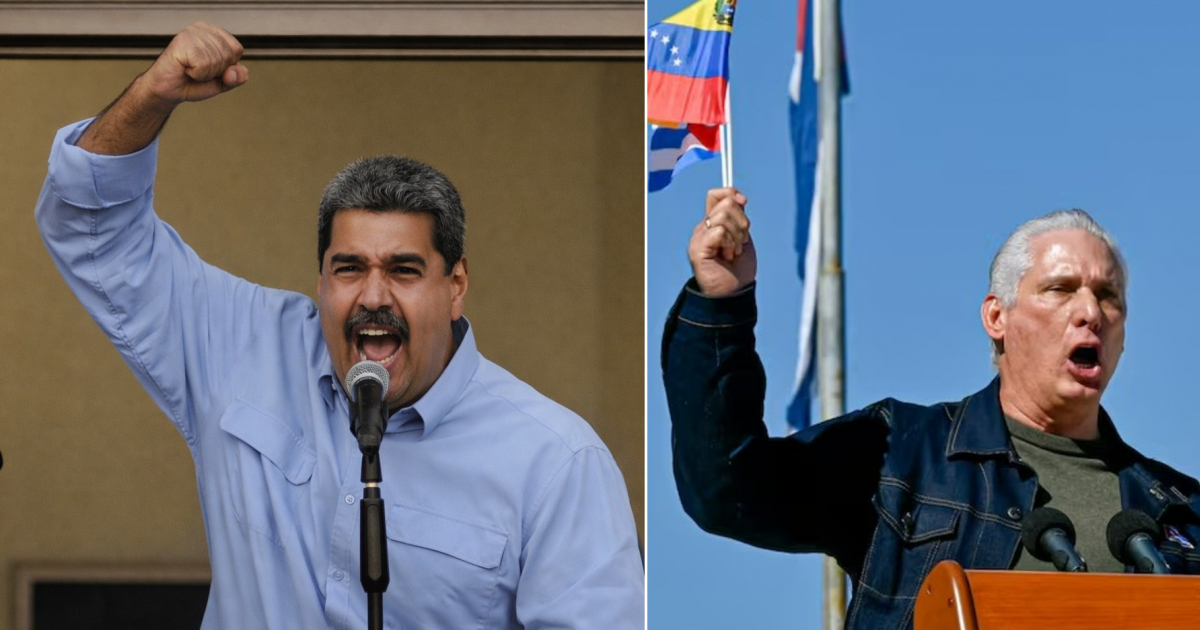
Every time the Cuban regime is confronted with reality, a familiar pattern emerges: they turn up the volume. Phrases like "Victory or death," "resist until the end," and "there will be no surrender" are thrown around. Words such as "honor" and "homeland" are multiplied just when genuine power fades away. The bravado increases inversely to their actual capacity.
This is neither new nor accidental. It's not courage—it's pure propaganda.
Two glaring examples—Grenada in 1983 and Venezuela in 2026—serve as uncomfortable mirrors where this hollow epic shatters. In both instances, the rhetoric was grandiose, but reality was swift, uneven, and humiliating. Those who paid the price were not the leaders shouting from afar, but rather the Cubans sent to die or be captured.
The Grenada Debacle
In October 1983, as the United States launched an operation against Grenada, Fidel Castro commanded his troops to "resist to the last man." His orders were clear: no surrender, no retreat, die if necessary. This epic narrative, however, was dictated from Havana, far removed from the actual battlefield.
The reality was starkly different. Overwhelming U.S. air and naval superiority crushed any hope of prolonged resistance. Many Cubans perished, and over six hundred were captured. There was no counterattack, no triumph, and no epic heroism.
Yet, propaganda thrived. From this defeat, the legend of "the last Cuban stronghold sacrificially holding the flag" was born. It was a false, inflated image, useful for masking a defeat as a heroic sacrifice. I watched the statement live on Cuban television. I can't recall who made that solemn appearance, but we were all stunned, saddened, and bewildered.
The Reality of Repatriation
The harsh truth dismantled the myth in a matter of days. Shortly after the story of the "sacrificial stronghold" circulated, the "combatants" repatriated from Grenada began arriving in Cuba. They returned alive, intact, and, in many cases, with conspicuously large luggage. Some came back laden with clothes, personal items, and even appliances; the image of a soldier descending the plane's steps with a fan is particularly memorable. These were not the remnants of a collective sacrifice, but survivors of a hasty retreat.
The official epic clashed with popular humor, which tends to be more honest than propaganda. Jokes that the regime could never control began to circulate in the streets. One of the most repeated was, "If you want to run fast, wear Tortoló sneakers," referring to the Cuban military's flight to the Soviet embassy and the discredit of the command led by Pedro Benigno Tortoló Comas. When the people laugh at the epic, it means the epic is already dead.
Venezuela: A Quick Collapse
Decades later, the script was repeated with other actors. Nicolás Maduro, trained and seemingly protected by the Cuban apparatus and Russian missiles, adopted the same tone: "Come for me. I'll be waiting at Miraflores. Don't take too long, coward."
The outcome was even swifter than in Grenada. In the early hours of January 3, 2026, a precise U.S. operation captured him and whisked him out of Caracas. There was no real resistance, no war. Just helicopters, special forces, and a handcuffed president en route to New York.
Bodyguards died, including 32 Cubans integrated into the Venezuelan regime's security system: once again, Cubans paying the price. It was said these Cubans "protected" Maduro: were they merely protecting him, or were they controlling him? Were they his bodyguards or, rather, his jailers?
The Hollow Echo of Propaganda
After Maduro's fall, the Ministry of the Revolutionary Armed Forces flooded social media with war slogans: there will be no ceasefire, no surrender, the war only ends with "victory or death." It's the same rhetoric from 1983. But today, it sounds emptier than ever.
Cuba couldn't prevent the fall of its main ally. It couldn't intervene, couldn't respond, couldn't protect Maduro. The only thing it could do was shout from Havana.
The less capacity it has, the more it shouts. That is the regime's logic.
For decades, the Cuban regime has sold the notion of significant regional influence. The reality is far less heroic: its weight hasn't come from its own military power but from exporting control apparatuses, intelligence, repression, and subjugated labor.
Angola, Grenada, Venezuela: the pattern is the same. Cubans sent as geopolitical pawns. Lives sacrificed to uphold epic narratives that crumble when someone decides to check if there's real strength behind the words.
Cuban influence has relied on exploitation, not strength. On parasitism, not power. On propaganda, not capability.
The conclusion is uncomfortable but clear: the Cuban regime's bravado is not a sign of strength but of weakness. It's the shout of someone who knows they can do nothing but needs to pretend otherwise.
Grenada proved it. Venezuela confirmed it. Every time reality imposes itself, the epic fades, leaving dead Cubans, and the regime once again hides its impotence behind slogans.
They are left with words.
The tweet.
The slogan.
But genuine power hasn't been there for a long time.
The Cuban Regime's Propaganda Tactics
How does the Cuban regime use propaganda during conflicts?
The Cuban regime amplifies its rhetoric, using grandiose slogans and patriotic phrases to mask its lack of real power and to create a false sense of heroism and sacrifice among its people.
What was the outcome of the Cuban involvement in Grenada?
The Cuban involvement in Grenada ended in defeat, with many Cuban soldiers captured and no significant resistance against U.S. forces. The regime's narrative of heroism was quickly dismantled by the reality of returning soldiers.
What does the repeated failure in conflicts indicate about the Cuban regime's power?
The repeated failures in conflicts like Grenada and Venezuela highlight the regime's lack of genuine power, relying instead on propaganda and exaggerated narratives to maintain an illusion of strength.