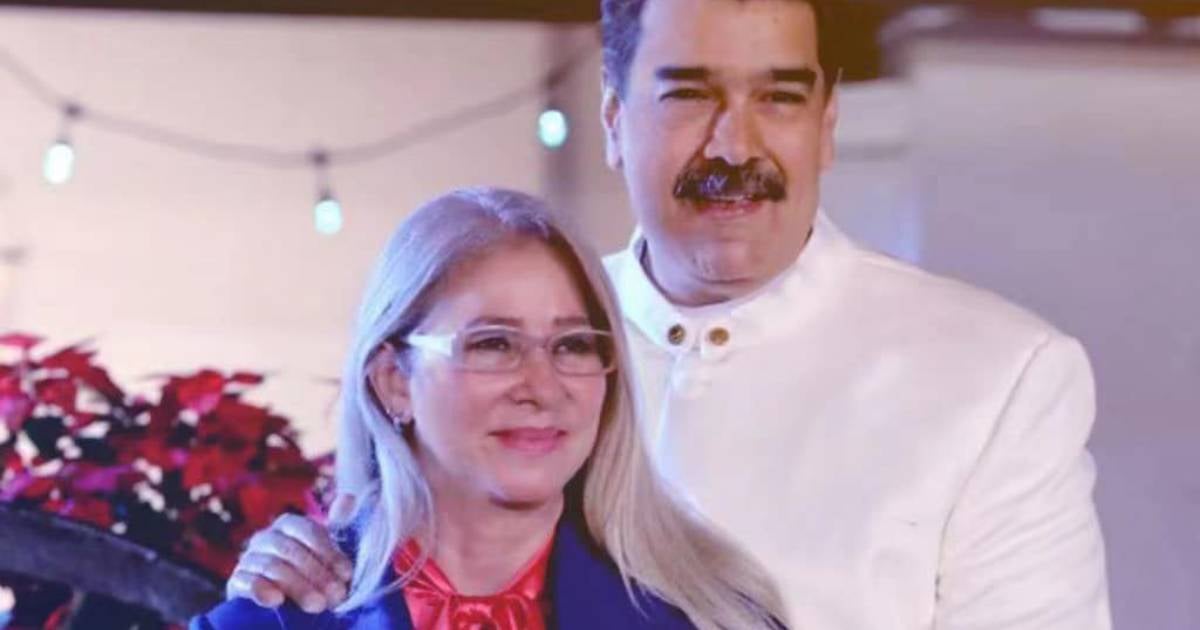
While the Chavista regime attempts to paint Nicolás Maduro's capture as a dramatic tale of devotion, the spotlight once again turns to his wife, Cilia Flores. Official media outlets promote a narrative of "love and loyalty," but this stands in stark contrast to the legal troubles she faces, including allegations of drug trafficking, corruption, and violence.
Patricia Villegas, director of Telesur, described the arrest of the Venezuelan leader and his wife on Telegram as an "abduction" by "imperial soldiers," portraying Flores as a woman whose "force of love" compelled her to accompany her husband rather than let him be taken alone. This romanticized account frames their ordeal as a "love story" amid political persecution and alleged rights violations.
However, the perspective from the United States tells a different story. According to Telemundo 51, Cilia Adela Flores de Maduro, 69, is not just the spouse of the Chavista leader. She is a lawyer and a pivotal figure in Venezuelan politics for over two decades. She served as a deputy in the National Assembly and became its first female president in 2006, pushing through financial reforms that solidified her influence within the Chavista movement.
Flores also held the position of Attorney General from 2012 to 2013 under Hugo Chávez, whom she defended legally after the failed 1992 coup. With Maduro's rise to power, she assumed a more prominent role, dubbing herself the "first combatant" of the revolution.
Yet, her political career is marred by numerous scandals. Accusations of nepotism arose when several family members appeared on the National Assembly's payroll during her tenure as a deputy. This was compounded by the "narcosobrinos" case, involving her relatives Efraín Antonio Campo Flores and Francisco Flores de Freitas, who were arrested in 2015 for conspiring to smuggle large quantities of cocaine into the United States.
According to reports from Telemundo 51 and The Associated Press (AP), the Southern District of New York’s prosecutors now directly accuse Cilia Flores of engaging in drug trafficking activities, accepting bribes, and acting as an intermediary between drug traffickers and high-ranking Venezuelan officials. The accusations include claims of receiving payments to facilitate meetings with Néstor Reverol, Venezuela's former anti-drug chief, and participating in violent networks to settle drug-related debts.
Further investigations, as reported by the Peruvian outlet Trome, indicate that Flores’ three children, acknowledged by Maduro as his own, have been linked by the U.S. Department of the Treasury to illicit drug-related businesses.
This past Saturday, Maduro and Flores were flown to New York on a U.S. military aircraft under stringent security measures to face four charges related to narcoterrorism and cocaine trafficking, as confirmed by American media outlets. Both are expected to appear before the federal judiciary, a process that temporarily shatters the image of impunity the Chavista regime has long maintained.
Thus, while Caracas and its media allies persist in portraying Cilia Flores as the unwavering "faithful wife" who stands by her partner in adversity, U.S. courts depict her as a key player in a criminal network that, according to prosecutors, operated from the very heart of Venezuelan power.
Understanding the Legal Challenges Facing Cilia Flores
What charges does Cilia Flores face in the United States?
Cilia Flores is facing charges related to narcoterrorism and cocaine trafficking, including allegations of drug trafficking, accepting bribes, and acting as an intermediary between drug traffickers and Venezuelan officials.
How has Cilia Flores influenced Venezuelan politics?
Cilia Flores has been a key figure in Venezuelan politics for over two decades, serving as a deputy in the National Assembly and its first female president in 2006, where she pushed through significant financial reforms.
What is the "narcosobrinos" case?
The "narcosobrinos" case involves the arrest of Cilia Flores’ relatives, Efraín Antonio Campo Flores and Francisco Flores de Freitas, in 2015 for conspiring to smuggle cocaine into the United States.