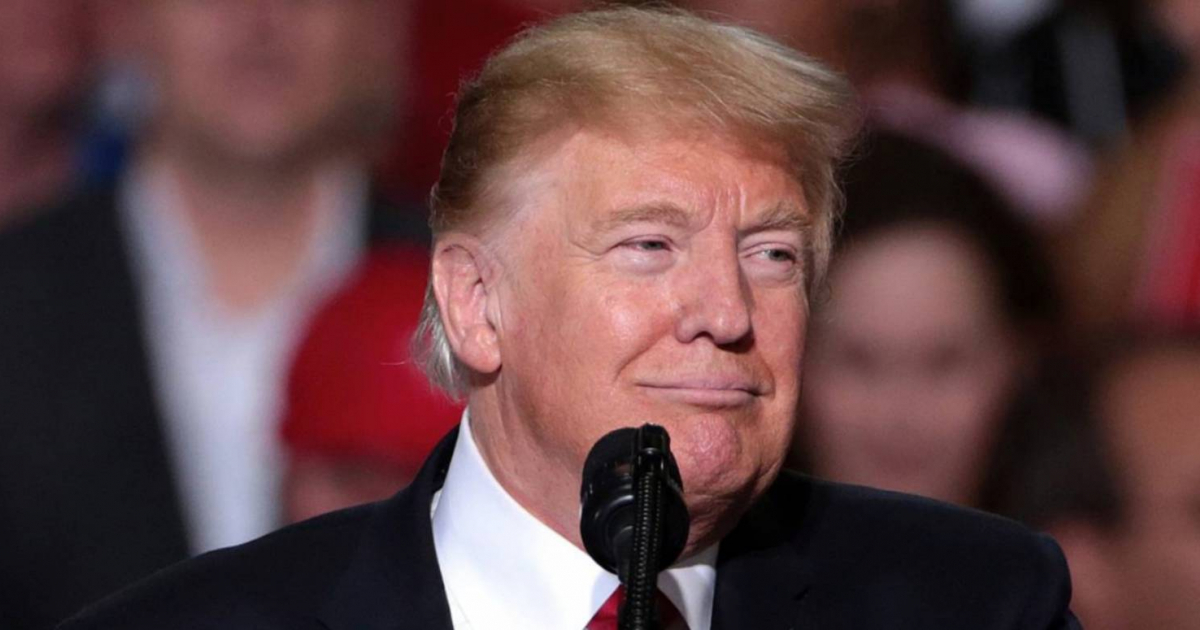
Former President Donald Trump has admitted to consuming a daily aspirin dosage higher than that advised by his doctors—a habit he confessed is responsible for the visible bruising on his hands. This revelation has once again brought his health into the public spotlight.
In a detailed interview published by The Wall Street Journal on Thursday, Trump disclosed that he ingests 325 milligrams of aspirin each day, significantly more than the 75 to 100 milligrams typically recommended as a low dose for heart attack and stroke prevention.
"Aspirin is said to be good for thinning the blood, and I don't want thick blood pumping through my heart. I prefer nice, thin blood flowing through my heart," Trump remarked.
Though his doctors would rather he take a lower dose, Trump admitted to maintaining the higher dosage "for years," which has led to bruising.
The White House physician, Navy Captain Sean Barbabella, verified Trump's daily intake of 325 milligrams and stated that the former president "continues to enjoy excellent health."
In a statement to CNN, Barbabella emphasized that medical evaluations and lab results indicate "excellent metabolic health," with his cardiovascular condition placing him "14 years below his chronological age," asserting that he is "perfectly fit" to serve as commander-in-chief.
External specialists, however, have raised concerns.
Trump's bruised hands, evident for months on his right hand and now on his left, have drawn attention due to the heavy makeup and bandages he uses to cover them, as well as gestures to hide them from cameras.
The White House has attributed these marks to frequent handshakes and regular aspirin use.
Trump himself explained that some bruises appeared after Attorney General Pam Bondi accidentally hit his hand with her ring, acknowledging that he is "a bit superstitious" and reluctant to reduce his aspirin intake, which he has maintained for 25 years.
The interview also shed light on medical tests the president underwent in October at the Walter Reed National Military Medical Center.
Initially, Trump stated it was an MRI, but later clarified it was actually a CT scan. "It wasn't an MRI. It was less than that. It was a scan," he said.
Barbabella clarified that the CT scan was conducted to "definitively rule out any cardiovascular issues," with results being "perfectly normal" and revealing no anomalies.
Trump expressed regret over undergoing these tests, stating they provided "ammunition" to critics questioning his health.
"It would have been better if they hadn't done it, because the fact that I did it made people think: ‘Oh, is something wrong?’ Well, nothing is wrong," he declared.
White House Press Secretary Karoline Leavitt defended the administration's transparency, noting that the president himself has disclosed additional details "because he has nothing to hide."
Questions about Trump's health have intensified this year, partially because he is the oldest individual to assume the presidency. Besides the bruising, observers have noticed persistent swelling in his ankles and legs.
In July, the White House revealed that he suffers from chronic venous insufficiency, a common condition in older adults that causes blood to pool in the lower extremities. He mentioned trying compression stockings but stopped wearing them because "he didn't like them."
He has also faced scrutiny for appearing to close his eyes or seem asleep during public events.
Trump dismissed this interpretation, asserting that he simply finds it "very relaxing" to close his eyes, and that sometimes cameras capture him mid-blink.
He also downplayed any hearing issues, stating difficulties only arise "when there are many people talking," attributing his energy levels to "very good genes."
This debate carries a political undertone, as Trump has repeatedly questioned his predecessor Joe Biden's fitness for office, amid accusations of the White House's lack of transparency regarding his own health.
In his own words, Trump has attempted to settle the controversy by insisting his health is "perfect," yet the combination of visible bruising, corrected medical tests, and a higher-than-recommended aspirin regimen continues to fuel doubts about the physical state of the 79-year-old occupying the Oval Office.
Key Questions About Trump's Health and Aspirin Use
Why does Trump take a higher dose of aspirin than recommended?
Trump takes a higher dose of aspirin because he believes it helps thin his blood, preventing thick blood from flowing through his heart.
What has been the response of Trump's doctors to his aspirin regimen?
While Trump's doctors prefer a lower dose, they verify his current dosage and confirm that he enjoys excellent health, despite the bruising caused by the higher dose.
What medical tests did Trump undergo, and what were the results?
Trump underwent a CT scan to rule out cardiovascular issues, with results showing no abnormalities and being perfectly normal.