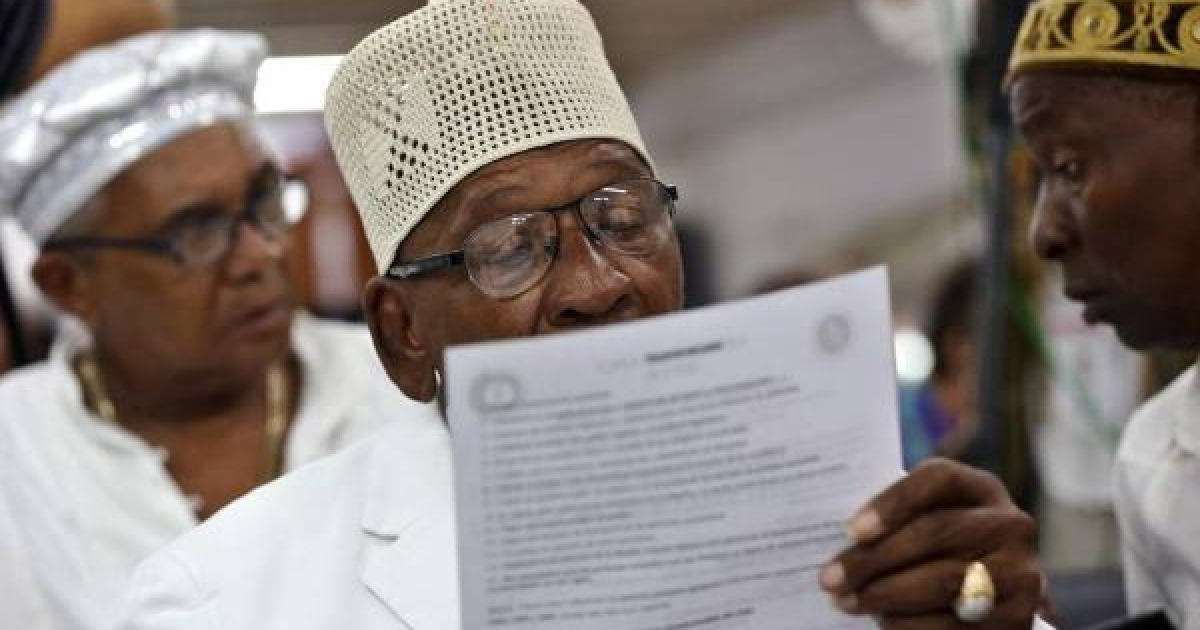
The Cuban Yoruba Cultural Association has revealed plans to unveil the "Letter of the Year" for 2026 on January 2, during a press conference scheduled for 11:00 a.m. at their headquarters in Havana.
In addition to the announcement, the event will feature the opening of the art exhibition "Echoes of Silence" by artist Carlos A. Pimentel Boiza, known as Pimbo, at 1:00 p.m., followed by a drum ceremony dedicated to Oddúa at 2:00 p.m. This information comes from an invitation signed by Roberto Padrón, the institution's president, and Martha Callaba, spokesperson.
The "Letter of the Year" is a significant religious tradition with Yoruba origins, unveiling spiritual predictions, advice, and warnings for the coming year through the Ifá oracle. Typically disclosed on January 1 or 2, these messages address themes such as health, coexistence, morality, and societal well-being, guiding the spiritual path for many believers in Cuba and its diaspora.
Regarded as one of the most pivotal events in the Afro-Cuban religious calendar, this ceremony garners significant attention from practitioners of Santería and Ifá Rule both on the island and within Cuban communities abroad.
Over recent years, the "Letter of the Year" has remained a highly anticipated spiritual tradition among Yoruba religion followers in Cuba. By late December 2025, the pre-opening ceremony hinted at the tensions and hopes accompanying the new cycle, as Afro-Cuban priests prepared to share the prophecies. During this time, babalawos emphasized a call for prudence and social harmony through their predictions.
A year prior, priest Lázaro Cuesta stressed that Ifá's revelations should be approached with spiritual responsibility rather than fear. He stated, "The predictions may be unsettling, but it is our duty to voice them," highlighting the moral role Yoruba priests play as societal guides in Cuba. The 2025 "Letter of the Year," notable for its warning about internal conflicts and emotional imbalances, set the stage for the forthcoming consultations.
The Cuban Yoruba Cultural Association, the official body responsible for issuing the "Letter of the Year," maintains a central role in preserving these religious traditions. In November 2023, the association organized a drum ceremony dedicated to Aggayú, the orisha symbolizing volcanic force and transformative power, during the San Cristóbal de La Habana festivities. They have also supported celebrations honoring Obbatalá and the Virgin of Mercedes, reflecting the deep syncretism between Catholicism and Afro-Cuban religions.
These practices continue to inspire cultural and artistic expressions both within and outside Cuba. In March 2025, Cuban dancer Ismaray Chacón, a daughter of Oshún, remarked on this deity's ability to manifest with either gentleness or sternness, depending on spiritual needs. Her testimony highlights the enduring vitality of Yoruba heritage within contemporary Cuban identity, a legacy that connects new generations with the ancient wisdom of Ifá. Additionally, figures like the late artist El Taiger have conveyed their faith in Ifá's signs, demonstrating how Yoruba spirituality extends beyond temples into popular culture.
Understanding the "Letter of the Year" Tradition in Cuba
What is the significance of the "Letter of the Year" in Cuba?
The "Letter of the Year" is a crucial religious tradition in Cuba, offering spiritual predictions and guidance for the year ahead based on the Ifá oracle. It addresses health, morality, and societal well-being, shaping the spiritual direction of believers in Cuba and its diaspora.
Who is responsible for announcing the "Letter of the Year" in Cuba?
The Cuban Yoruba Cultural Association is the official entity responsible for announcing the "Letter of the Year" each January, maintaining a pivotal role in the preservation of Yoruba religious traditions in Cuba.