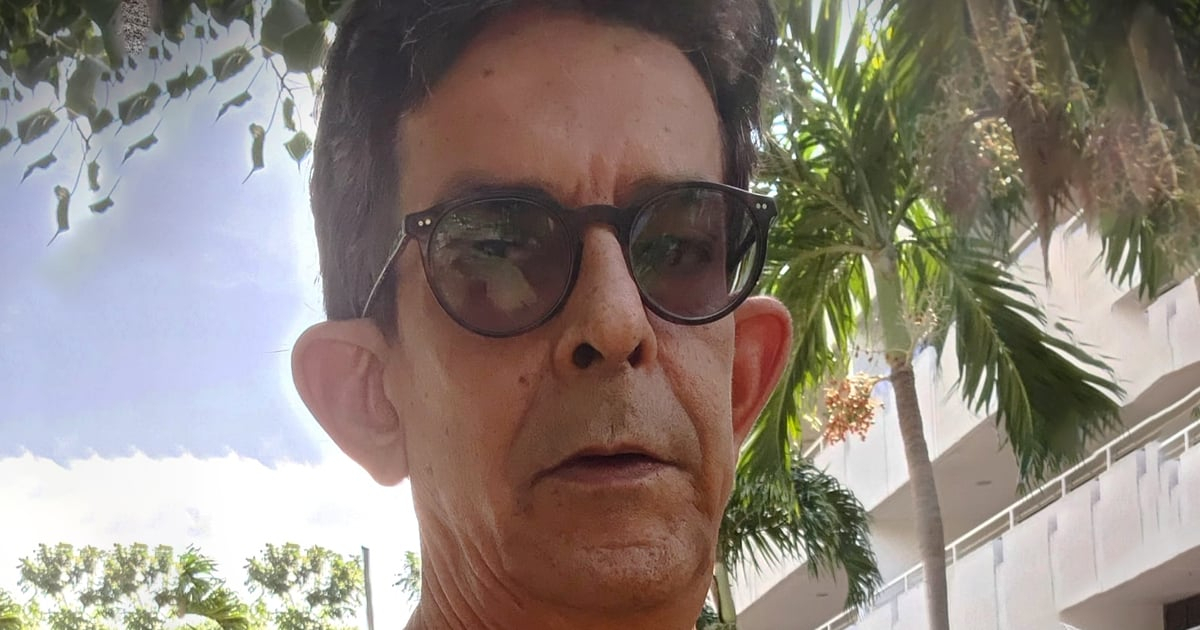
Cuban comedian Ulises Toirac recently took to Facebook to deliver a powerful critique of the nation's leadership, highlighting the severe state of deterioration that Cuban society is experiencing. He painted a vivid picture of a society on the brink, where even the smallest issues can trigger overwhelming reactions.
In his post, Toirac emphasized that "the leadership of this country has a massive problem," distinguishing it from the everyday struggles faced by the populace. He pointed out that social decay permeates every aspect of life, including "food, electricity, transportation, connectivity, health, education, and more."
According to the actor, the accumulation of deficiencies has led to a situation where even minor triggers provoke strong reactions among people.
He stressed that the signs are unmistakable: as time goes by, "no paths are found, the present is deteriorating (and the future seems unattainable), and unfortunate small changes are being made in the wrong direction."
The Disconnect Between Policy and Reality
Toirac also warned of a "reality disconnect" between decision-makers and the everyday lives of the citizens, a gap that widens when there is no direct information and leaders aren't "walking in the shoes of the people."
His final assessment paints a concerning image: "I'm watching a snowball (already large) rolling down that massive mountain."
The conversation escalated in the comment section when a user defended the notion that despite the difficulties, "Cuba and its revolution will emerge from this as it has always done, with optimism and faith in victory and improvement."
The commenter questioned why Toirac wasn't involved or contributing to finding solutions, suggesting that the paths he doesn't see will indeed exist in the future.
Facing Harsh Realities
Toirac's response was even more direct and detailed. "It is you who cannot see that there is no path," he replied, listing a series of structural problems highlighting the depth of the crisis.
He questioned whether people realize that "recovering the National Electric System will take ten years that we don't have," or that "the country's production and export capacity is nearly at zero."
He also reminded that Cuba imports "salt and sugar," two basic products historically linked to national production.
In the health sector, Toirac described hospitals that "offer nothing but consultations from the few doctors not abroad fattening an account not used to industrialize the country," where doctors "don't even write prescriptions because they know there are no medicines."
He also highlighted the contrast between the proliferation of hotels and the absence of tourism: "the hotels are vacant of tourists, and the city is filled with hotels."
Urban and social decay also plays a central role in his critique. He mentioned "the misery of our streets full of potholes and debris" and the plight of "our youth filled with desires to leave the country, being the future of a nation."
For the comedian, rather than closing, "the cycle... rises again and again without rest."
His response concluded with a statement summarizing his stance on optimism without visible results: "Faith is possible when there are signs. When there aren't, it's called fanaticism."
Toirac's statements encapsulate a growing social discontent and a direct criticism of the government's actions, giving voice to the frustration of many Cubans who witness deepening shortages without seeing tangible solutions or clear paths to reverse the crisis.
Understanding Cuba's Current Crisis
What are the main issues highlighted by Ulises Toirac regarding Cuba's crisis?
Ulises Toirac highlights various issues including social decay affecting all life aspects such as food, electricity, transportation, connectivity, health, and education. He also points out structural problems like the deteriorating National Electric System and the country's low production and export capacity.
How does Toirac describe the disconnect between Cuban leaders and the populace?
Toirac describes a "reality disconnect" where decision-makers are out of touch with the everyday lives of citizens, lacking direct information and not experiencing the people's challenges firsthand.
What does Toirac say about Cuba's healthcare system?
Toirac criticizes Cuba's healthcare system by describing hospitals that provide minimal services, as many doctors are abroad, and the hospitals lack medicines, making it futile for doctors to issue prescriptions.