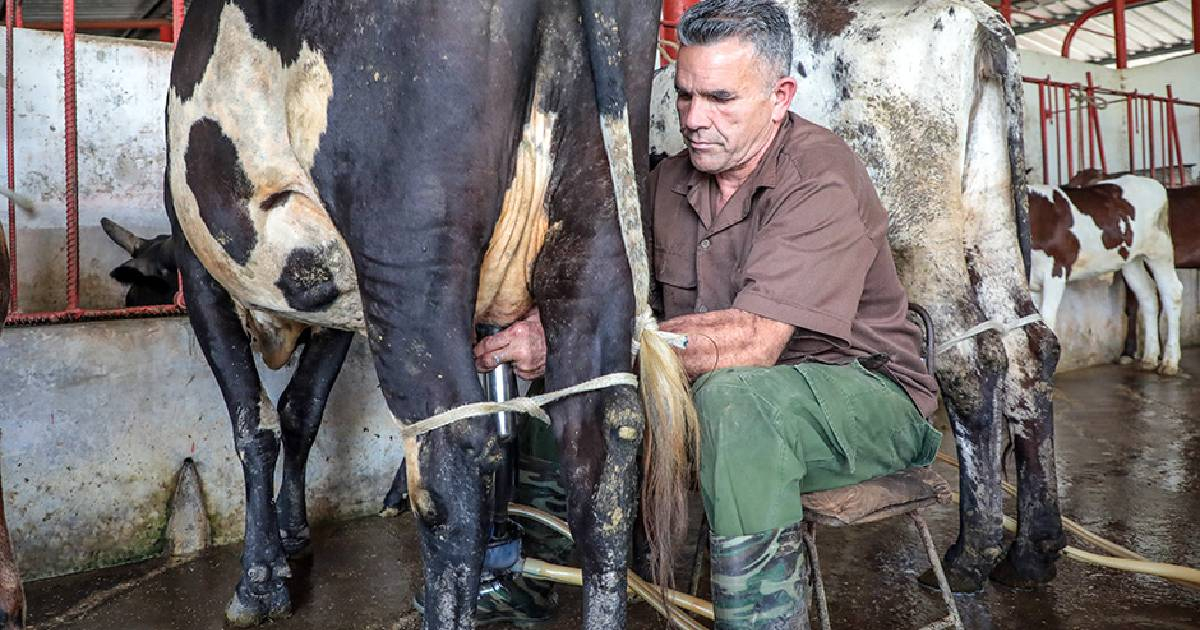
The official media outlet Cubadebate recently published an extensive article in support of legislator Emilio Interián Rodríguez, following his notable speech at the National Assembly of People's Power. His address was remarkable for its unusual stance in the Cuban Parliament, as he openly defended private enterprises and criticized the country's declining productivity amidst an unprecedented economic crisis.
In his speech, Interián, who serves as the president of an agricultural cooperative and represents the Havana district of Arroyo Naranjo, acknowledged that the national situation has deteriorated significantly in critical sectors such as energy, fuel, and food, just six months after the last parliamentary session.
"It's dishonest to keep promising solutions that never materialize," he warned, questioning the repetitive official rhetoric that announces improvements which never come to fruition as the crisis deepens.
Drawing from his experience as a producer, the deputy advocated for applying the same approach to the agricultural sector that has been, albeit limitedly, extended to private enterprises. He emphasized that these enterprises have managed to provide goods and services that the state apparatus has failed to deliver for years.
He cited an example of a sand quarry leased to a private enterprise, where construction materials are sold legally and efficiently, free from the bureaucratic paralysis typical of state management. According to Interián, this model has eliminated chronic inefficiency and addressed specific public needs.
Interián also tackled one of the most sensitive issues: the crisis in livestock and animal feed. He pointed out that before 1959, small feed factories existed in almost every neighborhood, sustaining livestock production, in stark contrast to the current situation marked by a lack of supplies and productive collapse.
"My great dream is to be able to purchase the feed I need, with the quality I require, or to produce it myself for my operations," he expressed, directly challenging state control over basic supplies.
Furthermore, Interián argued that those who produce results should not be restricted. He stated that if a producer effectively utilizes 65 hectares of land, they should have access to more. "Let’s not fear that someone might make money through hard work," he remarked, a statement rarely heard in official Cuban discourse.
Highlighting the Tension: Cubadebate's Narrative Control
Following the impact of his speech, Cubadebate released the article "Interián, a Peasant in Parliament," an in-depth piece aiming to humanize, legitimize, and politically frame the deputy by emphasizing his rural origins, loyalty to the Revolution, and commitment to official structures.
While the official media implicitly acknowledges the crisis's severity and the practical value of private enterprises, it avoids any critique of the centralized economic model. Instead, it insists that Interián's proposals are not about "capitalism" but about "efficiency," reiterating his allegiance to the Communist Party.
The contrast between the legislator's stark diagnosis and Cubadebate's effort to manage its political impact reveals growing tension within the system. It highlights the divide between those who, from a production standpoint, call for real and urgent changes, and those who continue to defend a model that has driven state production to historic lows.
Meanwhile, it is precisely the private enterprises—despite their high prices and severe limitations—that are currently meeting many of the population's basic needs in a country where the state can no longer guarantee essentials.
Interián's intervention does not break away from the system but exposes an uncomfortable truth: without profound structural changes, the productivity crisis will continue to worsen, beyond speeches, slogans, or carefully crafted heroic profiles by the official press.
Understanding the Economic Challenges in Cuba
Why did Emilio Interián Rodríguez criticize the current state of productivity in Cuba?
Emilio Interián Rodríguez criticized the current state of productivity in Cuba due to the worsening conditions in key areas like energy, fuel, and food, and the failure of state-led initiatives to deliver promised improvements.
What examples did Interián use to illustrate the benefits of private enterprises?
Interián used the example of a sand quarry leased to a private enterprise, where construction materials are sold efficiently and legally, bypassing the bureaucratic inefficiencies typical of state management.
How does Cubadebate portray Emilio Interián in its article?
Cubadebate portrays Emilio Interián as a loyal supporter of the Revolution, emphasizing his rural roots and commitment to the Communist Party, while avoiding criticism of the centralized economic model.