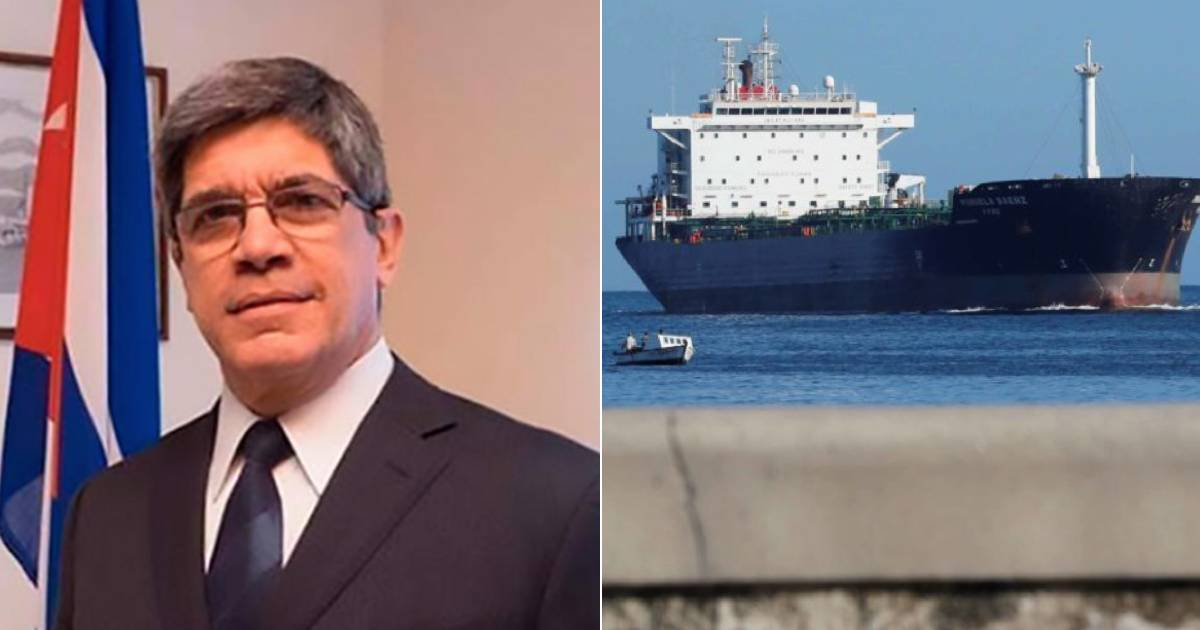
The Cuban Deputy Foreign Minister, Carlos Fernández de Cossío, has indirectly criticized the recent seizures of oil vessels by the United States in the Caribbean, referring to ships from Venezuela—though he did not mention them directly.
In a statement released on X, the Cuban diplomat declared that "no country has the right to deprive another of fuel supplies, nor to deny exporters the right to commercialize a legitimate product that belongs to them." He cautioned that using force as an international standard would be "unsustainable in the short term."
While the pronouncement may appear to be a general defense of international trade and energy sovereignty, it unmistakably targets Washington's actions against Venezuelan oil, which has been seized under international sanctions imposed on Nicolás Maduro's regime.
With this statement, the Cuban government is not only defending its own access to fuel, crucial amid a severe internal energy crisis, but also openly supporting the Venezuelan dictatorship, its main crude supplier for years.
Beyond Venezuela, the declaration aligns with the narrative of other strategic allies of Havana, such as China, Russia, and Iran. These countries face international sanctions and have repeatedly denounced what they describe as "interference" or "coercion" by the United States and its partners.
Fernández de Cossío's discourse avoids mentioning the reasons behind the sanctions—human rights violations, corruption, authoritarianism, and illicit activities—and omits that measures against these regimes are part of international resolutions and legal frameworks, not isolated arbitrary decisions.
Meanwhile, Cuba continues to suffer from prolonged blackouts and chronic fuel shortages, a crisis the regime attributes almost entirely to external factors, without taking responsibility for the collapse of its energy system or its reliance on equally sanctioned allies.
The Deputy Minister's statement thus reinforces Havana's political and ideological alignment with authoritarian governments, at a time when the Cuban regime seeks international legitimacy and economic support, despite increasing isolation and external pressures.
Understanding Cuba's Energy Crisis and International Dynamics
Why is Cuba experiencing a fuel shortage?
Cuba is facing a fuel shortage due to a combination of international sanctions on its allies, such as Venezuela, and the regime's own mismanagement and dependency on these sanctioned countries for energy resources.
What are the implications of Cuba's alignment with countries like Venezuela, China, and Russia?
Cuba's alignment with countries like Venezuela, China, and Russia reinforces its political and economic ties with authoritarian regimes, which may lead to greater international isolation and challenges in securing broader economic support and legitimacy.