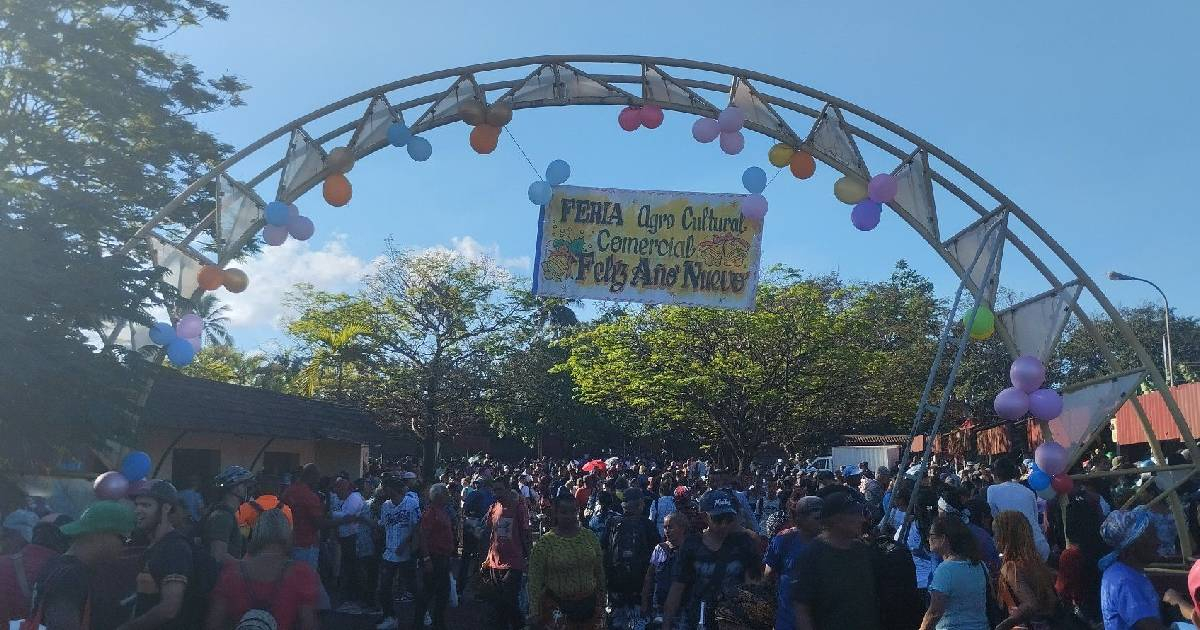
As the year draws to a close, the Cuban regime has once again launched end-of-year agro-commercial fairs across the nation, promoting them as a testament to their concern for the people's well-being.
For many Cuban families, however, these events highlight the stark contrast between the government's propaganda and the severe daily hardships they face, such as frequent blackouts, high prices, and subpar products.
In regions like Holguín, Camagüey, and Las Tunas, authorities and state media have praised the large crowds, diverse offerings, and festive atmosphere. Yet, beneath the surface of optimistic headlines, consumers report that many of the goods sold fail to meet even basic quality standards, with numerous instances of "meat" being mostly bones, spoiled root vegetables, and food in poor condition.
Mass Attendance but Few Real Choices
In Holguín, a large crowd flocked to the Year-End Agro-Commercial Fair in the Reparto 26 de Junio, as noted by Facebook user Camilo Velazco. Although prices were touted as “lower than other establishments,” they remain out of reach for the general populace, especially retirees, state employees, and families reliant on Cuban pesos.
The presence of state enterprises, cooperatives, and cultural activities fails to mask the reality that many attendees are driven by desperation rather than abundance, seeking any means to complete their traditional year-end meal.
Organization Over Quality Food
In Camagüey, official journalist Luis Naranjo emphasized the "organization and preparation" efforts of the fair, along with economic achievements of UEB Fruta Selecta. Nevertheless, administrative efficiency does not translate into sufficient or quality food, while residents continue to endure extended power outages that make it difficult to cook what little they can purchase.
“Affordable Prices” Only in Rhetoric
In Las Tunas, the event was advertised as a venue for "more affordable" prices and a variety of products, according to internet user Katy Baez. However, some users commented that prices remain high relative to incomes and that the quality of food is far from satisfactory.
For many families, attending these fairs means spending a significant portion of their monthly salary on items that barely cover a single meal, all while dealing with hours without electricity, lack of water, and challenges preserving food.
Fairs as Political Theater
Beyond their commercial role, these fairs serve an obvious political purpose, particularly during symbolic dates like the end of the year and the anniversary of the Revolution's Triumph. The regime aims to project an image of management, stability, and social concern while avoiding addressing the root causes of the food crisis.
The repetition of this model—occasional fairs, scarce products, and poor quality—fails to address the underlying issue: the collapse of the production and distribution system, rampant inflation, and the complete erosion of the Cuban peso’s purchasing power.
For Cubans, year-end fairs no longer symbolize celebration but rather serve as a grim reminder of scarcity, where propaganda attempts to fill the void left by the market and at home.
Understanding the Challenges of Cuban Year-End Fairs
Why do Cuban families struggle with high prices at year-end fairs?
Many Cuban families face high prices at these fairs because the cost of goods remains disproportionate to their real purchasing power, especially for those earning in Cuban pesos. Despite being labeled as affordable, the prices often exceed what the average citizen can afford.
What issues do consumers report about product quality at these fairs?
Consumers frequently report that products sold at these fairs do not meet basic quality standards. Complaints include meats that are primarily bones, spoiled vegetables, and generally poor food quality.
How do year-end fairs serve a political purpose in Cuba?
Year-end fairs in Cuba are used as political showcases, especially during significant dates. The regime uses them to project an image of effective governance and social care, diverting attention from the underlying systemic crisis affecting food availability and quality.