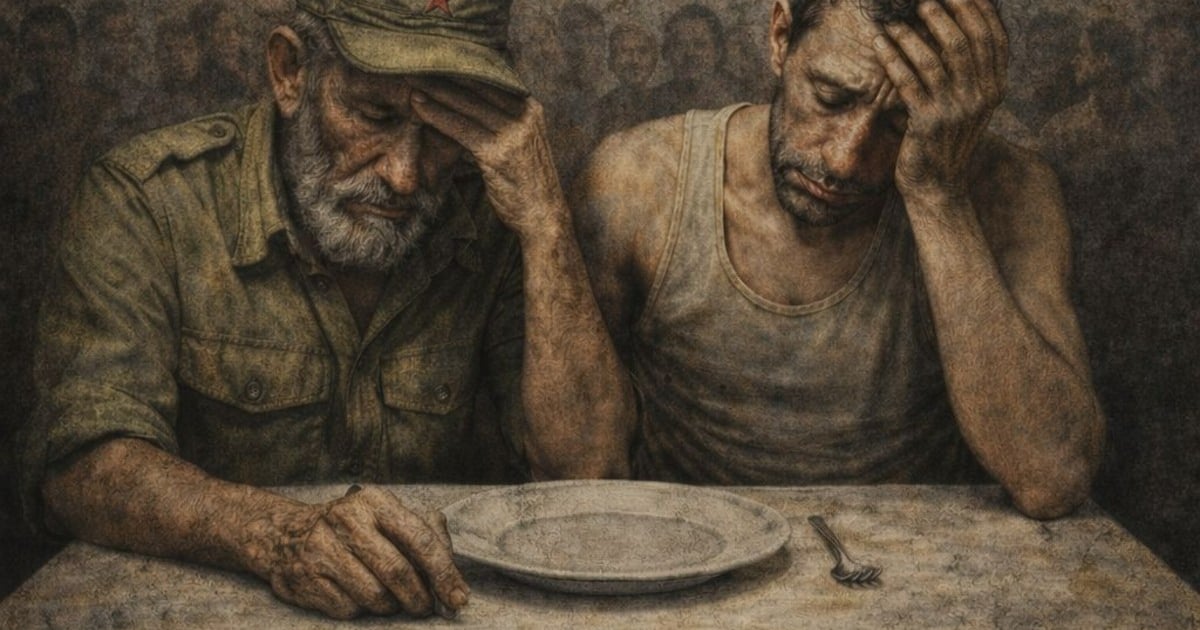
To tell a nation that rice isn't Cuban isn't just a slip of the tongue or a television gaffe. It is a political statement. It starkly acknowledges the inability to assure even the essentials, choosing instead to rationalize hunger rather than address the root cause.
When authorities begin to justify scarcity rather than fight it, the narrative shifts. It no longer serves to inform but to lower expectations. The issue is no longer poor management, neglect of agriculture, or chronic unproductivity. Instead, it becomes the people's habit of wanting to eat what they've always eaten. It's not the system that's failing—it's the citizens for insisting on rice, potatoes, beans, and bread.
Yet these foods are more than just sustenance. They are a collective memory, generations surviving on the bare essentials. They represent survival turned into habit. Questioning them isn't a cultural critique; it's an attempt to retrain hunger, teaching people that wanting the basics is a learned mistake.
This argument collapses under scrutiny. If being Cuban is defined by origin, the table is almost bare. Cuban cuisine isn't biologically native; it's a historical blend created from what arrived and what the people made their own. Identity isn't in the grain's origin but in its adoption. Denying this isn't cultural preservation—it's erasing reality.
And then comes the harshest irony: an island surrounded by sea where the sea doesn't feed its people. Fish exist, lobsters thrive, but they have destinations, prices, and permissions. They symbolize Cuba but aren't popular food. Citizens learn to view abundance as something distant, reserved, and unattainable. Everything is Cuban, except the right to consume it.
The table doesn't empty due to drought or war. It empties because of decisions and speeches made from places where nothing is ever lacking. When the plate is bare, the final narrative emerges: that it's about identity, culture, resistance. But no nation can sustain itself on words when bread is missing, and no ideology justifies a child's empty stomach.
Hunger doesn't need explanations. It needs food. When those in power focus more on justifying absence than resolving it, they stop governing people and start managing their human decay.
A nation doesn't surrender by protesting. It surrenders when it's taught to rationalize its hunger and begins to believe it.
Understanding Cuba's Food Crisis
Why is the availability of basic foods a political issue in Cuba?
The availability of basic foods like rice and beans in Cuba is tied to the government's economic policies and management. The inability to provide these essentials is often politically justified, shifting blame away from systemic failures.
What role does Cuban identity play in the food scarcity narrative?
Cuban identity is deeply rooted in the foods traditionally consumed. The narrative that challenges the origin of these foods aims to reshape cultural identity, making it a tool to manage expectations amid scarcity.