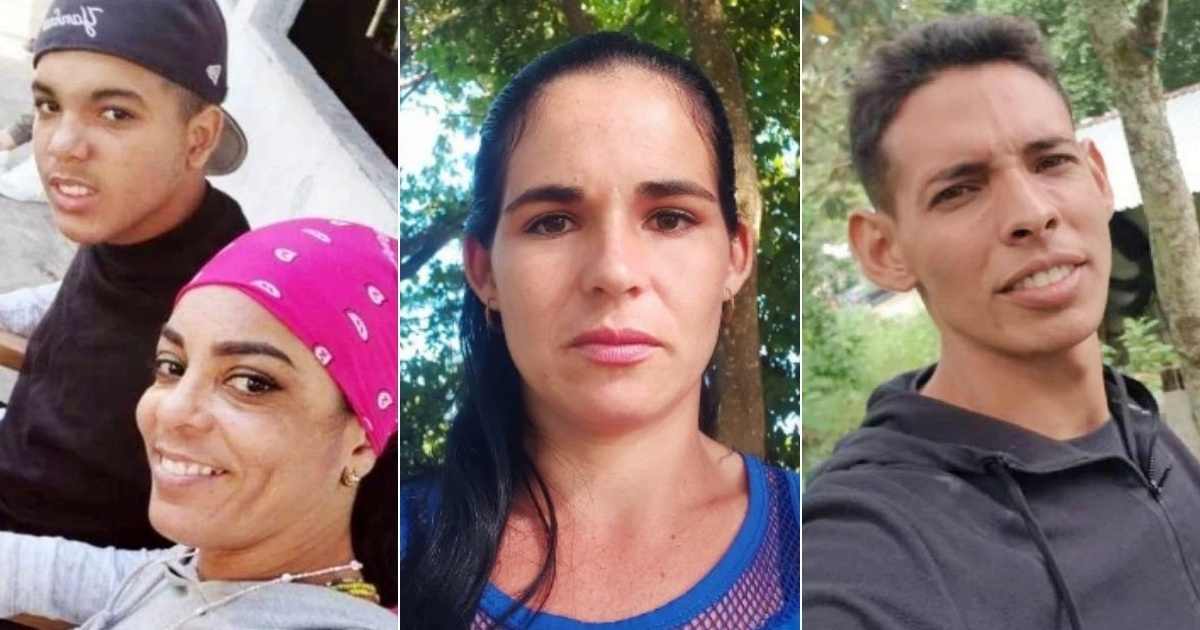
Over a year has passed since approximately 40 migrants—primarily Cubans, along with individuals from Honduras and Ecuador—vanished along the coast of Chiapas, Mexico. Despite the passage of time, authorities have yet to provide any clear answers regarding their whereabouts.
In a bid to demand tangible action, the families have utilized every avenue available, including releasing videos directed at the Mexican government, as reported by local media in recent days.
According to complaints documented by the organizations Sin Fronteras IAP and the Fray Matías de Córdova Human Rights Center, these migrants disappeared while traversing Mexico's southern border, an infamously active and hazardous migration route. Since their disappearance, no reliable information about their fate has surfaced.
Family members have faced bureaucratic hurdles and limited access to critical information. They collectively voice their concerns: “We don’t know if they are detained, victims of organized crime, or held in a migration station.”
The search efforts are hindered by a lack of coordination among institutions, scattered records of detainment and transfer, and fear of retaliation. In response, families have issued specific demands to various entities, emphasizing the need for answers.
Despite some virtual meetings with officials, families lament that “no concrete answers have been given to determine what happened to them.” Each missing person carries a unique story, yet all share the common thread of seeking a better life.
Take Meiling, a single mother who once worked in a Cuban bank, hoping to find employment in Mexico. Her 14-year-old son, Samei, had a passion for technology. Jorge, a self-taught builder and cooking enthusiast, dreamed alongside Elianis, who aspired to write about their journey. Meanwhile, Dayranis sought only stability, not necessarily reaching the U.S.
The last known communication with several migrants occurred on December 21, 2024, from San José El Hueyate, reporting their journey to Oaxaca via small boats. Since then, all their phones went silent.
The missing include young women, mothers, children, and adult men, each with dreams of reuniting with family in the U.S., working in Mexico, or escaping dire conditions in their home countries.
The official search bulletins released weeks later confirmed what families already knew: no one knows where they are, and no one is actively searching for them.
Unofficial accounts reaching the families range from potential shipwrecks to abductions by organized crime groups. However, there are no ongoing investigations yielding concrete results, nor rescue operations underway.
Some families have fallen victim to extortion, receiving threats and ransom demands up to $12,500, yet none have received proof of life.
One grieving mother recounted, “The 21st was the last time we spoke… The last thing he told me was: ‘Take care of Lulú,’” she remembered tearfully.
Another family member questioned in desperation: “How can so many people disappear? How does the authority not notice? Are they complicit or part of it?”
Urgent Civil Society Proposals
Beyond formal searches, support groups working with the families have suggested practical measures to expedite the process:
- Establish a single point of contact at the Chiapas Prosecutor's Office for missing migrants.
- Set up accessible protocols for DNA testing and comparison with national and international databases.
- Publish updated lists of detainees, ensuring data protection.
- Coordinate with the Cuban diplomatic corps for identity verification and consular assistance.
- Provide free psychological and legal support to the families during the investigation.
Representatives from Sin Fronteras IAP and Fray Matías stress that “it’s not just about identifying people; it’s about restoring certainty to families living in uncertainty.”
An Institutional Debt
To date, families have formally lodged complaints with the Chiapas Prosecutor's Office and requested intervention from the National Human Rights Commission (CNDH). However, no authority has publicly addressed the cases. The lack of institutional communication fuels a sense of abandonment.
The disappearance of migrants is not just a personal tragedy but a symptom of systemic failures in public policy and human rights protection. Without effective mechanisms for search, traceability, and accountability, impunity prevails.
What Can Citizens and Institutions Do?
Demand transparency and access to information in search processes.
Support local organizations providing legal and emotional assistance to families.
Promote the creation of regional search mechanisms among border states.
The Interrupted Journey: Reconstructing the Events
A report by the Spanish newspaper El País in June detailed the journey of this group of migrants from their home countries to Chiapas. Most departed from Cuba, yet individuals from Honduras and Ecuador were also present.
They crossed Central America with the help of smuggling networks, eventually reaching Tapachula, a crucial city in southern Mexico’s migration transit.
Some waited weeks for an appointment with the CBP One system to legally enter the United States.
Others, frustrated by the U.S. government change or lack of legal opportunities, hired coyotes promising maritime transport to Mexico City.
Thousands of dollars were spent on a supposedly “safe” route, complete with alleged migration permits.
In Tapachula, the migrants were taken to a warehouse in San José El Hueyate, a coastal locality known as a hub for trafficking people, weapons, and drugs. They remained there between December 18 and 21.
During those days, messages sent expressed concern: “There’s been a massive shootout here… these people came out heavily armed, and we were told to get inside.”
In the early hours of the 21st, families received the last messages: “We’re on the boat now,” “they're giving us life jackets.” GPS coordinates marked their sea position at 08:25. Then, absolute silence.
The Human Trafficking Business and State Omission
The migrants were handed over by various drivers in a recorded transfer chain: “Here are your people, safe and sound. Welcome to Tapachula,” one of the coyotes said.
The route was often prepaid: between $8,000 and $10,000 per person. The journey included connections from Nicaragua to Mexico City.
What should have been a passage towards the future ended in uncertainty. The families were victims of a deception machine. A coyote shared a list with the 40 names, passports, and signatures of the migrants, claiming they were held by a cartel.
He charged $12,500 for supposed rescues and then vanished.
Even though authorities have the data of the transporters, locations, vehicles, and routes used, the Mexican authorities have not conducted any search operations. Neither the state nor federal prosecutors, nor the armed forces, have provided answers.
“It’s as if the earth… or the sea swallowed them,” says a Cuban mother, now caring for her daughter’s orphaned children.
Chiapas: The Border of Terror
The El País report warns that southern Mexico has become a high-risk area for migrants. Territorial disputes among criminal groups have turned Chiapas into a corridor controlled by trafficking and extortion networks.
In 2024, at least 237 migrants disappeared in Mexico, according to the Secretariat of Governance, while civil organizations report massive kidnappings and unrecorded disappearances.
In this harsh reality, migrants face not only physical dangers but also become victims of a system where state inaction benefits criminal groups.
“In six months, there’s been no news, but also no search actions. These are 40 people,” the families’ lawyer denounced mid-year.
“Regardless of the condition: whether he’s on the street, kidnapped, dead… I just want to bring him back to Cuba,” concluded one of the mothers. Her words encapsulate the yearning of dozens of families who, a year later, continue to cry out for justice.
Understanding the Crisis of Missing Migrants in Chiapas
What are the main challenges faced by the families of missing migrants in Chiapas?
The families encounter bureaucratic obstacles, limited access to essential information, fear of retaliation, and a lack of institutional coordination in their search for answers.
What proposals have been suggested to aid in the search for missing migrants?
Proposals include creating a single point of contact in the Chiapas Prosecutor's Office, establishing accessible DNA testing protocols, publishing updated detainee lists, coordinating with Cuban diplomats, and providing free psychological and legal support to families.
How has the state of Chiapas become a high-risk area for migrants?
Chiapas has turned into a high-risk area due to territorial disputes among criminal groups, making it a corridor controlled by trafficking and extortion networks, posing severe risks to migrants.