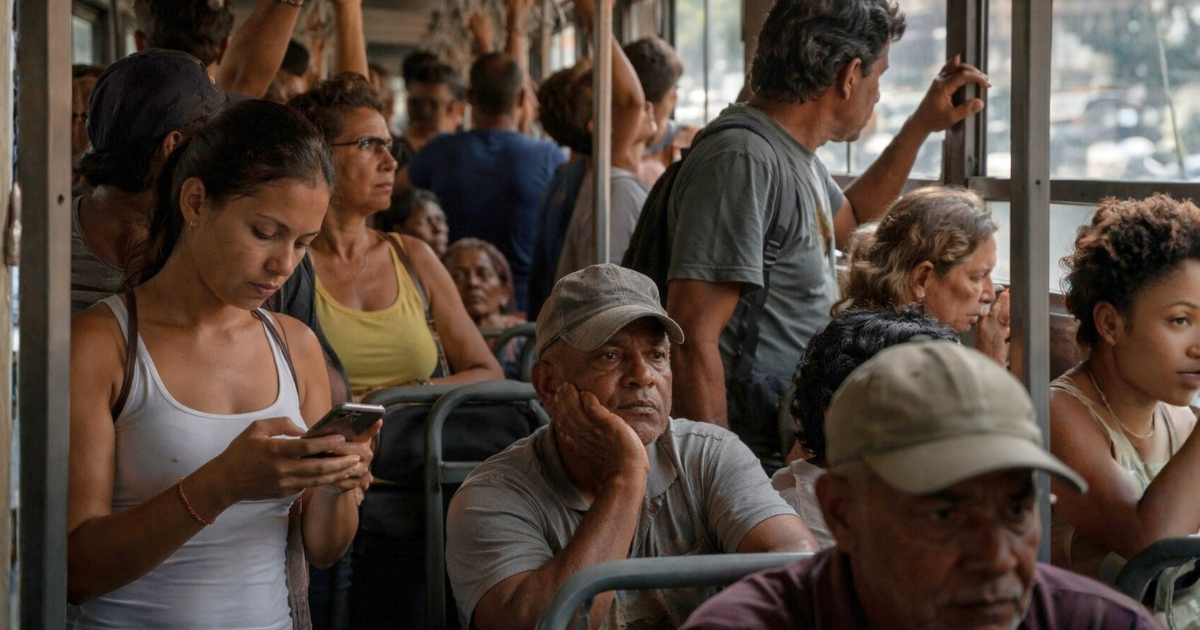
By 2025, Cuba is no longer characterized by anger or hope, but by something deeper: exhaustion. This isn't resignation or complacency; it's weariness. It's the realization, ingrained through countless broken promises, that nothing will change as long as power remains in the same hands. In the face of a regime that has spent decades managing scarcity and blaming the world for its failures, many Cubans have chosen to emotionally disconnect, to survive without expectation.
For over sixty years, authority in Cuba has persisted through speeches and slogans. Reforms that never materialize, plans that fail, external scapegoats repeated like a mantra. Every unfulfilled announcement, every repeated lie, has eroded what little trust remained. No one believes in the revolutionary miracle anymore. Not even those who still repeat it in public.
Daily life is a constant testament to this silent defeat. Endless lines, power outages, hospitals lacking medications, and wages insufficient to buy food. The country operates thanks to remittances, familial solidarity, and the ingenuity of a people surviving despite the State. Cubans don't expect solutions from above because they know that above, there are no answers—only excuses.
The authorities mistake silence for compliance, but they're wrong. What's on the streets isn't loyalty; it's frustration. People have stopped protesting not because they agree, but because they're exhausted. Dissent is costly, and fear has become a habit. For years, the regime has taught that having an opinion can cost you your job, your freedom, or your children's future. Thus, apathy prevails—not as genuine indifference, but as a defense mechanism.
Many have decided to leave. Mass emigration is not merely an economic phenomenon; it's a cry of rupture. Every young person leaving the country is voting with their feet. For many, leaving is the only free choice that still makes sense. Those who stay do so out of necessity, not hope. Exile has become the space where Cubans breathe the freedom denied to them at home.
However, beneath this surface of exhaustion lies something the regime fears: memory. The Cuban people know who has lied, who has oppressed, who has turned the nation into a familial prize. They also know that no system can sustain itself indefinitely on misery and fear. When there's nothing left to lose, even exhaustion can become the seed of change.
Today, Cuba is a weary nation, but not a defeated one. Behind every vacant stare is a story of silent resistance. And although the authorities may attempt to project stability, everyone knows there is no stability in hunger, no sovereignty in repression, no dignity in enforced obedience. Cubans don't expect anything from the authorities because they realized long ago that true hope can only come from themselves.
Indifference, then, is not defeat: it's the pause before awakening. A country without hope cannot endure indefinitely, and that day, sooner or later, will come. No rhetoric can cover it up.
Understanding the Cuban Struggle: Common Questions
Why are Cubans emotionally disconnecting from the regime?
Many Cubans are emotionally disconnecting from the regime due to decades of unfulfilled promises and persistent economic hardship. This detachment is a mechanism to survive without the expectation of change.
What drives the mass emigration from Cuba?
Mass emigration from Cuba is driven by a lack of economic opportunities, political repression, and the desire for personal freedom. For many, leaving is seen as the only meaningful choice available.
How does the Cuban regime interpret public silence?
The Cuban regime often misinterprets public silence as obedience, failing to recognize it as a sign of widespread exhaustion and disillusionment with the current state of affairs.