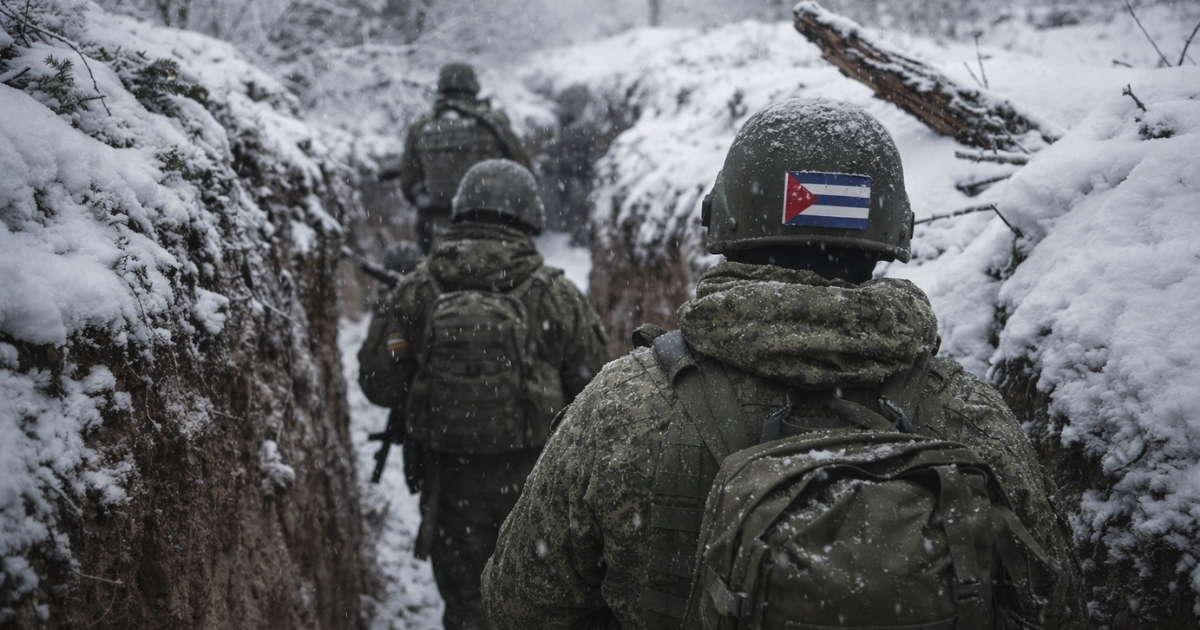
Over the past two years, a tangled web has emerged involving the recruitment of Cubans as mercenaries to bolster the Russian military in Ukraine. This article provides a comprehensive timeline of the key events in this scandal—from initial reports in 2023 to the latest revelations in 2025—sourced from verified journalistic reports and firsthand accounts.
Initial Reports and Official Responses: 2023
During the summer of 2023, reports surfaced that young Cubans were being lured to fight in Ukraine under the guise of false job offers. Russian official Vladímir Shkunov, associated with the Russia-Cuba Friendship Society, was identified as a pivotal recruiter. He reached out to Cubans, particularly ex-military personnel, via social media platforms. Shkunov managed a Facebook group titled “Rusia para cubanos,” where he promised high-paying construction jobs that were, in fact, military contracts. By late June 2023, Shkunov was seen at official events in Moscow alongside Cuban minister Álvaro López Miera, reflecting his close ties with Cuba’s leadership. These connections implied a possible tacit approval, as Cuba's ambassador to Russia, Julio Garmendía, stated that the regime did not oppose the legal participation of Cuban citizens in Putin's "special military operation."
The scandal erupted in August 2023 when two young Cubans reported from Russia that they had been deceived; they left Cuba with contracts for construction jobs but ended up conscripted as soldiers. Their families confirmed that they believed they were going for civilian work, unaware they would be sent to the front lines. This practice of offering civilian jobs to enlist mercenaries was beginning to be exposed.
On September 5, 2023, the Cuban government issued its first official statement, denying any involvement in sending youth to war and claiming it was a human trafficking network operating out of Russia. However, they acknowledged that their Ministry of the Interior had identified Cubans living in Russia and others coming from the Island among the recruits. Cuba vowed to take "vigorous action" against those involved.
Just two days later, on September 7, the first arrests were announced: 17 individuals detained for their connections to the network. Some confessed to enlisting voluntarily in exchange for residency and money. They were charged with human trafficking and mercenarism. Meanwhile, independent media continued to uncover details implicating Cuban officials and the regime's tolerance of the phenomenon.
Ongoing Recruitment and Emerging Evidence: 2024
Throughout 2024, the issue nearly vanished from official media, but recruitment persisted secretly. Scores of young Cubans continued traveling to Moscow on tourist or student visas, only to be sent to military camps. The criminal investigation promised by Havana was never publicly disclosed, fueling suspicions of state complicity.
International investigations identified Yelena Smírnova, a Russian citizen linked to the FSB, as a principal operator. Her network, based in Riazán, reportedly recruited over 3,000 foreigners—mostly Cubans—with promises of salaries up to $2,000 monthly and expedited Russian citizenship. Once in Russia, the recruits were coerced into signing military contracts in a language they did not understand, and their pay was withheld. Smírnova was arrested in April 2024 for fraud, but the recruitment networks continued under different intermediaries, including Cuban residents in Russia.
International Confirmation and Diplomatic Fallout: 2025
In May 2025, the Ukrainian humanitarian project “Quiero Vivir” published a list of 1,028 Cubans recruited by the Russian army, confirming the scale of the issue. By June, the U.S. State Department labeled the recruitment as “state-sponsored human trafficking by Cuba.” According to their report, the regime facilitated the departure of citizens through accelerated passport issuance and neglecting migration controls.
In September, Ukrainian military intelligence (GUR) estimated that Russia had recruited at least 20,000 Cubans, making the Island the primary source of foreign combatants for Moscow. By October, the matter had become a diplomatic flashpoint between Cuba, Ukraine, and the United States. Washington accused Havana of actively collaborating with the Russian invasion, which the Cuban government vehemently denied. Nonetheless, international media investigations documented regular flights between Moscow and Varadero transporting groups of young men.
In November 2025, the Ukrainian parliament revealed that it had identified the bodies of 39 Cubans killed in action. Additionally, Ukraine held four Cubans captured alive and expressed willingness to consider their release if Cuba freed political prisoners. This humanitarian gesture highlighted the connection between the mercenaries' tragedy and the human rights situation on the Island.
By December 2025, the outcome was grim: hundreds of recruited Cubans were abandoned by the Russian army, left without pay or support. Many vanished without a trace, leaving their families in Cuba in silence and uncertainty. Most recruits were young men, drawn by the promise of a salary twenty times that of Cuba, only to find themselves in a brutal war, without training or rights. Meanwhile, the Cuban regime remains silent in the face of a tragedy that showcases the desperation of its people and the complicity of those who should protect them.
Understanding the Crisis of Cuban Mercenary Recruitment
How did the recruitment of Cubans for the Russian army begin?
The recruitment began under the pretense of offering high-paying construction jobs in Russia. However, once they arrived, Cubans were forced to sign military contracts, becoming mercenaries for the Russian army in Ukraine.
What was the Cuban government's response to the recruitment scandal?
The Cuban government initially denied involvement, claiming the issue was due to a human trafficking network in Russia. However, they acknowledged some Cubans were recruited and promised to take action against those involved.
What has been the international response to the recruitment of Cubans?
The international community, including the U.S. State Department, has condemned the recruitment as state-sponsored human trafficking by Cuba. Diplomatic tensions have risen, particularly with the United States and Ukraine.