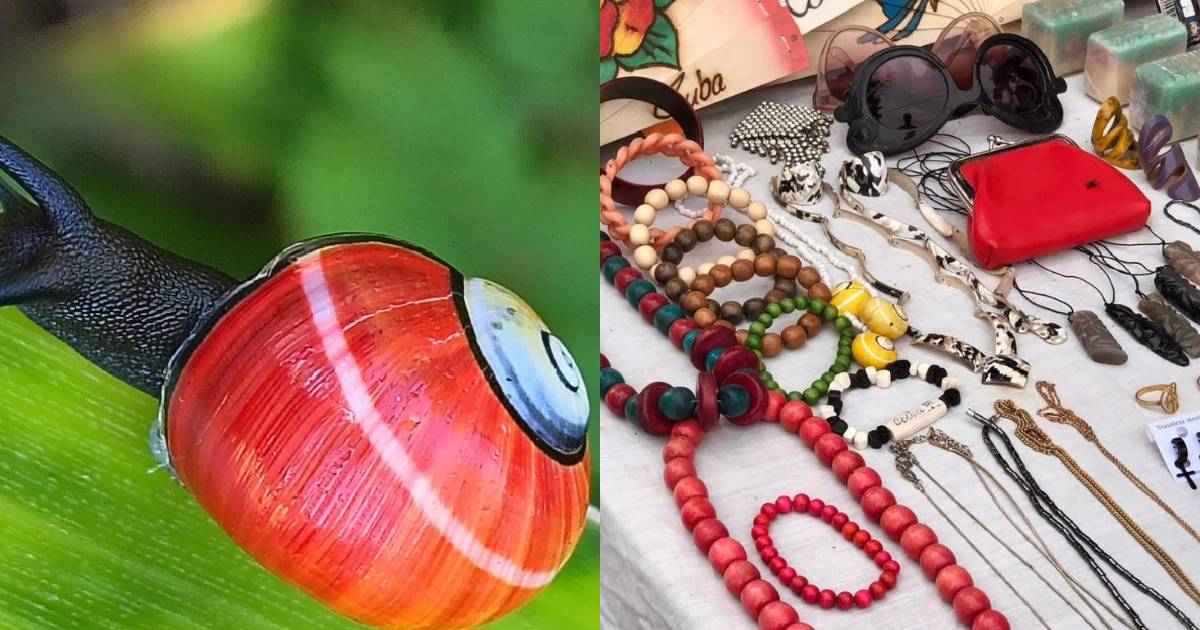
A recent citizen complaint regarding the sale of crafts made with Polymita snails has prompted the Ministry of Science, Technology and Environment (Citma) to launch an investigation into the illegal exploitation of protected species in Cuba.
Armando Rodríguez Batista, head of the sector, highlighted the usage of these mollusks in handcrafted items after receiving a tip-off about a sales stall in Havana. He addressed the issue in a Facebook post on December 21, describing the practice as illegal and a direct threat to the nation's natural and cultural heritage.
Rodríguez emphasized that the Polymita, an endemic mollusk of Cuba, is critically endangered and represents a crucial part of the national biodiversity. He stressed that preserving this species is not only a legal requirement but a moral duty to future generations. Turning these creatures into ornamental objects, he argued, strips the nation of an irreplaceable legacy.
Creative Alternatives Encouraged
The minister has instructed authorities to trace the origin of the crafts in question and enforce appropriate penalties. Additionally, he urged artisans to explore creative alternatives that honor biodiversity by using sustainable materials and designs that celebrate natural beauty without causing harm.
In his message, Rodríguez warned that this is not an isolated incident. There have been reports of other endangered species, such as hawksbill turtles, queen conchs, and cigua, being used for artisanal purposes. These practices underscore the urgent need to enhance environmental education and promote a cultural shift that prioritizes life and diversity over immediate economic gain.
Public Reaction and Institutional Responsibility
The publication sparked numerous reactions. The Antonio Núñez Jiménez Foundation for Nature and Humanity called for increased collaboration between environmental entities, regulatory bodies, and artisan associations, along with a strengthened environmental dialogue to counteract practices often stemming from ignorance.
Some comments stressed the importance of citizen responsibility in rejecting the trade of protected species and reporting illegal activities. Others highlighted the role of institutions like the Cuban Fund of Cultural Assets and state inspectors in monitoring artisan sales, particularly among self-employed workers. A more stringent enforcement of the law was demanded, with the exploitation of polymitas and hawksbill turtles in crafts labeled not as folklore but as environmental crimes causing irreversible damage.
The Unique Beauty of Polymita Snails
The Polymita, derived from Greek meaning "many stripes," is a genus of terrestrial snails native to Cuba, renowned for their vivid colors and unique shell patterns. Conservation biologist Bernardo Reyes-Tur from the University of Oriente and evolutionary geneticist Angus Davison from the University of Nottingham are leading efforts to prevent the extinction of the six known Polymita species from their native forest habitats in eastern Cuba, as reported by BBC News in August.
Among the six species, the most endangered is Polymita sulphurosa, described as having a lime green color with blue flame patterns around its spirals and striking orange and yellow bands along its shell. However, all species are noted for their vibrant colors, an extraordinary trait that remains an evolutionary mystery.
In recognition of their unique beauty, the Polymita Picta was named Mollusk of the Year 2022 in an international survey conducted by several scientific institutions.
Conservation Efforts for Cuban Polymita Snails
Why are Polymita snails important for Cuba's biodiversity?
Polymita snails are a crucial part of Cuba's biodiversity as they are endemic to the island and are considered symbols of its natural heritage. Their preservation is vital for maintaining ecological balance and honoring the country's unique biological legacy.
What actions are being taken to protect Polymita snails?
Efforts to protect Polymita snails include tracing the origins of crafts made from these mollusks, enforcing penalties for illegal trade, and promoting the use of sustainable materials in artisan crafts. Additionally, conservationists are working to preserve their natural habitats.
How can the public help in the conservation of Polymita snails?
The public can contribute to the conservation of Polymita snails by rejecting the purchase of products made from these endangered species, reporting illegal activities, and participating in environmental education initiatives to raise awareness about the importance of biodiversity.