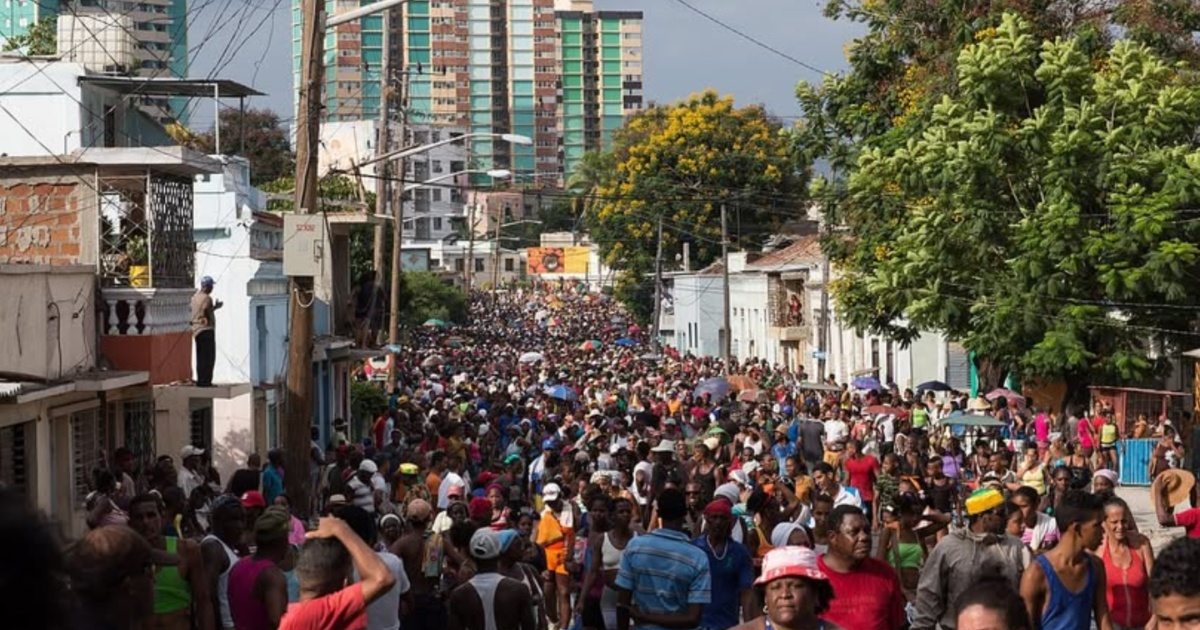
In Santiago de Cuba, rumors began to swirl about the cancellation of the traditional Los Hoyos Conga, scheduled for December 27 as a year-end celebration. No official announcements, public notices, or institutional explanations were provided to clarify the situation.
The information first emerged on journalist Yosmany Mayeta Labrada's profile, where he described the incident as a form of "paperless censorship" aimed at dampening public participation.
Concerns grew when word spread that the Santiago conga, which was set to move through the city's neighborhoods, might have been called off. However, there was no confirmation or documentation to support this claim.
A post on the reporter's page invited Santiago residents to join the "Súbelo Mayeta" challenge: record a creative video from the conga itself, lasting 30 seconds to a minute, chanting a phrase deeply rooted in Santiago's identity.
The most creative video with the most positive reactions would receive a $100 prize, according to the challenge details.
Mayeta noted that this call for cultural expression, creativity, and free participation shifted the tone of the conversation.
According to investigations quoted by Mayeta, the Provincial Directorate of Culture in Santiago de Cuba, following guidelines from the Communist Party of Cuba, allegedly spread the cancellation rumor to prevent videos from being recorded during the challenge and to deter participation without formally banning the event.
Mayeta himself reported that, after consulting sector workers, there was no official suspension at that time: no documents, circulars, or statements confirmed the cancellation—only unverified rumors among musicians and comments in the realm of hearsay.
By mid-afternoon, around 3:00 p.m., Mayeta noted that the conga had yet to commence its usual December 27 procession.
Meanwhile, many musicians from various neighborhood congas claimed it was canceled, though this lacked confirmation from the Provincial Directorate of Culture.
In his report, the journalist emphasized that the conga is not an institutional favor but a symbol of streets, community, and identity. The use of rumors to instill fear and confusion exposes a "fear of free culture" not under official control.
The traditional Santiago conga invasions serve as a "release valve" for public discontent, featuring spontaneous chants where people critique the regime.
This aspect, combined with the massive gathering of people, makes the regime closely monitor this cultural event, which could quickly escalate into a large-scale public protest.
Censorship and Cultural Expression in Cuba
Why was the Los Hoyos Conga rumored to be canceled?
The rumor suggested that the cancellation was intended to prevent videos from being recorded during a creative challenge and to decrease participation, without officially banning the event.
How did the public react to the cancellation rumors?
Many in the community were concerned and confused, as there was no official confirmation, leading to speculation and further suspicion of censorship.
What role does the conga play in Santiago's culture?
The conga is a significant cultural expression that represents community identity and serves as a platform for spontaneous public critique of the regime.