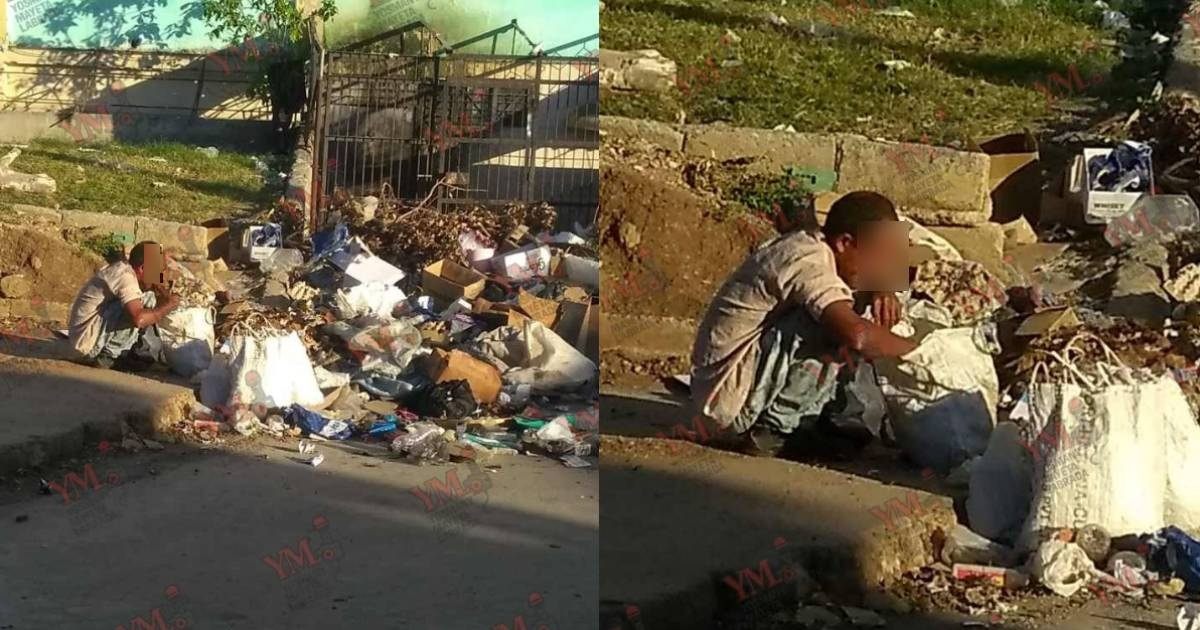
In Santiago de Cuba's bustling center, the sight of a man rummaging through garbage for food starkly highlights the everyday struggle with hunger on the island. This scene has sparked widespread reactions, revealing similar experiences across various regions of Cuba.
Independent journalist Yosmany Mayeta Labrada brought attention to this harsh reality on Friday through his Facebook account. He reported on a man searching for food among trash behind the "18 plantas de Garzón" building, a familiar sight in what is known as the Hero City.
Mayeta emphasized that this instance is neither isolated nor unusual but rather a vivid portrayal of daily life. He attributes the dire situation to insufficient wages, inadequate pensions, and markets with either empty shelves or prices unreachable for the majority.
“This is real hunger, severe hunger,” he wrote, contrasting the official rhetoric that blames such scenes on laziness or shamelessness.
The journalist criticized the official narrative of resilience and sacrifice, warning about the dangers of accepting human degradation as normal. He argued that the gravest issue is not witnessing these scenes but becoming desensitized to them, losing both outrage and dignity in the process.
The post elicited numerous responses from citizens who recognized the individuals depicted and confirmed their long-standing struggle for survival. One user mentioned the individuals as disabled brothers, "the twins," who have always relied on charity in her neighborhood.
Others shared that they frequently saw these men behind central establishments, awaiting food scraps. Several readers broadened the discussion beyond Santiago de Cuba, describing similar scenes in Havana, such as elderly people begging in traffic or others scavenging for food and clothing.
The recurring theme in the comments was that these people are not "in disguise," as the former Minister of Labor and Security suggested—a statement that led to her dismissal—but rather exposed to neglect and hardship, with state institutions failing to respond.
Reactions converged on the notion that the image is neither exaggerated nor exceptional but a clear indicator of a deeper social crisis, where extreme poverty and hunger have become part of the urban landscape in many Cuban cities.
In a recent speech, the ruler Miguel Díaz-Canel once again demonstrated the disconnect between power and the reality faced by most Cubans. During the XI Plenum of the Communist Party of Cuba's Central Committee, he attempted to disguise the economic and social decline by replacing “poverty” with "material scarcity," while attributing the country's hardships to the "blockade" and "enemy hatred."
Understanding the Reality of Poverty in Cuba
What is causing the current hunger crisis in Cuba?
The hunger crisis in Cuba is primarily due to insufficient wages, inadequate pensions, and markets that are either empty or have prices that are unaffordable for most people.
How has the Cuban government responded to the poverty issue?
The Cuban government, particularly under Miguel Díaz-Canel, has often downplayed the severity of poverty by using euphemisms like "material scarcity" and blaming external factors such as the "blockade" and "enemy hatred."
Are scenes of people scavenging for food common across Cuba?
Yes, such scenes are not uncommon and have been reported in several cities including Santiago de Cuba and Havana, indicating a widespread social issue.