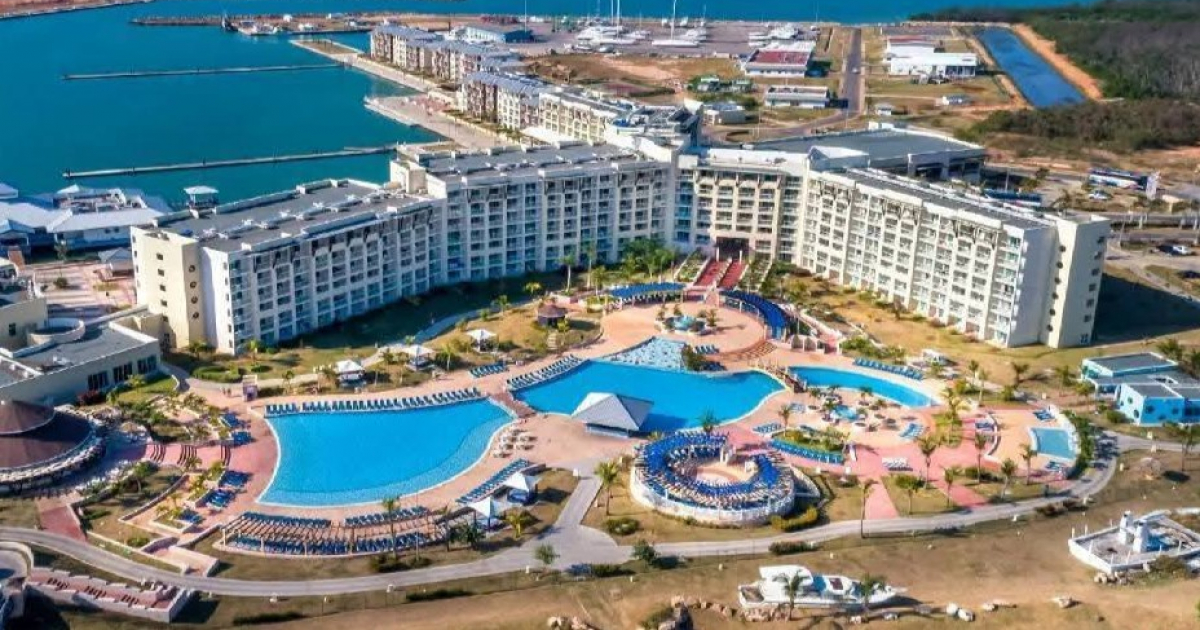
Amidst Cuba's most severe crisis in decades—characterized by extended blackouts, chronic food shortages, and a decimated purchasing power—the tourism conglomerate Gaviota, under the military-run GAESA holding, has celebrated the reopening of a high-standard hotel in Varadero, a premier tourist hotspot.
Gaviota took to Facebook to announce the unveiling of a "completely refurbished" hotel, now managed by the Italian chain Domina. This new "tourism product" promises luxury, comfort, and exclusive seaside experiences.
The announcement highlighted the hotel's updated dining areas, leisure zones, relaxation spaces, and stunning ocean views, all designed to attract international visitors in search of "authenticity" and upscale amenities at Cuba's leading beach resort.
"Welcome to Domina Marina Varadero!" declared the state-run company, inviting travelers to "discover" this new chapter for the complex. Domina itself described the venue as a place where "every detail reflects excellence and exclusivity."
However, this promotional enthusiasm stands in stark contrast to the reality faced by most Cubans. While resources are invested in tourist facilities catering to foreign visitors, countless families endure days with over 12 to 20 hours without electricity, empty markets, rampant inflation, and wages insufficient to cover basic needs.
The reopening of another luxury hotel is perceived as further evidence of the disconnect between the state's priorities and the urgent needs of the populace.
Some users responding to the official posts identified the property as the former Meliá Marina Varadero, sparking questions about the change in management. "Why did Meliá leave?" one commenter inquired. Another, who claimed to have worked at the site, remarked on the previous chain's neglect and expressed hope that the new management would "revive" the place.
The hotel's reopening underscores a longstanding government policy: a heavy reliance on international tourism, even as visitor numbers decline and many hotels remain partially occupied or empty, falling short of profitability.
Nevertheless, the construction, renovation, and reopening of tourist complexes continue unabated, with investments funneled into a sector largely controlled by the military apparatus, while essential areas like food production, power generation, and public transportation remain in decline.
In this context, the reopening of Domina Marina Varadero is not merely the launch of another luxury enclave on the northern Matanzas coast. It symbolizes an economic model that favors tourism revenues managed by GAESA, even as the country grapples with a social emergency that affects millions daily.
Insights into Varadero's Hotel Management Shift
Why did Meliá leave the Varadero hotel?
The specific reasons behind Meliá's departure from the Varadero hotel have not been detailed, but there are suggestions of management neglect and a strategic shift to new administration under Domina.
How does the reopening of luxury hotels impact the Cuban population?
While luxury hotels continue to reopen, offering facilities mainly for international tourists, the majority of Cubans face severe shortages in essential services and goods, highlighting a disconnect between state investments and public needs.
What does the shift to GAESA control signify for Cuba's economy?
The shift to GAESA control reflects an economic model prioritizing tourism revenue over essential sectors, indicating a focus on foreign income despite the country's ongoing social challenges.