Recently, a Cuban state TV official's suggestion that citizens should cut back on or even eliminate rice, potatoes, and pasta from their diet ignited a firestorm of outrage on social media.
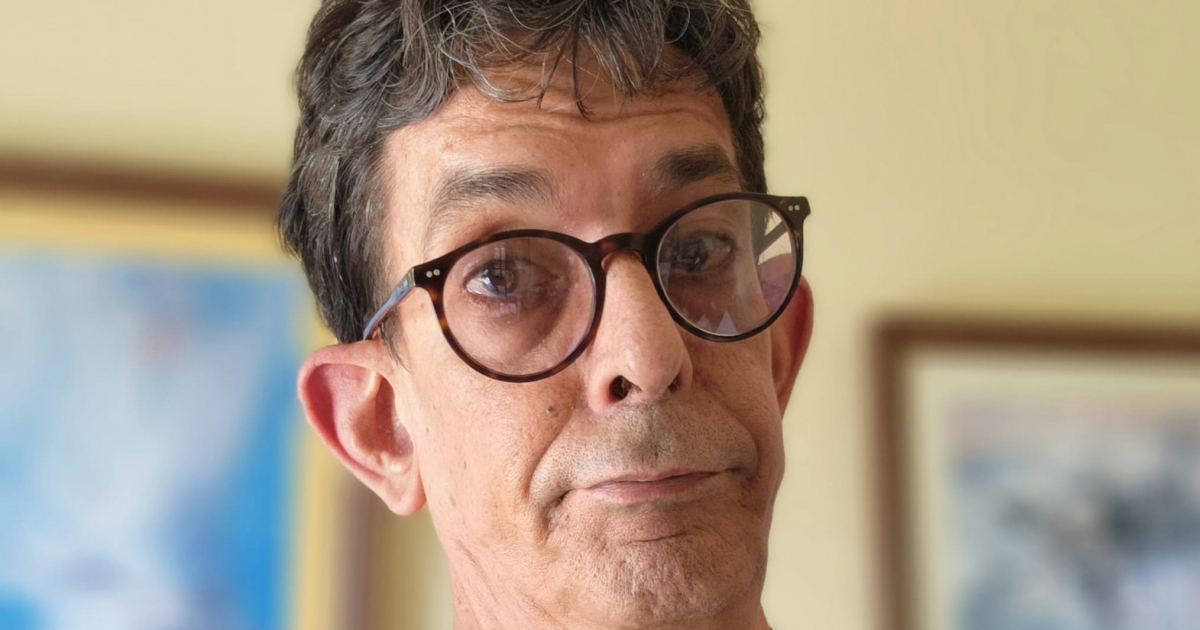
Comedian Ulises Toirac responded with a mix of irony and anger, capturing the frustration of millions of Cubans who are fed up with a government that not only fails to produce food but also seems to blame people for being hungry.
Through his Facebook page, Toirac reminisced about the days when humorists had to "tread very carefully" to survive censorship. He contrasted that era with the current situation, where a bureaucrat casually suggests what the populace should eat amid a "food crisis that makes you want to cry."
The comedian expressed his disbelief, writing, "And now, in the midst of a food crisis that makes you want to cry, someone decides to say we shouldn't eat so much rice, potatoes, or spaghetti."
Rejecting the notion that these foods are not native to Cuba, Toirac debunked the argument using the nation's history and culture. He highlighted the country's mixed heritage, shaped by Africans, Europeans, Chinese, Arabs, and Latin Americans, who have left their mark not only in music and religion but also in culinary traditions.
"My grandparents... ate rice, spaghetti, and potatoes! What traditions is he talking about?" Toirac questioned, exposing the disconnect between official rhetoric and reality.
But his main point was even more profound: in today's Cuba, the vast majority of citizens no longer have the freedom to choose what they eat. "NORMAL PEOPLE in this country no longer CHOOSE what they will eat. The privileged do. People grab whatever they can," he emphasized, pointing out that discussing "dietary habits" in a context of chronic shortages is not only absurd but also offensive.
He condemned the TV commentary as reprehensible and sarcastically asked for at least a modicum of respect: "A little respect, please. We already know you're adrift. Don't give more signals, people are fuming!"
Toirac's words join a chorus of reactions criticizing the state apparatus's attempt to shift the responsibility for the food crisis onto the people. On social media, activists, journalists, and ordinary citizens mocked the official narrative that suggests the problem is not agricultural unproductivity or lack of investment but rather that Cubans "eat poorly" or maintain "wrong habits."
At the center of this controversy is Dr. Roberto Caballero, a member of the National Executive Committee of Agricultural and Forestry Technicians, who on the TV program "Cuadrando la Caja," claimed that food sovereignty is hindered by the Cuban diet. He argued that potatoes don't suit the climate and that rice is an acquired habit that can be changed, even stating with a smile, "it's easier than ever to introduce that change" due to scarcity, because "whatever you put in front of people at the market will sell."
The problem, as numerous users pointed out, is that neither rice nor potatoes, nor the so-called "native" alternatives—malanga, yucca, sweet potatoes, or yams—are regularly found in the markets. Meanwhile, wages are eroded by inflation, fields remain overrun with marabú weed, pests spread unchecked, and farmers face a system that prevents them from freely selling what they produce.
In this context, the suggestion to "change the diet" seems like a mockery to families spending hours searching for something to put on the table. This is why Ulises Toirac's reaction resonated so strongly: it was not just a joke or a personal outburst, but a portrait of the chasm between official rhetoric and the everyday reality of a country where, increasingly, eating has become an act of survival.
Understanding Cuba's Food Crisis and Toirac's Response
What triggered Ulises Toirac's reaction on social media?
Ulises Toirac reacted to a state TV official's suggestion for Cubans to reduce or abandon the consumption of rice, potatoes, and pasta, which sparked widespread outrage on social media.
Why do many Cubans feel they have no choice in what they eat?
Due to chronic shortages and economic constraints in Cuba, most people cannot choose what they eat, and instead, they must accept whatever food is available.
What cultural argument did Toirac make against the official's suggestion?
Toirac argued that the diverse cultural heritage of Cuba, influenced by various ethnic groups, has naturally incorporated foods like rice, spaghetti, and potatoes into the nation's culinary traditions.