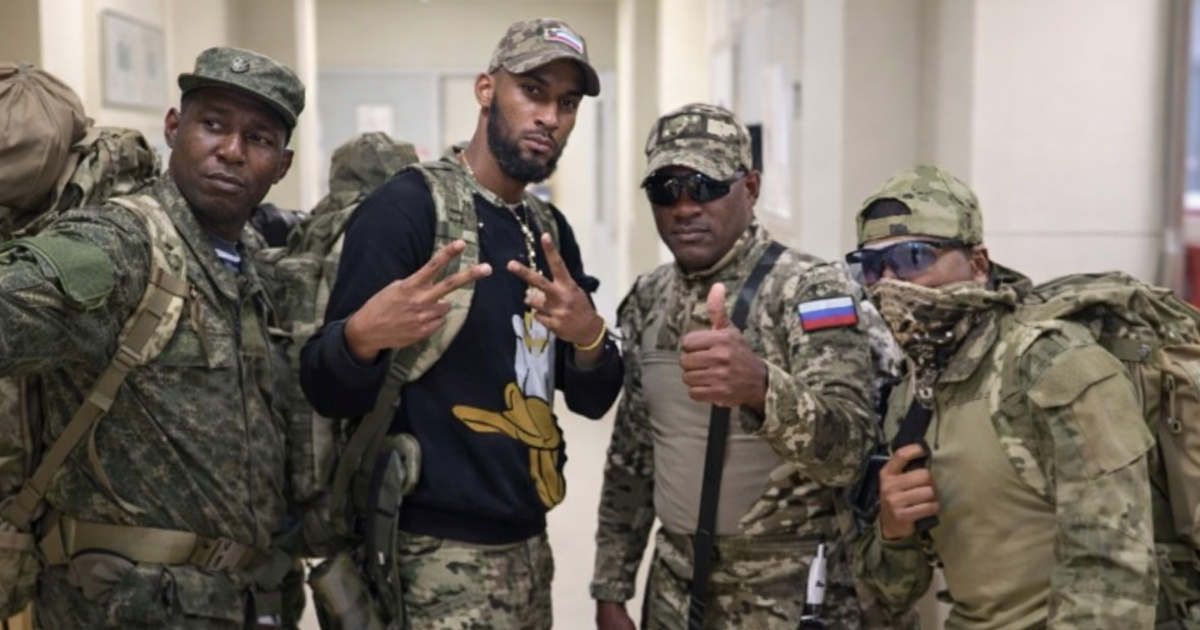
Ukrainian foreign intelligence has revealed that Russia continues its systematic recruitment of foreign nationals for its ongoing conflict against Ukraine. Among the "primary sources" of recruitment, Cuba is highlighted, alongside post-Soviet nations and countries from the so-called "Global South."
According to Oleg Ivashchenko, head of the Ukrainian Foreign Intelligence Service, more than 150 foreigners from 25 different countries were identified by intelligence services in December as being recruited by the Russian military.
Additionally, Ivashchenko stated that another 200 individuals are reportedly preparing to join the Armed Forces of the Russian Federation.
The Ukrainian intelligence chief emphasized that the primary incentives for these recruits are economic gains, the simplified process for obtaining citizenship, and the possibility of amnesty for convicted individuals.
Ivashchenko further claimed that Moscow deliberately exploits the economic instability of impoverished nations and the limited avenues for legal migration, transforming these conditions into tools of "control and pressure."
Moreover, the participation of foreigners in the conflict also serves a political and propaganda purpose, according to Ivashchenko. Russia aims to portray the war as a global issue rather than a bilateral confrontation, using the presence of nationals from China, Cuba, and African countries as supposed support from the non-Western world.
The statement also notes that the South African government is in discussions with Russia regarding the return of 17 men fighting for Russia in Ukraine. Previously, South African police detained four men allegedly on their way to Russia, suspected of violating local laws concerning assistance to foreign armed forces.
Role of Cuban Mercenaries in Russia's War
Cuba stands among the top contributors of mercenaries to the Russian army in its invasion of Ukraine.
The Ukrainian Center for Countering Disinformation (CCD) reported that Uzbekistan (2,715), Tajikistan (1,599), Kazakhstan (1,190), Belarus (1,338), and Cuba (1,028) are some of the leading contributors to the war against Ukraine.
Nonetheless, North Korea has reportedly contributed the most, with approximately 12,000 recruits.
In total, about 18,000 foreign nationals from 128 countries have been involved in the invasion since 2022 as part of Russian forces, lured through deception, coercion, or promises of financial compensation, according to the source.
Additionally, the international recruitment drive is part of a systematic practice involving state actors and private military companies.
Between 1,000 and 25,000 Cubans have been sent to Russia to fight in Ukraine.
Recently, Ukrainian authorities have identified the bodies of 39 deceased Cubans and have expressed their commitment to continuing efforts to determine the identities of more compatriots and inform their families "what happened to these men," as explained by Maryan Zablotskiy, Chairman of the Pro-Free Cuba Committee of the Ukrainian Parliament, during a press conference in Miami.
Zablotskiy elaborated that, in addition to the 39 identified, there are "hundreds of deceased Cubans" whose identities remain unknown.
He indicated that Ukraine holds four Cuban prisoners, who are reportedly treated humanely, and proposed two potential solutions for their situation: exchanging them for Ukrainian prisoners held by Russia or considering their release on humanitarian grounds if the Cuban government simultaneously frees a group of political prisoners on the island.
The deputy also highlighted that since the beginning of the invasion, Russia has not requested foreign combatants in prisoner exchanges, focusing solely on Russian nationals, leaving mercenaries from other countries in a more precarious situation.
Insight into Cuban Mercenary Involvement
How many Cubans have been recruited by Russia for the war in Ukraine?
Between 1,000 and 25,000 Cubans have been sent to Russia to fight in Ukraine.
What are the motivations for foreign nationals to join the Russian forces?
The primary motivations include economic benefits, simplified citizenship processes, and the possibility of amnesty for those convicted.
What is the political significance of foreign participation in the war?
Russia seeks to depict the conflict as a broader global issue, rather than a bilateral confrontation, by involving nationals from countries like China, Cuba, and African nations.
How has the Ukrainian government responded to the involvement of Cuban mercenaries?
Ukrainian authorities have identified 39 deceased Cubans and are working to identify more to inform their families. They are also considering humanitarian solutions for Cuban prisoners they hold.