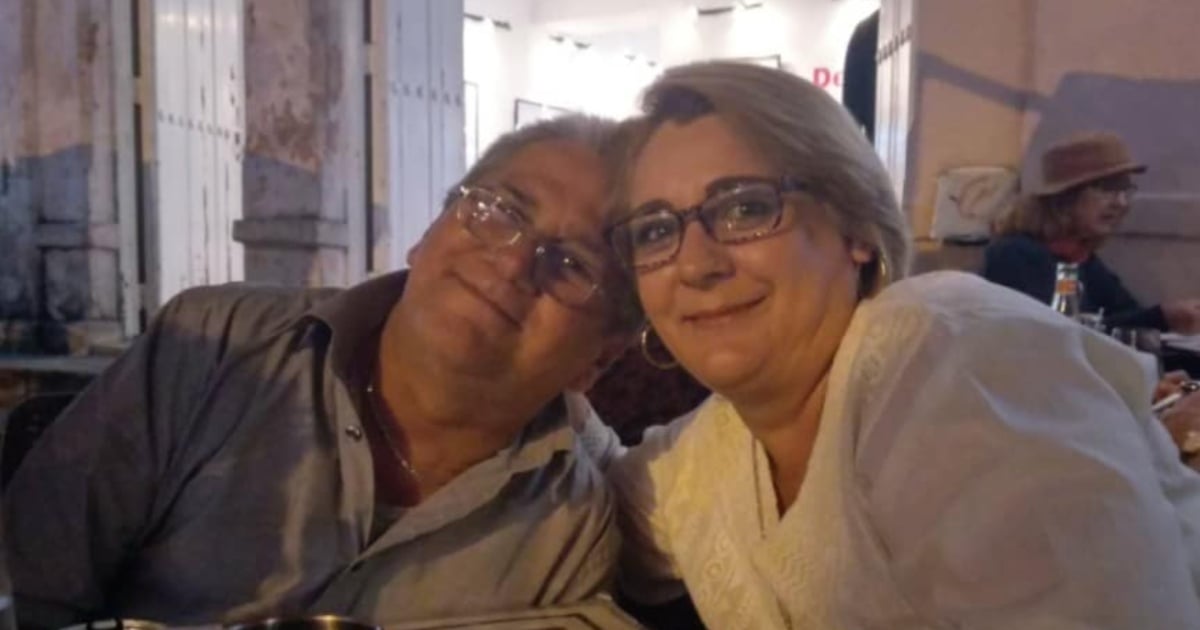
Renowned television director Armando Arencibia Valhuerdi passed away this Tuesday, as reported by the ICRT. They described him as a creator of a "sustained and diverse" body of work in Cuban audiovisual media, characterized by artistic sensitivity, professional rigor, and a continual passion for storytelling through the screen.
Born in Matanzas, Arencibia faced personal challenges from an early age: at 12, he was diagnosed with a congenital condition—being born with only one kidney—that imposed physical limitations, yet never hindered his creative drive.
The ICRT note also highlights his family background: he was raised by a mother who single-handedly brought up five sons following the early death of their father, a figure Arencibia acknowledged as a crucial source of strength and character.
His journey to film and television was not straightforward. After graduating in Philology, he entered the industry through amateur work and an internship at ICAIC. The turning point came when he joined the FAR Film Studios, an experience that led to his selection as one of the seven Cubans in the inaugural class of the San Antonio de los Baños International Film and Television School (EICTV) in 1978.
From then on, he combined his philological background with his training as a director of audiovisual media. After graduating from EICTV, he continued at the FAR Film Studios, primarily producing documentaries. Over time, his interest in exploring fiction brought him to ICRT.
At ICRT, he developed a significant part of his career. He began as an assistant director in the teleplay "Falsa Moneda" and later directed titles such as "La mujer que me tocó," "Entre la espada y la pared," "No parqueo," and the story "El almacén de los mundos," featuring Aramís Delgado, according to the note.
The text highlights that much of his work had a humorous touch, allowing him to frequently collaborate with actors like Rigoberto Ferrera, Otto Ortiz, and Sheila Roche, while also acknowledging the creative contributions of significant performers in the Cuban acting scene.
He is also remembered for television programs like "Un, dos" (1989), "Desde ahora" (1990), "A contratiempo" (1998), the comedy "Sala O" (2014), and more recently, "Te invito al cine," a show on the Educational Channel aired on Friday nights, dedicated to the dissemination and analysis of cinema.
As both a spectator and creator, Arencibia was a critical observer of Cuban audiovisual media: he advocated for generational renewal and valued the democratization brought by the digital era, highlighting works and filmmakers that, in his view, marked a turning point in national film production from the early 21st century.
With his passing, the text concludes, Cuban television loses a director shaped by perseverance, continuous learning, and a deep passion for the craft.
Frequently Asked Questions About Armando Arencibia Valhuerdi
What was Armando Arencibia Valhuerdi known for in Cuban television?
Armando Arencibia Valhuerdi was renowned for his diverse and sustained body of work in Cuban audiovisual media, marked by artistic sensitivity and professional rigor. He had a passion for storytelling and a notable humoristic touch in his productions.
How did Armando Arencibia Valhuerdi begin his career in the audiovisual industry?
Armando Arencibia Valhuerdi started his career in the audiovisual industry through amateur work and an internship at ICAIC. He further developed his skills at the FAR Film Studios and was part of the first class at the EICTV.
What impact did Armando Arencibia Valhuerdi have on Cuban cinema?
Armando Arencibia Valhuerdi was a critical observer of Cuban cinema, advocating for generational renewal and embracing the digital era's democratization. He highlighted impactful works and filmmakers who marked significant changes in national film production.