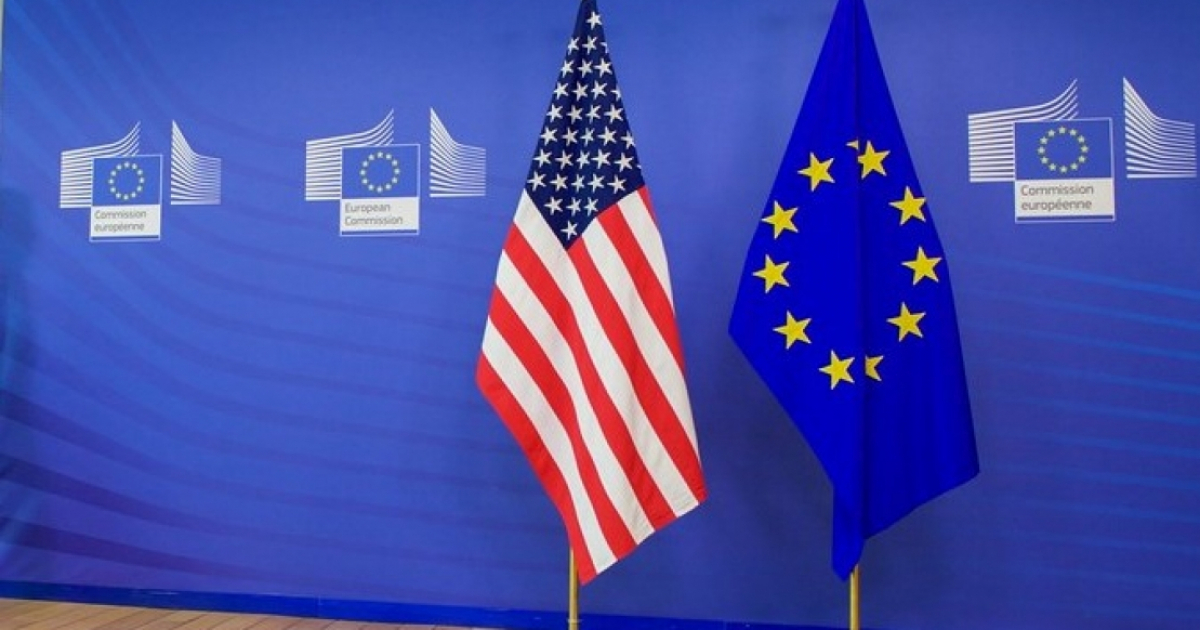
The Trump Administration's decision to bar five European citizens, accused of censoring American voices on social media platforms, has stirred significant discontent across Europe, sparking a new wave of tension between Washington and its longstanding allies.
France, Germany, the European Union, and the United Kingdom have all labeled the action as "unacceptable," arguing that it undermines transatlantic cooperation and challenges Europe's regulatory sovereignty in the digital realm, according to the Associated Press.
Among those banned is Thierry Breton, former European Commissioner for the Internal Market, a pivotal figure in the implementation of the Digital Services Act (DSA). The list also includes Imran Ahmed, head of the Center for Countering Digital Hate, along with other leaders from European organizations dedicated to combating misinformation and hate speech, as reported by EFE.
Upholding European Sovereignty
French President Emmanuel Macron was quick to respond, asserting that Europe will not succumb to external pressures. “We will stand firm and protect Europeans,” he declared on X, following a discussion with Breton.
Macron emphasized that the EU's digital rules were established through a “democratic and sovereign” process, warning that decisions regarding Europe’s digital space will not be made outside the continent.
Similarly, the European Commission defended its right to regulate the digital market in line with its democratic values. “The EU is an open, rules-based market. Our laws ensure a safe, fair, and equitable environment, applied without discrimination,” it stated in an official release.
The European Council President, António Costa, also denounced the U.S. ban, describing it as “unacceptable among allies, partners, and friends.” He vowed that the EU would continue to champion freedom of expression, fair digital standards, and regulatory sovereignty.
Germany and the UK Raise Concerns
From Berlin, German Foreign Minister Johann Wadephul criticized the entry ban — including against leaders of the organization HateAid — as “unacceptable.” He announced that Germany will engage with Washington to clarify the interpretation of European digital regulations to prevent further strain on bilateral relations.
The UK government, while adopting a more measured tone, expressed support for laws and institutions aiming to keep the internet free from harmful content, acknowledging that each nation has the right to set its own immigration policies.
Expanding Diplomatic Conflict
This diplomatic rift follows a €130 million fine imposed by the European Commission on social media platform X, owned by Elon Musk, for violations of the Digital Services Act. Washington perceives these regulations as a form of censorship, whereas Brussels argues they ensure transparency, safety, and fair competition.
U.S. Secretary of State Marco Rubio defended the ban by claiming that the sanctioned Europeans promoted censorship campaigns abroad, posing “potentially severe repercussions” on U.S. foreign policy, a stance Brussels firmly rejects.
Thierry Breton countered by reminding that the Digital Services Act was sanctioned by all 27 EU member states in 2022. “To our American friends: censorship is not where you think it is,” he remarked.
This ongoing dispute highlights a widening rift between the United States and Europe regarding who should govern online discourse and the extent of digital sovereignty, a debate that threatens to evolve from a technological issue into a broader political conflict.
Key Questions on U.S.-EU Digital Tensions
What was the reason behind the U.S. banning five Europeans?
The U.S. banned the five Europeans due to accusations of promoting censorship of American voices on social media, which the U.S. views as harmful to its foreign policy.
How has the European Union responded to the U.S. ban?
The European Union has condemned the ban as unacceptable, defending its right to regulate the digital market according to its democratic principles and emphasizing its regulatory sovereignty.
What impact does this conflict have on U.S.-EU relations?
This conflict introduces a new strain in U.S.-EU relations, challenging transatlantic cooperation and potentially expanding from technological disagreements to broader political issues.