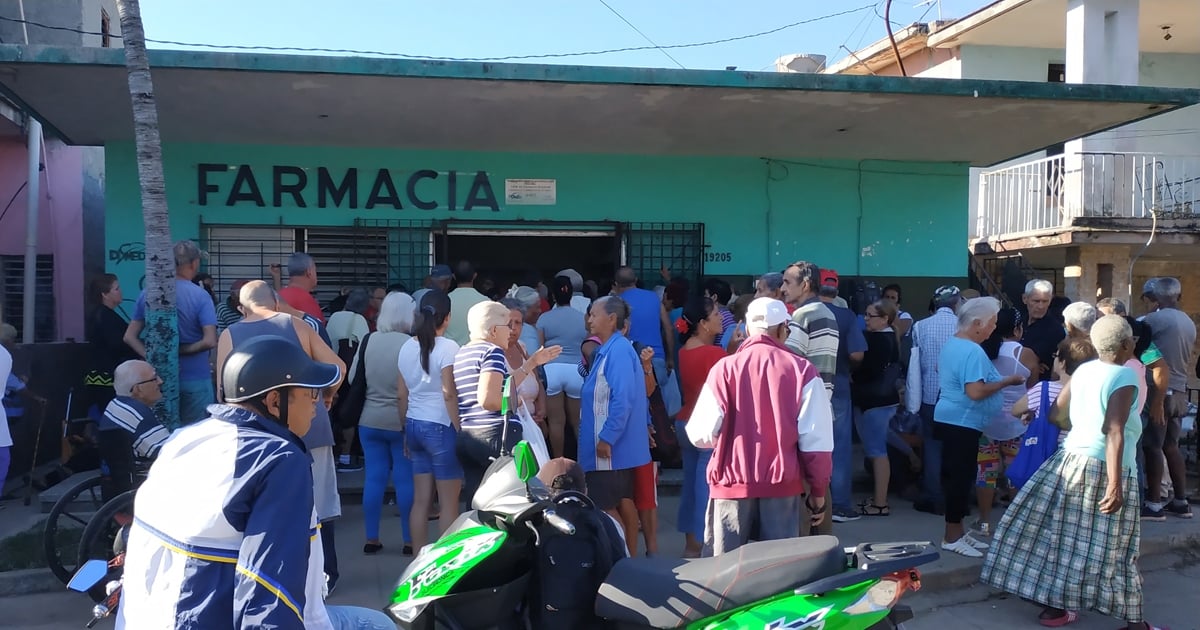
Leaders from Cuba's Ministry of Public Health (MINSAP) have acknowledged that the nation is grappling with a "quite complex situation," with only about 40% of necessary medicines available in pharmacies.
An article from the state-run Cubadebate attempts to blame the ongoing medication crisis on the U.S. embargo and international financial "siege," conveniently overlooking the industrial stagnation caused by a lack of investment and upkeep in national factories.
According to Maylin Beltrán Delgado, head of MINSAP’s Department of Pharmacies and Optics, 33 "extraordinary incidents" have been reported in pharmacies up to October, which include 18 thefts and 10 cases involving controlled substances.
In an effort to address this dire situation, the regime has conducted over 5,000 joint inspections and operations with the Ministry of the Interior across the island's pharmacies.
Nevertheless, even state media concedes that "the lack of medicines is almost total," and the government fails to ensure the supply of treatments for chronic patients.
Rather than focusing on structural solutions, the official discourse emphasizes surveillance, control, and criminalizing the resale of drugs, which many Cubans resort to as their only means of accessing essential treatments.
MINSAP maintains that selling medicines outside the state network "constitutes a crime," yet the informal market continues to thrive as a response to the scarcity.
Furthermore, official drug distribution cycles have been extended to as long as 60 days, while restocking local pharmacies has become erratic and unpredictable.
This focus on regulation, rather than production and supply, highlights a familiar pattern: addressing a crisis of their own making with increased control.
As the government tightens its grip, Cubans are left waiting for medicines that never arrive, often resorting to the black market where they purchase drugs without labels, certified packaging, or medical oversight, risking their health in the process.
Understanding the Cuban Medicine Shortage Crisis
What percentage of medicines are currently available in Cuba?
According to MINSAP, only about 40% of the necessary medicines are available in circulation.
What actions has the Cuban government taken to manage the medication shortage?
The government has conducted over 5,000 inspections and operations in pharmacies, in collaboration with the Ministry of the Interior, but has focused more on surveillance rather than increasing production and supply.