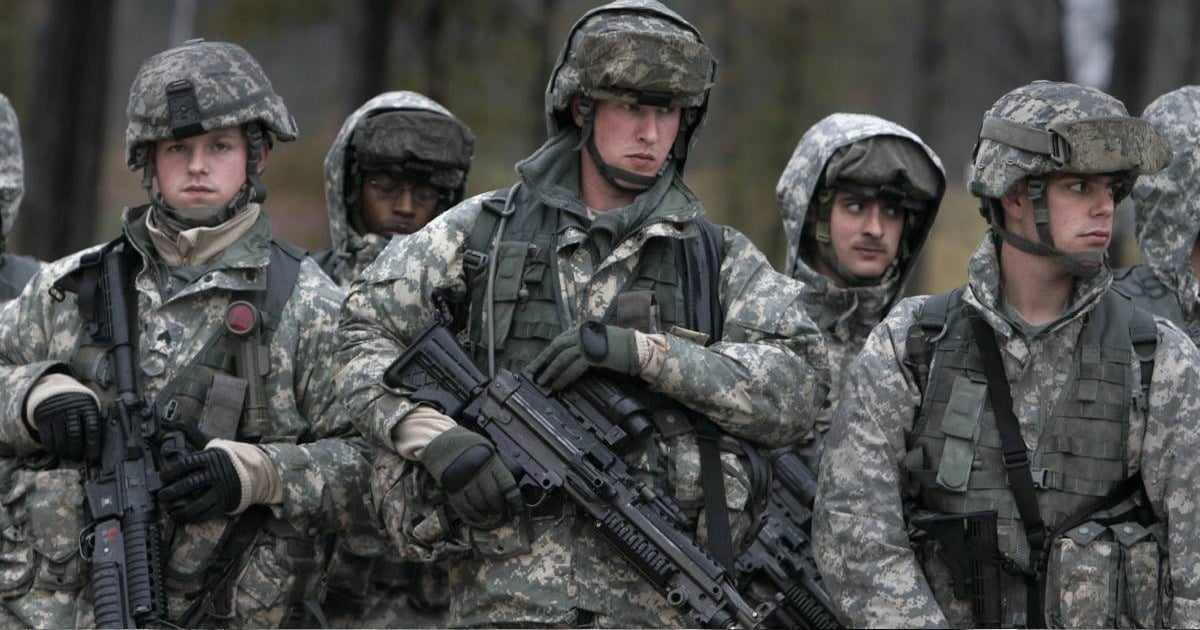
The United States Supreme Court has rejected President Donald Trump's request to deploy the National Guard in Illinois for immigration raids around the Chicago area. This decision is a significant judicial setback for the Republican administration and a political victory for Democratic Governor JB Pritzker, who has been a vocal critic of the raids and a staunch defender of immigrants residing in the state, according to Telemundo.
In an unsigned order, the court dismissed the federal government's emergency appeal, which claimed that troops were essential for safeguarding federal agents during immigration operations in Illinois, where public opposition to such raids is substantial.
This preliminary ruling restricts the president's power to invoke a federal law that permits military deployment in situations of "rebellion or danger of rebellion" or when regular forces "cannot execute the laws of the United States."
Governor Pritzker hailed the decision as "a major victory for Illinois and American democracy," arguing that Trump lacked the authority to federalize and deploy troops in his state. "This ruling is an important step in curbing the ongoing abuse of power by the Trump Administration and its march towards authoritarianism," declared the charismatic and wealthy governor, who has recently been an advocate for local Latino businesses.
He further emphasized, "Illinois will remain vigilant and defend the rights of our people against any new attempts at abuse of authority."
Meanwhile, White House spokesperson Abigail Jackson defended the presidential move, asserting that Trump "promised to protect the American people and federal agents against violent rioters," and that "nothing in today's ruling diminishes that essential agenda."
Jackson added, "The president activated the National Guard to ensure the enforcement of immigration laws and the safety of federal personnel."
Although the ruling pertains only to Illinois, it sets a legal precedent that could influence similar disputes regarding military use in cities with Democratic governments opposing Trump's immigration policies.
The court concluded that the Posse Comitatus Act—which prohibits the use of armed forces in policing roles—limits presidential authority in these scenarios, and that the White House "failed to identify a legal basis for executing laws through military deployment in Illinois."
The state of Illinois and the city of Chicago filed a lawsuit against the federal government, claiming that Trump acted with political motives and violated both the Tenth Amendment (which safeguards state sovereignty) and laws restricting the militarization of internal security.
The Seventh Circuit Court of Appeals had already partially blocked the deployment, a decision now reaffirmed by the Supreme Court.
Trump's measure was part of a broader strategy to exert federal control over Democratic cities resisting his immigration policies, such as Los Angeles, Portland, and Washington D.C., where troops have also been deployed under similar justifications.
In these jurisdictions, courts have yet to rule, but analysts predict that the Supreme Court's decision will bolster legal challenges against military involvement in civil control tasks.
The ruling stands as one of the few recent defeats for Trump in a court dominated by a conservative majority (6-3), following a series of judicial victories achieved in 2025.
ICE's (U.S. Immigration and Customs Enforcement) immigration operations have caused chaos in Chicago, where outraged residents often confront federal agents. They have also staged significant protests and thrown snowballs at ICE agents in defense of the predominantly Mexican immigrant community residing in the city's suburbs.
Implications of the Supreme Court Ruling on Military Use in Immigration Raids
What does the Supreme Court's decision mean for Trump's immigration policies?
The ruling limits Trump's ability to deploy the military for immigration enforcement, particularly in states like Illinois where there is strong opposition to such measures. This could impact his broader strategy of using federal force in Democratic-led cities.
How might this decision affect other states?
The decision sets a legal precedent that could influence future cases, potentially empowering other states to challenge similar federal military deployments in immigration enforcement scenarios.
What legal arguments were made against Trump's deployment of the military?
The lawsuit argued that Trump's actions violated state sovereignty under the Tenth Amendment and the Posse Comitatus Act, which restricts the use of military forces in domestic law enforcement roles.