The term "invasion" might sound exaggerated, but the Caribbean is once again feeling the tension. In December 2025, Washington announced a "total and complete blockade" on sanctioned oil tankers linked to Venezuela, and reports suggest a bolstering of military presence in the region. Meanwhile, PDVSA is dealing with halted shipments and floating storage, a situation reverberating far beyond Caracas.
There's a country that often escapes military headlines: Cuba. Every time Caracas loses a drop of oil, Havana loses a day of electricity. Should Nicolás Maduro's regime collapse—whether through military action or sustained economic strangulation—the ripple effects would strike the island with a volatile mix of blackouts, shortages, repression, and migration.
Venezuela: Cuba's Lifeline
The relationship between the Cuban and Venezuelan regimes is not driven by sentiment but by mutual necessity. For years, it has thrived on the exchange of services—mainly technical and healthcare personnel—for oil, along with political and security cooperation. In essence, Venezuela has been a critical external support to mitigate the chronic crisis of the Cuban model and maintain its control network.
When shipments of crude and its derivatives from Venezuela increase, Cuba can breathe. When they decrease or stop, the nation grinds to a halt. Reports tracking PDVSA shipments have documented peaks in exports followed by months of decline or irregularity. This inconsistency translates into very tangible consequences for the island: reduced electricity generation, less transportation, decreased production, and longer lines.
The Impact of a Venezuelan Conflict
Cuba doesn't need a war to reach its shores for its suffering to begin. The mere disruption of fuel routes, increased maritime risks, or a hike in insurance and freight costs would suffice. In scenarios of military pressure and aggressive sanctions, many shipping companies, insurers, and operators avoid exposure, creating a domino effect: oil becomes more expensive, delayed, or simply undelivered.
Already, signs show how the island could become collateral damage. Reuters reported an instance where part of the crude transferred from a sanctioned tanker ended up on a ship bound for Cuba before being seized. This detail is revealing: as tensions rise in Venezuela, Havana edges closer to an energy crisis precipice.
Consequences for Cuba's Energy, Economy, and Security
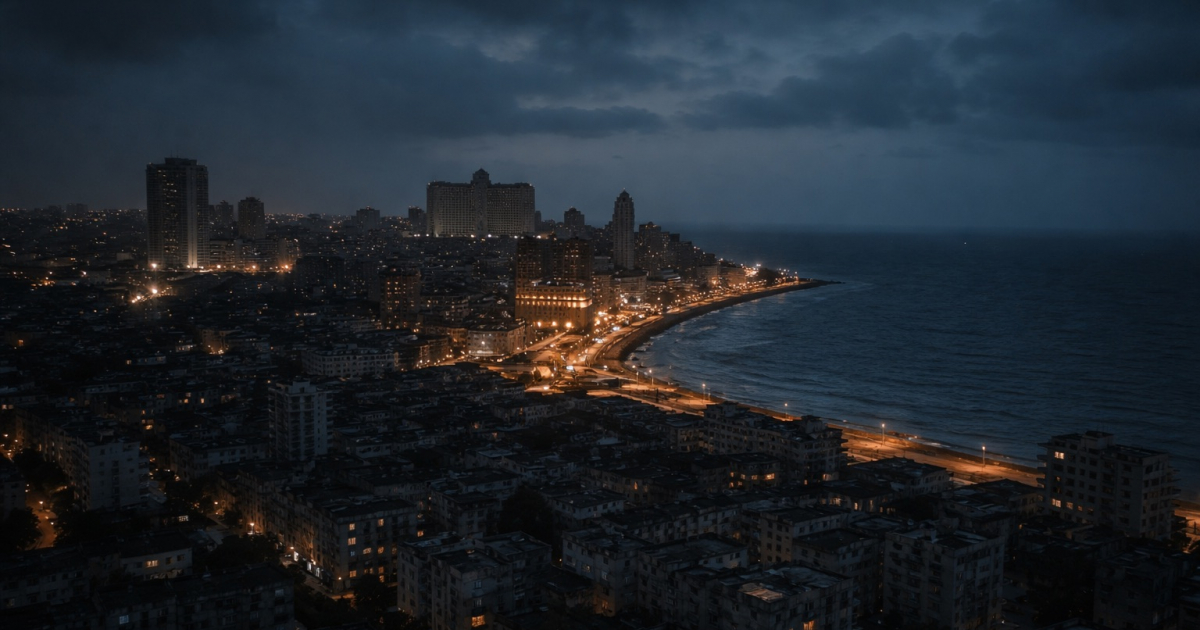
Energy: The most immediate blow would be to the electrical grid. Cuba has endured prolonged blackouts and protests sparked by severe power cuts. In 2024, Reuters reported demonstrations in Santiago de Cuba amidst blackouts lasting up to 18 hours and food shortages. Should a conflict or PDVSA's strangulation further reduce fuel flow to the island, electricity generation would plummet, and blackouts would multiply.
For everyday Cubans, this isn't just a statistic: it's spoiled food, overwhelmed hospitals, stagnant water, missing transportation, and sleepless nights. In a country already exhausted, the blackout is the spark that ignites everything.
Economy: In a militarized Caribbean, regional tourism cools, and moving money becomes increasingly difficult. A conflict raises the costs of logistics, trade, and country risk. This directly impacts the flow of foreign currency the regime needs to import food, fuel, and basic goods.
This scenario also strains a model where economic power is concentrated in military structures. Various sources have pointed out that entities linked to GAESA are at the center of U.S. sanctions on the Cuban economy. In times of crisis, the regime tends to fortify its core: protecting foreign currency income circuits and keeping operational sectors that serve as showcases, even if the rest of the country deteriorates.
Simultaneously, international media have documented public outrage over the state's priority on tourism while the country sinks into blackouts, shortages, and decay. Under external pressure and with less financial breathing room, this contradiction becomes explosive.
Internal Security: In a regional crisis, the Cuban regime would activate its historical "besieged fortress" reflex. This means more propaganda, more control, and less tolerance. The official narrative would try to spin any social unrest as "media warfare" or "imperialist attack," justifying detentions, preventive operations, and increased surveillance.
A conflict in Venezuela would also expose the military and intelligence cooperation between Havana and Caracas. If Chavismo falls, it wouldn't just mean the loss of a political ally: it would dismantle a pillar of the authoritarian framework that both regimes built to sustain each other in power.
Havana's Potential Response to Maduro's Fall
If Nicolás Maduro loses power, Cuba faces a double shock: the loss of an energy and economic support, and a political blow to the narrative of regional "resistance." In this scenario, the Cuban regime would likely attempt to:
1) Buy time internally with more control and propaganda, blaming external factors for the deterioration, repressing protests, and managing shortages for its survival.
2) Seek new backers and funding sources—or renegotiate existing arrangements—with allies willing to cooperate, albeit with less capacity and more conditions.
3) Reallocate fuel prioritizing the repressive apparatus, strategic sectors, and tourist areas, leaving the rest of the country bearing the brunt of blackouts and hardship.
Possible Scenarios and Their Implications for Cubans
Scenario A: Quick fall and transition in Venezuela. For the Cuban regime, it would be a severe blow: loss of lifeline and a key partner. For Cubans, tough months would follow due to the energy impact, but also a political effect impossible to conceal: if Chavismo falls, the myth of regime "eternity" shatters.
Scenario B: Prolonged war or low-intensity conflict. This would be the worst for the Cuban population: long crisis, constant uncertainty, more expensive or non-existent fuel, and repression under the guise of national security. The regime could use the conflict to justify further closing the country.
Scenario C: Maduro remains but is strangled. This scenario resembles the current one: stalled exports, seizures, and PDVSA improvising with floating storage. For Cuba, it would mean a model of intermittent scarcity: weeks of "respite" followed by sharp declines and extreme blackouts.
The bottom line: the regime entrenches itself, while the people pay the price. A military crisis in Venezuela would translate to a domestic crisis disguised as geopolitics for Cuba. The regime would try to turn it into propaganda and an excuse to tighten control. But the real cost would be borne by ordinary Cubans: more blackouts, more inflation, longer lines, less food, and a nation even more trapped by despair.
If Maduro falls, Castrismo would lose an external pillar that has been its lifeline for years. The question isn't whether Havana will scream, but whether the battered and exhausted Cuban people can turn the regional tremor into an opportunity to push the island toward a democratic exit.
Understanding the Impact of Venezuela's Situation on Cuba
How does Venezuela support Cuba?
Venezuela supports Cuba primarily through the exchange of oil for technical and healthcare services, along with political and security cooperation, acting as a crucial external support for the Cuban regime.
What could happen to Cuba if Maduro's regime collapses?
A collapse of Maduro's regime could lead to severe energy shortages, increased blackouts, economic instability, and intensified repression in Cuba, as the island loses a critical ally and source of support.
Why is Venezuela's oil supply crucial for Cuba?
Venezuela's oil supply is crucial for Cuba because it helps mitigate the island's chronic energy shortages, powering electricity generation and transportation, and supporting overall economic activity.