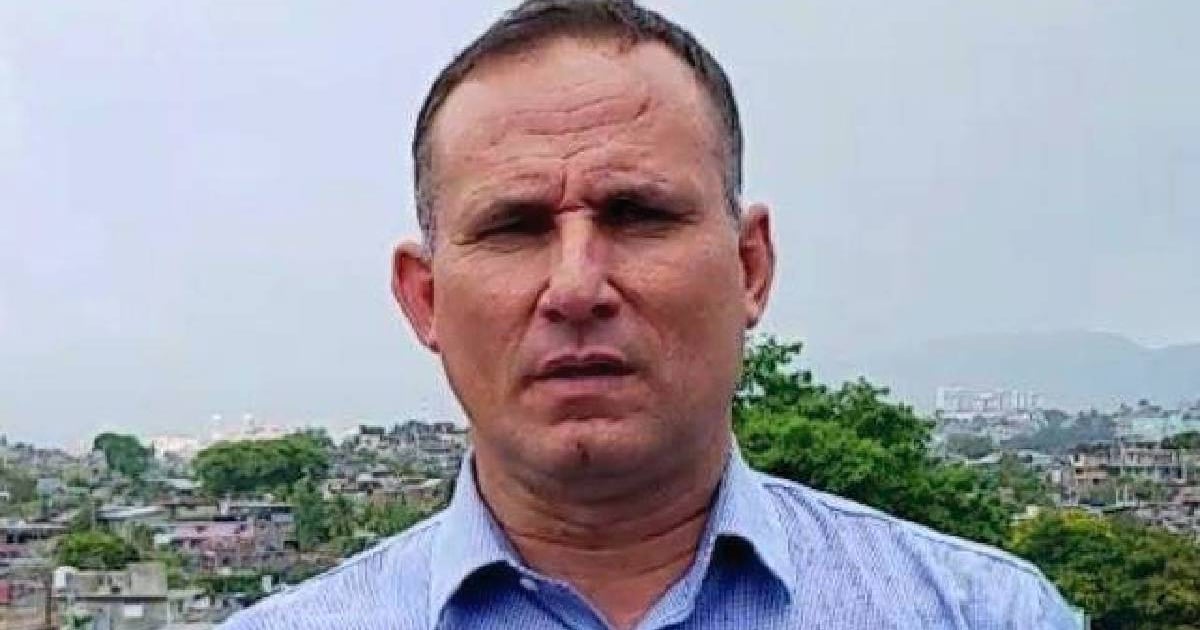
On Tuesday, prominent Cuban dissident José Daniel Ferrer announced his resignation as the head of the Council for Democratic Transition in Cuba (CTDC), the leading unified platform opposing the Cuban regime both on the island and abroad. He has called for fresh internal elections within the organization.
In a statement to EFE, Ferrer confirmed that he will not participate in the new executive board of the CTDC, although he will remain a member of the group.
"We remain united as brothers, and I support the council's initiatives," stated the opposition leader, who has been living in exile in the United States since last October.
Ferrer, who leads the Patriotic Union of Cuba (UNPACU), explained that his decision aims to ensure that his current political and humanitarian endeavors do not conflict with the CTDC's focus on legal proposals and democratic institution-building.
New Leadership at the CTDC
The CTDC announced in a statement that a new leadership team, selected between December 11 and 15, will officially take charge on January 10, 2026.
Opposition figure Manuel Cuesta Morúa will assume the presidency, supported by four vice presidents in Cuba—Osvaldo Navarro, Juan Alberto de la Nuez, Marthadela Tamayo, and Félix Navarro (who is currently imprisoned)—alongside two vice presidents abroad, Elena Larrinaga and Iris Ruiz.
"We will continue to strive for human rights, restore popular sovereignty, and democratize Cuba," the organization declared in its statement.
Challenges and Commitments
According to the CTDC, despite "difficult conditions," 63% of the electoral roll, consisting of 46 organizations and independent activists, participated in the election process.
Ferrer, at 54, has been deemed a prisoner of conscience by Amnesty International following multiple incarcerations due to his opposition activism.
Upon his arrival in Miami, he pledged to work towards unifying the Cuban opposition both within and outside the country, a task he acknowledged as "complex" due to internal divisions within the movement.
Currently, Ferrer is promoting a network to coordinate opposition groups and is advocating for the creation of a dissident census as a precursor to potential democratic primaries among the opposition.
His goal, as he articulated, is to forge a united front that would champion the amnesty of political prisoners and advance the transition to a rule of law in Cuba.
The Role of the CTDC
The Council for Democratic Transition in Cuba (CTDC) was established on June 11, 2021, as a unified platform for the Cuban opposition, with the aim of fostering a peaceful transition to democracy on the island.
In 2023, the organization gained international legal recognition through the Hague Apostille, which certifies its authenticity under private international law.
The CTDC comprises a broad coalition of institutions, organizations, and citizens from both within Cuba and the diaspora, all dedicated to reclaiming national sovereignty, promoting human rights, and paving a new path for Cuba rooted in freedom and diversity.
Understanding Cuba's Democratic Transition Efforts
Why did José Daniel Ferrer step down from the CTDC?
Ferrer resigned to prevent his political and humanitarian activities from conflicting with the CTDC's mission, which is focused on legal and democratic institutional proposals.
Who will lead the CTDC after Ferrer's resignation?
Manuel Cuesta Morúa will take over as president of the CTDC, supported by vice presidents in Cuba and abroad.
What is the aim of the Council for Democratic Transition in Cuba?
The CTDC seeks to foster a peaceful transition to democracy in Cuba, promoting human rights and restoring national sovereignty.