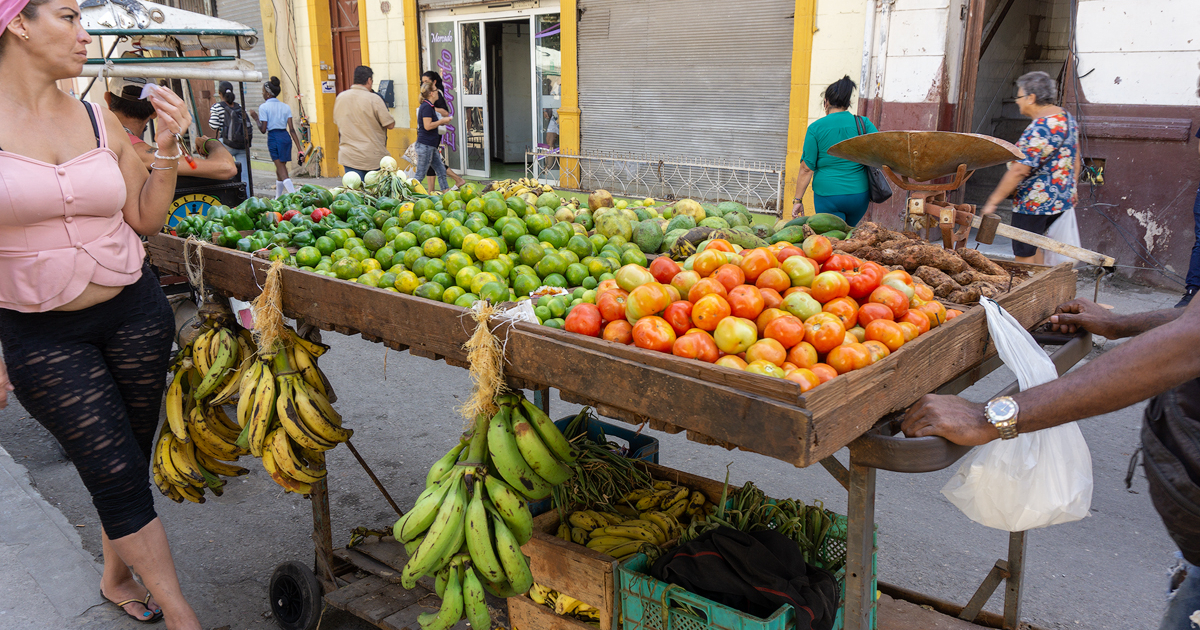
As the holiday season approaches, the cost of food in Cuban markets has soared, underscoring the severe economic crisis gripping the island.
Reports from December 22nd gathered by CiberCuba reveal dramatic price hikes in both imported goods and locally produced items.
Price Surge in Private Markets and MIPYMES
In private establishments, known as MIPYMES, imported rice is priced between 690 and 840 pesos per kilogram, while black beans reach up to 840 pesos for a 500-gram bag.
Imported coffee ranges from 2,100 to 2,200 pesos per package, and sugar is sold between 290 and 300 pesos per pound.
Pork prices have also escalated, with pork loin selling for 1,150 to 1,300 pesos per pound, pork leg at 1,150 pesos, and ground pork at 320 pesos per pound.
Chicken breast—highly sought after during the holidays—costs between 4,500 and 5,100 pesos for a 2-kilogram package, while a 2.5 kg package can go up to 6,100 pesos. A whole chicken is available at 2,200 pesos for 1.3 kilograms.
A carton of 30 eggs is priced at 3,000 pesos, or 100 pesos per egg, a staggering amount for many Cubans whose average monthly salary is around 5,000 pesos.
Rising Costs in Agricultural Markets
Even in agromarkets, traditionally known for lower prices, costs have surged. Papaya is priced between 80 and 100 pesos per pound, salad tomatoes at 150 pesos, and pineapples reach 250 pesos each.
Onions, whether white or red, are around 350 pesos per bunch, with medium white onions reaching 450 pesos per pound. Cucumbers and guavas sell for 150 pesos per pound, sweet peppers at 260 pesos, and lemons range from 500 to 550 pesos.
The more affordable options include yucca and sweet potatoes at 60 and 50 pesos per pound, respectively, though even these prices are high compared to previous years.
A Holiday Burdened by Shortages and Inflation
The surge in prices complicates the ability to enjoy a traditional Christmas dinner in Cuba. A mix of shortages, inflation, and the devaluation of the Cuban peso has turned basic foods into luxury items.
While the government continues to blame the U.S. embargo for the crisis, the Cuban population faces an increasingly dollarized market, with daily price fluctuations and no short-term relief in sight.
“This year I can't even afford pork or rice,” lamented a woman from Havana. “Just the cost of eggs eats up half my salary.”
As Christmas Eve nears, Cuban tables reflect the harsh economic reality of the country, marked by food scarcity, insufficient wages, darkness, and empty chairs where loved ones once sat.
Understanding the Economic Challenges in Cuba
Why are food prices so high in Cuba?
Food prices in Cuba are high due to a combination of factors including economic mismanagement, inflation, and the devaluation of the Cuban peso, alongside ongoing shortages and a partially dollarized market.
How has the economic crisis affected Cuban families during the holidays?
The economic crisis has made it difficult for Cuban families to afford traditional holiday meals, turning basic ingredients into unaffordable luxuries and causing financial strain during the festive season.