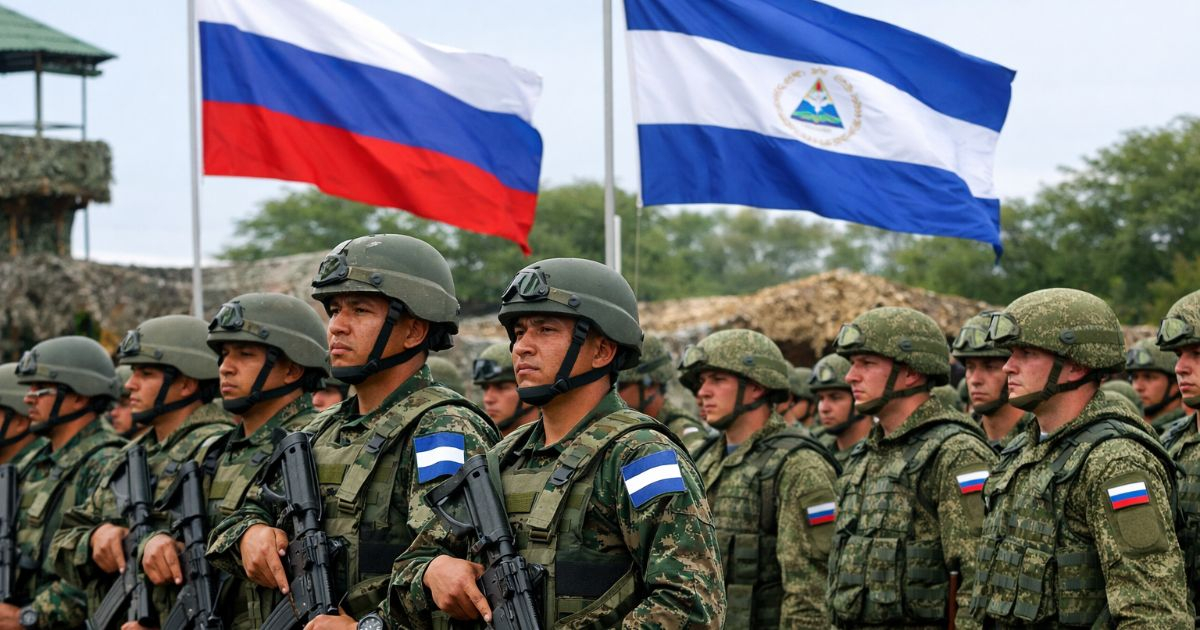
The Nicaraguan government has officially permitted the entry, transit, and stay of military personnel, ships, and aircraft from multiple countries within its borders, as stated in a presidential decree published in the Official Gazette, La Gaceta.
This legal document, identified as Presidential Decree No. 14-2025 and released on December 17, 2025, sanctions these activities from January 1 to June 30, 2026.
Beyond allowing foreign military forces to enter, the decree also provides for the deployment of Nicaraguan troops abroad for exchange programs and humanitarian aid missions.
Country-Specific Military Operations
Russia features prominently with the highest number of operations authorized by the decree. It permits Russian military personnel to enter, transit, or remain for joint activities with Nicaragua’s armed forces.
The decree outlines:
- Rotational entry of 80 personnel for experience exchange and training exercises with Nicaragua's Special Operations Command.
- Rotational entry of 50 personnel to collaborate with the Naval Force, Air Force, and communications sectors, including operations against illegal activities and transnational crime.
- Rotational entry of 50 personnel for security tasks and planning humanitarian aid and disaster response exercises.
- Exchange and training operations related to search, rescue, and emergency response, as well as maritime operations in the Caribbean Sea and Pacific Ocean.
The decree does not specify exact dates for these entries, stating that rotations and operations will occur within the authorized timeframe.
Cuba is granted rotational entry of 50 military personnel, alongside the transit or stay of ships and aircraft for exchange and training purposes.
According to the decree, their involvement will focus on:
- Experience exchange.
- Humanitarian work.
- Emergency or disaster cooperation.
The document does not elaborate on unit types or specific rotation dates.
Other Countries' Military Involvement
Venezuela is also allowed to send military personnel, with ships and aircraft permitted for exchanges, training, and humanitarian efforts.
The decree includes rotational entries of:
- 50 personnel for security tasks and humanitarian exercise planning.
- 80 personnel for experience exchange and training exercises with Nicaragua’s Special Operations Command.
- 50 personnel to work with the Naval Force, Air Force, and communications sectors, including anti-illicit operations.
As with other countries, no exact dates are provided, but all operations must occur within the specified period.
For Mexico, the decree approves rotational entry of 50 military personnel, along with the transit or stay of ships, aircraft, and equipment.
Tasks outlined include:
- Humanitarian assistance exercises.
- Training and instruction.
- Experience exchange with Nicaragua’s military.
The inclusion of the United States in the decree comes with a stipulation: any military personnel, ships, or aircraft entries must be pre-planned and coordinated with Nicaragua’s military.
Authorized activities include:
- Humanitarian aid operations.
- Search, rescue, and salvage missions.
- Air, sea, and land operations.
- Docking at national ports.
- Landings at national airports.
The decree also covers the transit or stay of armed forces from Central American and Caribbean nations, including Guatemala, El Salvador, Honduras, and the Dominican Republic.
These countries are part of the Central American Armed Forces Conference (CFAC), engaging in regional cooperation, exchange, training, and humanitarian activities.
Nicaraguan Troop Deployments and Legislative Approval
In addition to foreign military entries, the decree outlines the deployment of Nicaraguan troops abroad for exchanges and humanitarian assistance within the same timeframe.
According to Nicaraguan law, the decree requires ratification by the National Assembly—controlled by the ruling party—for full implementation.
Key Questions About Nicaragua's Military Decree
What is the duration of the military operations authorized by the decree?
The authorized military operations are set to occur between January 1 and June 30, 2026.
Are there specific dates for each country's military entry into Nicaragua?
The decree does not specify exact dates for each military entry; it only states that operations will be conducted within the authorized period.
How does the decree affect the presence of U.S. military forces in Nicaragua?
The U.S. military can enter Nicaragua, but any presence must be pre-planned and coordinated with Nicaragua’s military, focusing on humanitarian aid and rescue missions.