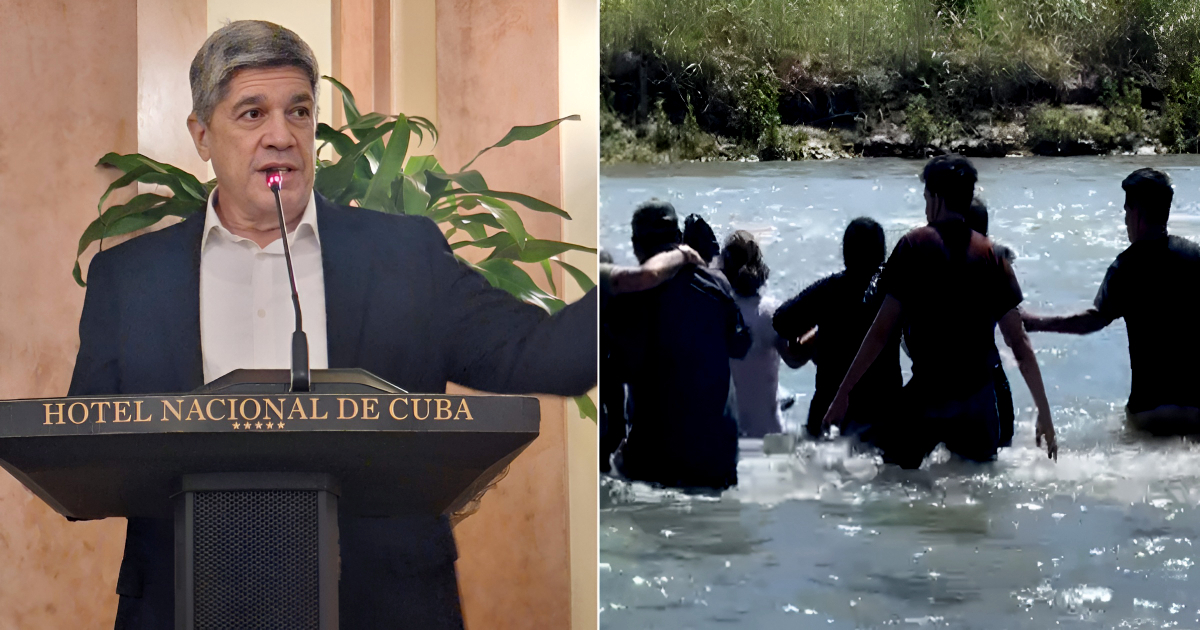
The Cuban regime once again reveals its hypocrisy by feigning "concern" for Cubans residing in the United States, many of whom fled precisely due to the oppression, poverty, and lack of freedoms imposed by the very regime that now claims to defend them.
During the conference titled "Cuba in U.S. Foreign Policy: The Return of Trump," organized by the International Policy Research Center (CIPI), Deputy Foreign Minister Carlos Fernández de Cossío accused Washington of harassing and discriminating against Cubans living in the U.S.
Fernández de Cossío stated that Cuban emigrants face "the threat of deportation, degrading treatment, and persecution" from the U.S. government. He also condemned the restrictions imposed on those traveling to Cuba or engaging in commercial activities with the island.
However, his speech deliberately ignored the root cause of the issue: millions of Cubans have been forced to leave their homeland due to a system that denies them fundamental rights and development opportunities.
It's ironic that the same regime that labels emigrants as "traitors" or "worms"—and for decades prohibited their return or publicly stigmatized them—now seeks to portray itself as their defender.
The reality is that the Cuban diaspora did not flee the United States, but rather the government of Havana, which keeps the island mired in a structural crisis marked by shortages, censorship, and the absence of political freedoms.
Instead of acknowledging its responsibility for this mass exodus, the Ministry of Foreign Affairs (MINREX) attempts to manipulate the migration issue to present itself as a victim of U.S. policies.
It fails to mention, for example, that the regime exploits emigration as a source of income through remittances and exorbitant consular fees.
Nor does it recognize that many Cubans now living in the U.S. were persecuted or imprisoned for their dissenting views, or that thousands more have died or disappeared trying to escape the country.
The regime's alleged "solidarity" with its exiles is nothing more than a propaganda tactic amid international isolation and growing domestic dissatisfaction.
While blackouts, hunger, and repression multiply on the island, Havana seeks to deflect attention by blaming Washington for the ills caused by its own authoritarian model.
Cubans abroad do not need defense from those who drove them away. What Cuba urgently requires is freedom, justice, and a government that stops using its people's suffering as a political tool.
Understanding Cuba's Emigration Crisis
Why do many Cubans emigrate from Cuba?
Many Cubans emigrate to escape the oppressive regime, economic hardships, and lack of fundamental freedoms and opportunities in Cuba.
What accusations did Carlos Fernández de Cossío make against the U.S.?
Carlos Fernández de Cossío accused the U.S. of harassing and discriminating against Cuban emigrants, alleging they face threats of deportation and degrading treatment.
How does the Cuban regime benefit from emigration?
The regime benefits from emigration through remittances sent by Cubans abroad and high fees charged at consulates, which provide significant revenue sources.