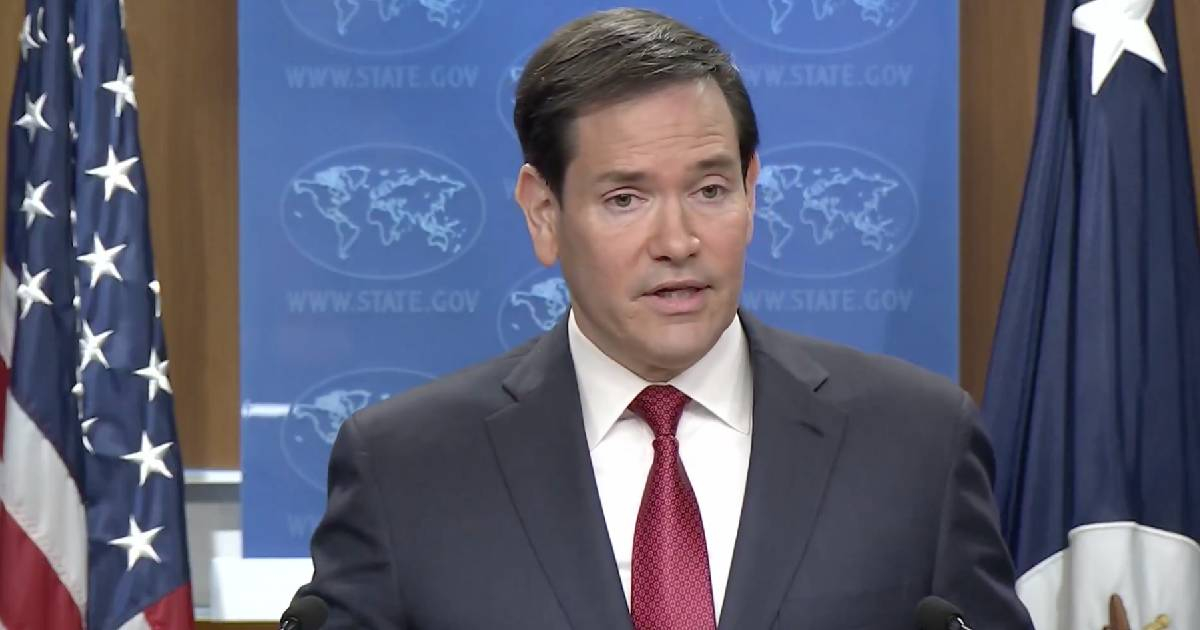
On Friday, U.S. Secretary of State Marco Rubio highlighted that Washington's focus on Venezuela stems from national security concerns. He accused Nicolás Maduro's regime of partnering with narcoterrorist groups that jeopardize hemispheric stability.
"The United States' interest in Venezuela and the region is rooted in our national interest. In Venezuela, there's an illegitimate regime that not only refuses to cooperate with the U.S. but openly collaborates with narcoterrorists and others who threaten our country's national security," Rubio declared in an official statement on his X account (formerly Twitter).
His remarks come amid escalating regional tensions, following new Treasury Department sanctions targeting relatives and associates of Maduro and Cilia Flores, and coinciding with a U.S. naval blockade aimed at halting Venezuelan oil shipments to allies like Cuba.
The Struggle Against Chavista Regime
As a key architect of U.S. policy towards Latin America during Republican administrations, Rubio has consistently taken a strong stance against the Chavista regime, denouncing it as a "corrupt dictatorship sustained by drug trafficking and Cuban espionage."
Diplomatic sources in Washington indicate that former President Donald Trump's strategy sought to sever the financial and logistical lifelines of the Caracas regime, including operations by Petróleos de Venezuela (PDVSA) and its subsidiaries in the Caribbean and Latin America.
Oil as a Political Tool
The U.S. accuses the Maduro government of wielding oil as a political instrument, particularly via subsidized shipments to allied nations, such as Cuba, Nicaragua, and Bolivia.
Rubio also emphasized that the alliance between Maduro and the Cuban regime poses a direct threat to the region. According to the Secretary of State, Havana provides intelligence advisors, military personnel, and logistical support to Venezuela's repressive apparatus in exchange for energy supplies and financial resources.
"Maduro doesn't act alone; his regime relies on Cuban security services to maintain power," Rubio has stated previously, advocating for sanctions against high-ranking military officials in both countries.
Increased Sanctions and Military Operations
Rubio's statements align with a week marked by new Treasury Department sanctions against relatives of Carlos Erik Malpica Flores, Cilia Flores' nephew and former high-ranking PDVSA executive, accused of participating in a corruption and money laundering network involving businessmen in Panama and Europe.
The tightening of sanctions coincides with U.S. military operations in the Caribbean aimed at intercepting sanctioned oil tankers from Venezuela's so-called "phantom fleet," a maneuver intended to disrupt illegal crude trade with Caracas' allied governments, like that of Miguel Díaz-Canel in Cuba.
Frequently Asked Questions About U.S. Actions Against Venezuela
What are the reasons behind the U.S. interest in Venezuela?
The United States' interest in Venezuela is primarily driven by national security concerns, as the Maduro regime is accused of collaborating with narcoterrorists and other groups that threaten regional stability.
How does the U.S. plan to counter the influence of the Maduro regime?
The U.S. aims to cut financial and logistical support to the Maduro regime through sanctions and by targeting operations of Petróleos de Venezuela (PDVSA), as well as intercepting oil shipments to allied nations.