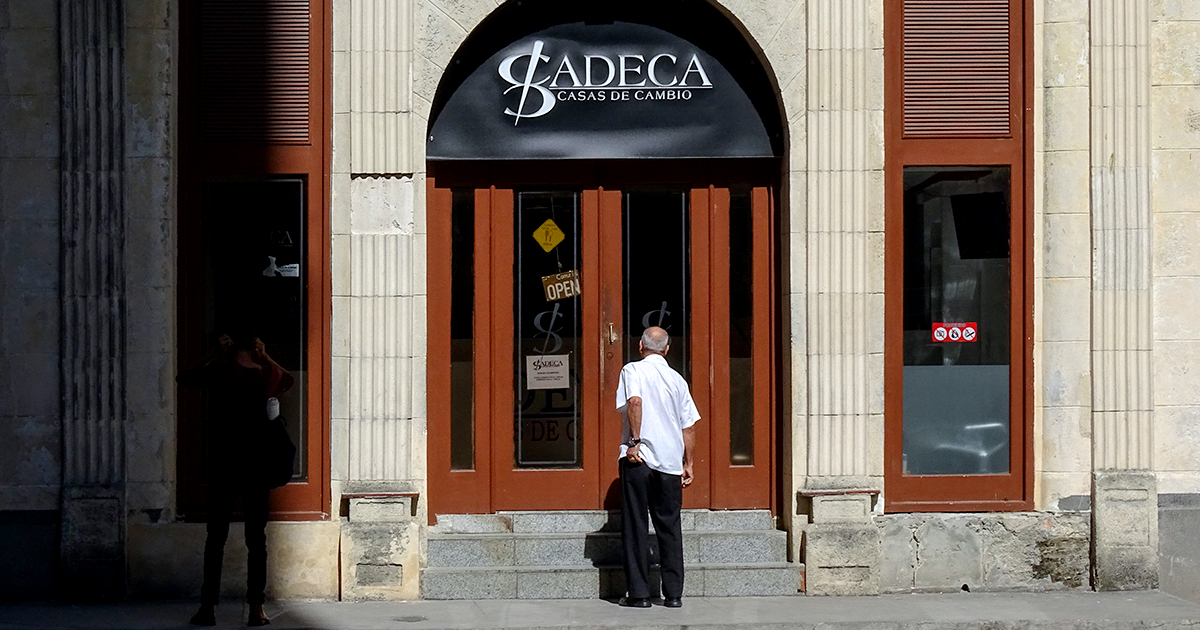
On Thursday, December 18, 2025, the Central Bank of Cuba rolled out its new "floating" exchange rate for currency transactions at CADECA: 401.80 pesos for buying and 418.20 for selling.
While this figure seems to align more closely with the actual market, it remains distant from the values familiar to everyday Cubans.
That same day, the independent portal El Toque reported the informal exchange rate for the dollar at 440 CUP, the euro at 480, and the MLC at 300.
Although the difference may appear minor, it underscores a harsh reality: Cubans still place more trust in the street market than in the state. And the regime is acutely aware of this.
Scarcity of Dollars and Waning Trust
The Central Bank can set any rate it wants, but without enough dollars to sell, the official market is ineffective.
Currently, the nation's reserves are depleted, tourism lags behind 2019 levels, and state exports fail to generate fresh currency.
Meanwhile, Cubans receiving remittances or earning hard currency prefer trading their dollars on the informal market, where they receive more without bureaucracy.
Faced with this, the state is in a bind: it needs to gather dollars to survive, yet it can't outmatch the street. As a result, rather than persuade, it aims to impose.
The Tactics of Fear
Official media has begun hinting at this: warnings against "illegal currency operations," police reports, and alerts from the Ministry of the Interior. The message is clear: "Trading outside the system is a crime."
The regime bets on fear to succeed where the economy fails. However, Cubans have witnessed this before and understand that as long as the government lacks dollars, CADECA will remain merely a hollow showcase.
The Grip of Control
The second approach involves tightening banking and financial controls. This means reducing cash usage, restricting transfers, enforcing card use, and increasingly cutting off access to physical dollars.
In essence, it's about cornering citizens until they have no choice but to go through banks. Yet, this control fuels another trend: the migration of transactions to digital platforms (Zelle, Binance, Revolut, informal remittance services), beyond the state's reach.
Manipulation as a Tool
The third strategy is to manipulate the official rate. The regime might slightly increase it to feign a "real float," making it appear closer to the informal value when convenient.
This is an attempt to suggest that "the market is balancing." Yet, in reality, only the sign changes, not the true dollar price.
Economist Mauricio de Miranda Parrondo warns that multiple rates only create distortions and privileges: "Keeping one dollar at 24 pesos for some and another at 400 for others is not economic policy; it's nonsense."
An Unyielding Truth
The Cuban government can try to enforce its rate through fear, control, and manipulation. However, it cannot alter a fundamental truth: people will sell where they receive more, not where the regime dictates.
As long as the economy remains stagnant and the peso plunges, Cubans will continue exchanging dollars on the street, not at CADECA.
No decree can transform an imposed rate into a credible one.
Understanding Cuba's Exchange Rate Challenges
Why is the Cuban government's exchange rate not effective?
The government's exchange rate isn't effective because it lacks sufficient dollars to support it, and Cubans trust the informal market more, where they receive better rates.
What strategies is the Cuban regime using to enforce the official rate?
The regime is employing fear by criminalizing informal currency exchanges, exerting control over banking transactions, and manipulating the official rate to simulate market balance.
How do Cubans respond to the regime's currency policies?
Cubans typically resort to the informal market for better rates and less bureaucracy, often utilizing digital platforms beyond the regime's control.