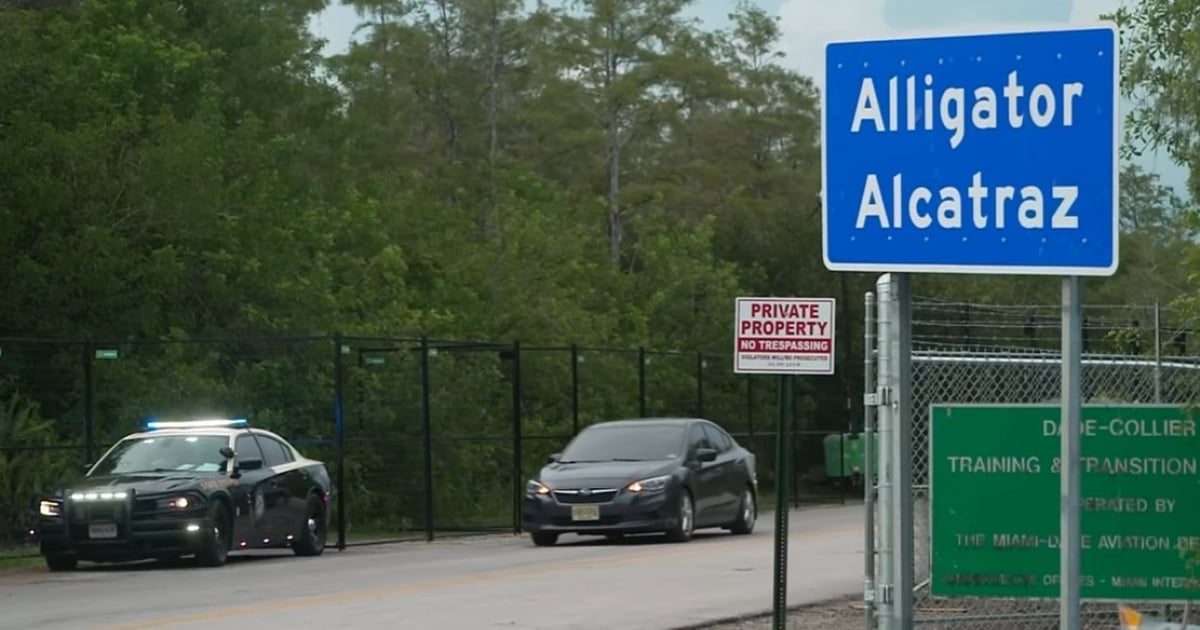
Hundreds of Cubans find themselves detained at the facility known as Alligator Alcatraz in Florida, lacking clear information about their immigration status and facing constant deportation threats, according to family accounts shared with CiberCuba during phone interviews.
Reports indicate that between 700 and 800 Cubans are typically held at this location, with many transferred from various states across the United States.
The detainees claim they haven't received official explanations regarding their legal status or guidance on handling their cases.
"They tell us we're not going to set foot on American soil," one detainee recounted to our publication during a phone call.
He also reported threats of being moved to the Guantanamo Naval Base, Mexico, or even African countries.
Abel Ducanses Ceballos, detained since December 5, described the conditions as "inhumane" with "no right to life." He added, "We're locked in cages; nobody cares about us. Even the drinking water, which is essential, looks like swamp water; it's disgusting."
Ducanses explained their "cages" each house 32 people.
"We sleep on bunk beds. We can only bathe and brush our teeth three times a week. The place reeks, and there are scabies outbreaks. We look like animals: long hair, beards, no basic hygiene. We've been forced to respond like animals to animal treatment," he stated.
Meanwhile, Endy Castillo, who has been detained for 28 days despite living in the U.S. for 20 years, remarked, "Almost no one here has committed any crimes for a long time, yet it's like a concentration camp. Living conditions are inhumane. This feels like a punishment cell," he emphasized.
Castillo noted they receive "three meals a day: at 5 a.m., noon, and 5 p.m. The food is cold and consists of the same sandwich all week. The water is undrinkable," he expressed.
"Medical attention is only available after 72 hours. Everyone is sick upon arrival, and there's a lack of medication. We can't make any complaints. The facility is isolated for two miles around. This is entirely inhumane," they protest.
"We're in cages, like in a concentration camp. If there's a fire, we'll all die because there are no fire extinguishers. There are three toilets per cage, and if someone needs to use them, others have to turn around. The temperature is fixed at 35 degrees, freezing us, and we have to sleep under blankets," Castillo added.
Another detainee mentioned being held for 98 days in Alligator Alcatraz, despite being scheduled for release after 90 days.
"I was moved through Louisiana and Mississippi and then brought back here. Nobody has visited me or explained what's going to happen. They want to send me to Mexico, but I don't want to go," he explained.
"The worst part is the overcrowding, one person on top of another, no cleanliness, and terrible food. My family in Cuba hasn't been able to speak with me; I'm completely cut off," he hurriedly shared as the 15-minute call limit approached.
There are particularly sensitive cases among the detainees, including individuals who don't speak Spanish, having arrived in the U.S. as children during the Mariel exodus.
One detainee said he has lived in the U.S. for 40 years, while another mentioned being in the country for 32 years, having arrived at age 12.
The accounts agree that new detainees arrive daily from different states, adding to the uncertainty within the detention center. They also reported difficulties accessing legal assistance, with some lawyers unable to represent them.
CiberCuba will continue to monitor the situation and plans to broadcast live interviews featuring the wives of detainees communicating with them by phone to highlight their grievances and the conditions inside the facility.
Families are demanding clear information, access to attorneys, and adherence to due process, as concerns grow over the fate of hundreds of Cubans trapped in an immigration limbo.
Frequently Asked Questions About Cuban Detainees in Florida
What is the current situation of Cuban detainees in Alligator Alcatraz?
Hundreds of Cubans are being held at a detention facility in Florida, facing uncertain immigration status and threats of deportation, with many reporting inhumane living conditions.
What conditions are the detainees experiencing?
Detainees describe overcrowded cages, lack of basic hygiene, insufficient medical care, and poor quality food and water, akin to living in a concentration camp.
How are families and advocates responding to the situation?
Families and advocates are demanding clarity on detainees' legal status, access to legal representation, and respect for due process, while raising awareness of the detainees' plight.