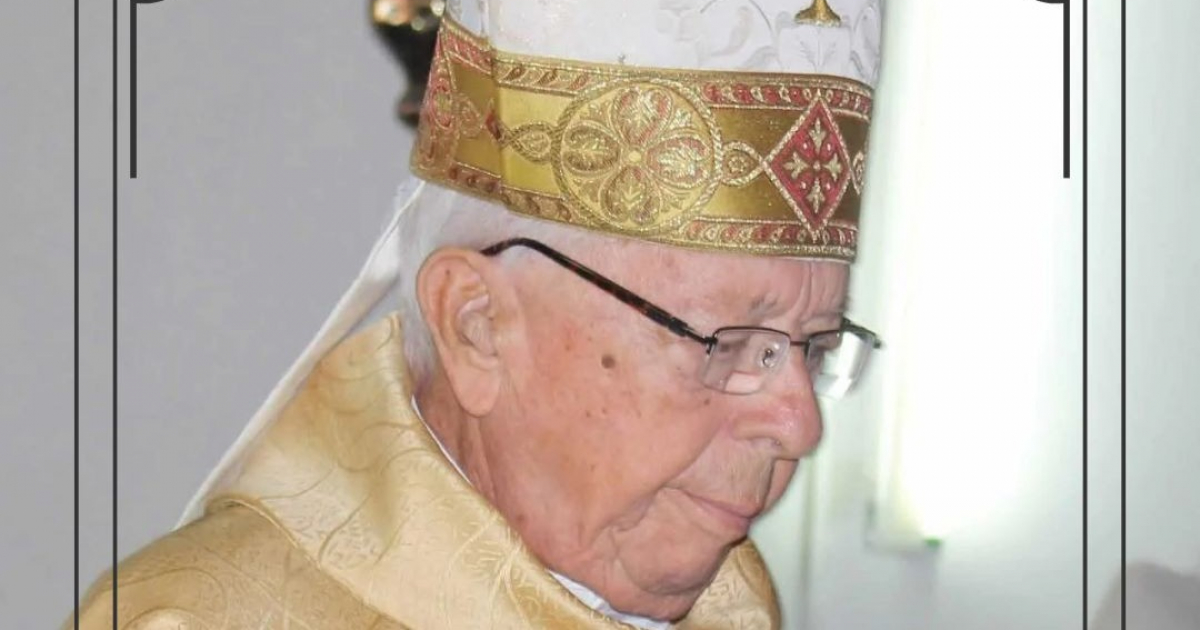
Monsignor Héctor Luis Lucas Peña Gómez, the emeritus bishop of the Diocese of Holguín, passed away on Thursday, December 18, at 3:45 a.m., at the age of 96. His death marks the end of an era for the Cuban Catholic Church.
The Diocese of Holguín confirmed the news through official channels, noting that his passing coincided with the liturgical memory of Saint Mary of Hope. Monsignor Peña Gómez was the oldest serving bishop in Cuba, renowned for his unwavering commitment, simplicity, and pastoral dedication.
Farewell to a Dedicated Servant
The Diocese announced that a Funeral Mass was scheduled for Thursday at 3:00 p.m. in the Holguín Cathedral, with Bishop Emilio Aranguren Echeverría presiding. The service would be followed by a burial at the local cemetery. The Diocese's Office of Communications requested prayers for the eternal rest of the prelate, saying, "Grant him eternal rest, O Lord, and let perpetual light shine upon him."
A Life of Service and Faith
Born on October 18, 1929, in Velasco, Gibara - part of the former Oriente province - Monsignor Peña Gómez was one of seven siblings. He was baptized in Velasco before the image of the Virgin of Charity of Cobre, within the San Andrés parish territory. He entered the San Basilio Magno Seminary at the age of 13, where he completed his basic education, along with studies in Humanities and Philosophy.
At the behest of Santiago de Cuba Archbishop Enrique Pérez Serantes, he pursued his theological studies in Santo Domingo, Dominican Republic. On June 26, 1955, he was ordained as a priest alongside Pedro Claro Meurice Estíu and Francisco Parrón, and began serving as a vicar at San Isidoro parish, now the Holguín Cathedral.
Pioneer Bishop of Holguín
In 1979, Pope John Paul II established the Diocese of Holguín, appointing Monsignor Peña Gómez as its first bishop, elevating San Isidoro church to a Cathedral. Over his 26-year tenure, he spearheaded significant pastoral and organizational efforts.
He founded 12 new parishes, encouraged religious communities to serve rural and underserved urban areas, ordained 11 priests and four permanent deacons, and oversaw the restoration of the Cathedral, consecrated in 1997. His efforts included establishing educational and social initiatives like the Diocesan Center for Lay Formation and Promotion, the Cocuyo diocesan bulletin, the Diocesan Youth Center, and the House of Divine Mercy to assist those in need.
As a member of the Cuban Episcopal Conference, he chaired multiple pastoral commissions, participated in CELAM continental meetings, and played a key role in the Cuban Ecclesial Reflection, culminating in the historic Cuban National Ecclesial Encounter (ENEC). He also witnessed and participated in significant moments for the Church on the island, including papal visits by John Paul II, Benedict XVI, and Francis.
In 2004, Monsignor Peña Gómez submitted his resignation to Pope Benedict XVI, as required by Canon Law, which was accepted in November 2005, paving the way for Monsignor Emilio Aranguren to succeed him. Clergy, laypeople, and faithful remember Monsignor Peña Gómez for his humility, openness to advice, and ability to lead a diocesan Church in challenging times.
His legacy of faith, service, and perseverance continues to inspire new generations of pastors and believers in Cuba.
Key Questions About Monsignor Héctor Luis Peña Gómez's Legacy
Who was Monsignor Héctor Luis Peña Gómez?
Monsignor Héctor Luis Peña Gómez was the emeritus bishop of the Diocese of Holguín in Cuba, known for his dedication to the Catholic Church and his significant contributions to the Cuban ecclesiastical community over his long career.
What were some of his significant contributions?
He established 12 new parishes, promoted religious communities in underserved areas, and initiated various educational and social projects, leaving a lasting impact on the Cuban Catholic community.