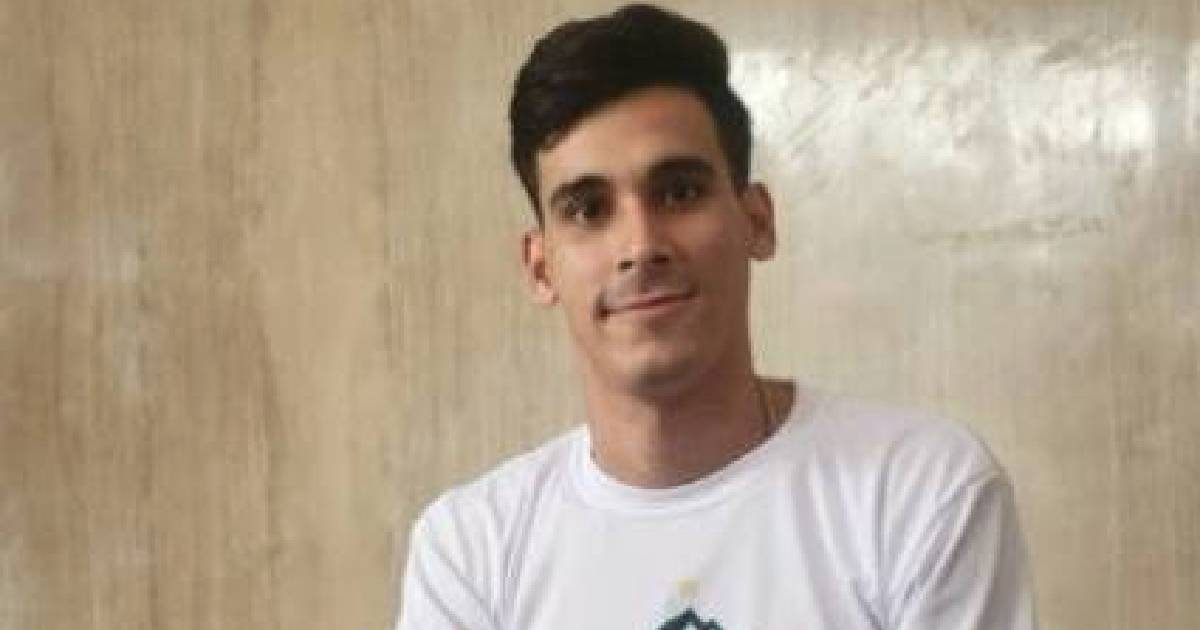
In the midst of a shake-up within Cuba's leadership, Ricardo Rodríguez González, the former head of the University Student Federation (FEU), has stepped down from the State Council. This decision follows months of criticism over his stance during the controversial ETECSA rate increase.
During a State Council session, Miguel Díaz-Canel announced several changes, including judicial leadership adjustments and the acceptance of various resignations from the political apparatus. These changes come at a time when Cuba is grappling with economic turmoil, power outages, and rising public discontent.
Among the notable moves, the head of state disclosed that Rubén Remigio Ferro has been "released from his duties" as President of the People's Supreme Court. His role will now be filled by Óscar Silvera Martínez, the current Minister of Justice.
Additionally, Rosabel Gamón Verde has been recommended to take over Silvera's position as the head of the Ministry of Justice.
In Parliament, Esteban Lazo Hernández, President of the National Assembly, noted that resignations were received from key political figures: Ulises Guilarte de Nacimiento, former general secretary of the CTC, and Rodríguez González, former president of the FEU.
Another resignation, attributed to Homero Acosta Ávila, has been reported, although its acceptance has not been confirmed.
Rodríguez's departure follows a wave of backlash he faced in June when he publicly supported the government and state-owned ETECSA after the telephone and internet tariff hikes. Cuban university students popularized the slogan "He does not represent us" on social media, criticizing his lack of leadership and the FEU's alignment with official rhetoric.
At that time, Rodríguez praised Díaz-Canel's television appearance, insisting that "clear explanations" were given on the "necessity" of the measures. Many students viewed his stance as accommodating, especially in light of the economic impact on young people and families on the island.
As news of his resignation spread, past posts by the former leader praising official youth figures and new deputies resurfaced, reinforcing critics' views of a student leadership subservient to the Party's agenda.
In the same wave of changes, Ulises Guilarte de Nacimiento's resignation as a deputy signifies the end of his political tenure after leading the CTC, often criticized for being a Communist Party arm with little real defense of labor rights.
While these changes are presented as part of a "renewal," the prevailing sentiment on social media suggests another interpretation: the regime is attempting to adjust its structure in response to internal wear and diminishing legitimacy.
For many, these substitutions are not seen as reforms but rather as an effort to quell dissatisfaction with fresh faces.
Understanding the Recent Political Shifts in Cuba
Why did Ricardo Rodríguez González resign from the State Council?
Ricardo Rodríguez González resigned following months of criticism over his handling of the ETECSA tariff hike controversy, where he was perceived as aligning too closely with the government's position.
What are the implications of the leadership changes in Cuba?
The leadership changes are viewed by many as an attempt by the Cuban regime to restructure and manage internal challenges and declining legitimacy, rather than as genuine reforms.
Who is Óscar Silvera Martínez?
Óscar Silvera Martínez is the newly appointed President of the People's Supreme Court, previously serving as Cuba's Minister of Justice.