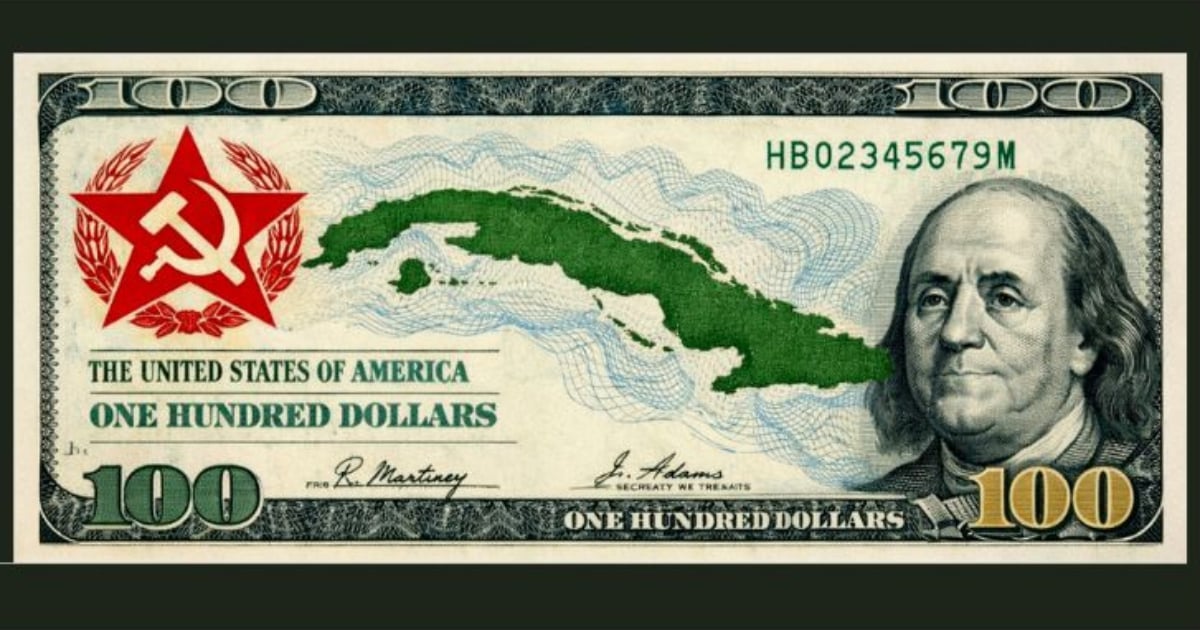
The latest currency exchange system unveiled by the Central Bank of Cuba (BCC) is being portrayed by the regime as a structural reform aimed at "organizing the currency market" and "strengthening the Cuban peso." Yet in reality, it is merely a political maneuver to prop up state-controlled enterprises and create the illusion of an economic opening that doesn't actually exist.
Boasting three official exchange rates, a supposedly "floating" market, and promises of stability, this system appears to signal modernization. However, it masks the same old issues: centralization, inequality, and deception.
Three Exchange Rates, One Direction: Control
As of December 18, 2025, Cuba operates under three official exchange rates:
- 1 CUP = 24 USD, reserved for state imports of "essential" goods: energy, transportation, medications, and food.
- 1 CUP = 120 USD, applicable to companies with external revenues and select exporters.
- A daily floating rate, ostensibly determined by supply and demand, applicable to private individuals and non-state management forms.
At first glance, this might seem like a technical attempt to "segment" the economy. However, as economist Mauricio de Miranda Parrondo has cautioned, the government is actually solidifying an inequitable and fictitious system where rules are tailored to benefit the military-business powers.
"What is the point of maintaining two fixed rates and a floating one? It’s absurd," wrote the academic. "The only outcome is that state imports are favored, while productive sectors that generate real wealth are penalized."
GAESA's Advantage
De Miranda's analysis highlights that the primary beneficiary of this system will be GAESA, the military conglomerate controlling tourism, foreign trade, and a significant portion of the country's finances.
With a rate of 1x24, GAESA companies—which import consumer goods and operate in dollars—can access cheap foreign currency for their operations, whereas the rest of the economy must pay higher prices or rely on the informal market.
"They're creating special conditions for certain segments (including GAESA) to operate at an unsustainable rate, while the rest are left to bear the brunt of the crisis," the economist criticized.
This results in a deeply unjust dual market: a privileged exchange rate for state enterprises and a more costly, restrictive one for the private sector, which remains excluded from legal access to foreign currency.
A "Floating" Rate That Doesn't Float
The BCC claims that the new "floating" rate will be updated daily and reflect actual market conditions. Yet in Cuba, there is no free currency market: the state controls all banks, CADECAs, and exchange points.
In such a context, calling this a "floating" rate is merely administrative fiction. "The BCC minister attempts to dictate to the market the rate at which it should operate. This is not how the economy works," De Miranda explained. "A floating rate only exists if there is real supply and demand; in Cuba, what we have is an imposed rate."
In normal countries, exchange rates vary slightly between banks or money desks, with the central bank later publishing a representative market rate. In Cuba, the opposite happens: a political figure is imposed first, and the market is then expected to adapt.
The Economic Deception
The Cuban regime justifies this system with a paternalistic narrative: "Avoiding abrupt devaluations to protect the population." However, the truth is that Cubans will not be able to operate at either of the fixed rates and will only have access to the "floating" segment, where the dollar's value will depend on the scarce flow of official currency.
Meanwhile, domestic prices will continue referencing the informal market, where the dollar reaches 440 CUP. The gap between official fiction and real-world wallets will widen, along with distrust in the Cuban peso and the impoverishment of the majority.
Instead of correcting distortions, the measure institutionalizes them. The state seeks to compete with the black market without offering real rates or sufficient currency. What theoretically aims to "stabilize" will, in practice, only fuel informality, corruption, and the discrediting of the financial system.
Conclusion: A Market for Power, Not the People
Behind the technical jargon and graphs of the Central Bank lies an old authoritarian recipe: control the flow of dollars to sustain the state, not to rejuvenate the economy.
The people, small entrepreneurs, and workers continue to be excluded from real access to foreign currency, condemned to survive in a segmented economy with unrealistic prices and worthless wages.
Three rates, three privileges, one single lie: that the Cuban exchange system responds to economic criteria. In reality, it serves political interests. In Cuba, as always, the economy is subordinate to power, not market forces.
Understanding Cuba's Currency Exchange System
What are the new exchange rates introduced by Cuba?
Cuba has introduced three official exchange rates: 1 CUP = 24 USD for essential state imports, 1 CUP = 120 USD for companies with foreign income and some exporters, and a daily floating rate for private individuals and non-state entities.
Who benefits most from Cuba's new currency system?
The primary beneficiary is GAESA, a military conglomerate controlling key sectors such as tourism and foreign trade, which gets access to cheap foreign currency, unlike the private sector.
Why is the "floating" rate in Cuba considered a fiction?
Despite being labeled as "floating," the rate is controlled by the state, as there is no free currency market in Cuba. The government sets the rate, making it an imposed figure rather than one determined by supply and demand.