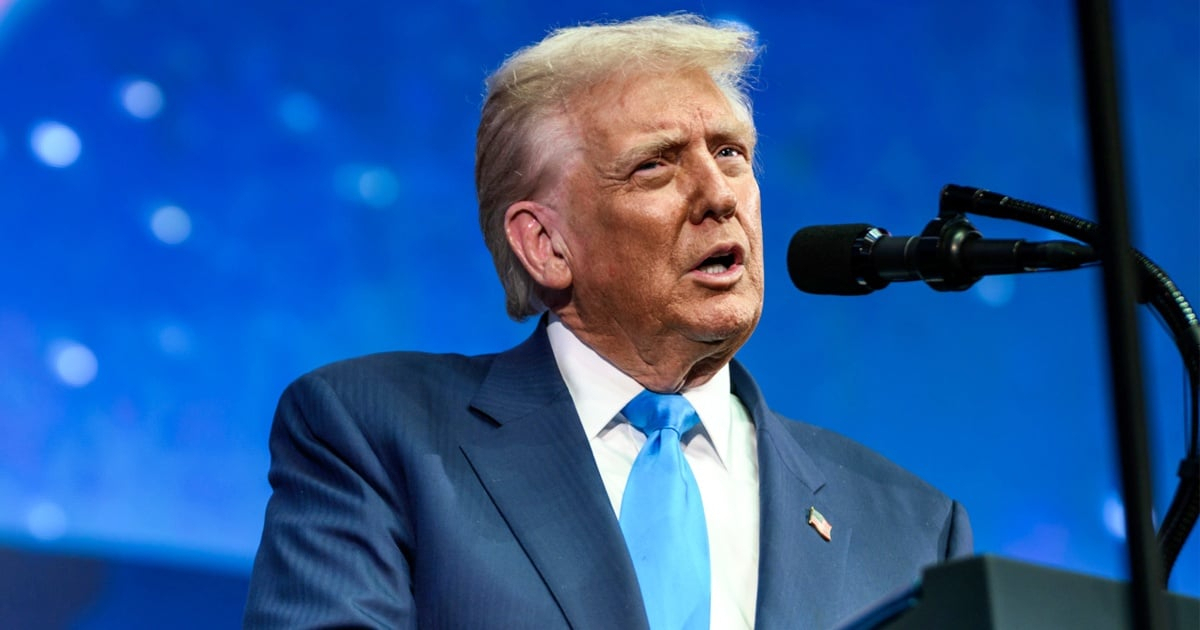
The administration of President Donald Trump is reportedly planning a significant increase in efforts to strip naturalized immigrants of their U.S. citizenship, according to an internal document from the United States Citizenship and Immigration Services (USCIS) obtained by The New York Times.
This move marks a substantial shift in the use of denaturalization, a legal mechanism that has traditionally been reserved for rare and extreme cases.
As detailed in the report, the USCIS has directed its regional offices to initiate between 100 and 200 denaturalization cases each month by the fiscal year 2026. This target represents a dramatic increase from the historical average of just 11 cases per year from 1990 to 2017.
The stated aim of this initiative is to bolster the administration's declared "war on fraud" within the immigration system, targeting individuals who allegedly acquired citizenship unlawfully.
A USCIS spokesperson confirmed that this is not a clandestine policy and emphasized that the agency is prioritizing cases involving fraudulently obtained citizenship, particularly from previous administrations.
However, the internal document does not clarify the specific criteria that will be used to determine fraudulent cases, raising concerns among experts and former officials.
Legal Framework and Concerns
Under current U.S. law, naturalized citizenship can be revoked if it is proven to have been obtained through fraud or misrepresentation of material facts during the naturalization process. Historically, this has been a measure of last resort, reserved for severe offenses like war crimes or significant, well-documented fraud. Analysts suggest that the Trump administration's plan represents an unprecedented expansion of this practice.
Trump himself has publicly expressed his desire to revoke citizenship from naturalized individuals on multiple occasions. Earlier in December, he claimed in front of reporters that "criminals came into our country and naturalized," implying this occurred under the Joe Biden administration, but he failed to provide concrete evidence.
"If I had the power to do it—I’m not sure I do, but if I did—I would strip them of their citizenship, no question," he stated at the time.
Implications of Monthly Quotas
The introduction of monthly quotas for denaturalization cases has sparked concern among former USCIS officials. Sarah Pierce, a former agency official, warned The New York Times that setting arbitrary numerical goals risks politicizing the citizenship revocation process. She explained that requiring monthly figures substantially higher than historical averages turns an exceptional legal tool into a routine instrument, instilling fear and uncertainty among millions of naturalized Americans.
This measure is part of a broader immigration strategy championed by Trump since regaining power, which includes expanded travel bans, visa and residency application freezes, and a general tightening of the immigration system.
At the end of November, Trump announced a set of radical policies that include revoking citizenship from naturalized immigrants who, in his words, "undermine national tranquility" or "are not a net asset to the country."
On Thanksgiving, in a message from the official White House account, Trump stated that his administration would "denaturalize" those deemed a threat to internal security and deport foreigners considered a public burden. He also pledged to permanently halt migration from what he termed "Third World countries" and to limit federal benefits to non-citizens.
Reaction and Criticism
The policies have already produced visible outcomes. Last week in Boston, several citizenship oath ceremonies for immigrants from countries labeled as "high risk," including Cuba, Venezuela, and Haiti, were canceled. According to reports, USCIS officials segregated applicants by country of origin and suspended their processes without providing clear explanations. Immigrant advocacy groups confirmed that the suspension has nationwide reach.
Human rights organizations and Democratic leaders have harshly criticized these measures, warning that they could violate the Constitution and the Fourteenth Amendment, which protects the citizenship of naturalized individuals.
Meanwhile, the Trump administration defends its "Zero Migration" program as a means to bolster national security and "reclaim American identity."
In this context, the plan to impose quotas for denaturalization marks a new chapter in U.S. immigration policy, with profound implications for millions of naturalized citizens who now face greater scrutiny and uncertainty about their legal status.
Understanding Trump's Denaturalization Policies
What is denaturalization?
Denaturalization is the legal process of revoking a person's citizenship, typically because it was obtained through fraud or misrepresentation.
Why is the Trump administration increasing denaturalization efforts?
The Trump administration aims to target and revoke citizenship from individuals who allegedly obtained it unlawfully, as part of a broader effort to combat fraud in the immigration system.
How does the new quota system for denaturalization compare to historical practices?
The proposed quota system marks a substantial increase from the historical average, aiming for up to 200 cases per month compared to the previous annual average of 11.
What are the potential legal implications of these policies?
Critics argue that these policies could violate constitutional protections, specifically the Fourteenth Amendment, which safeguards the rights of naturalized citizens.