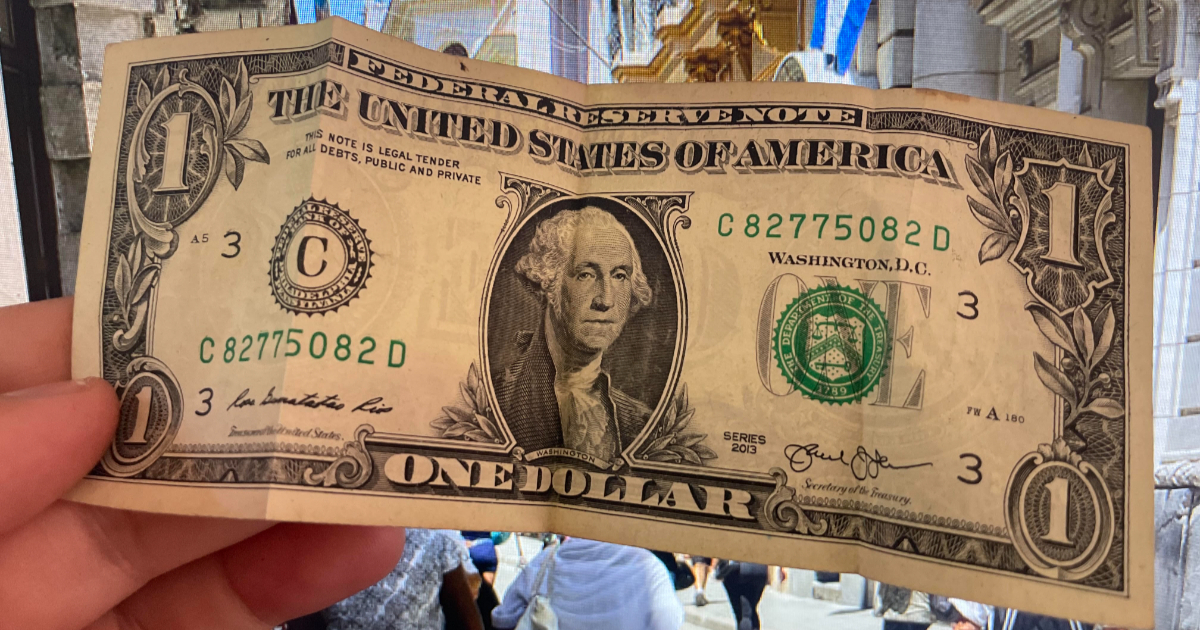
The average wage in Cuba has seen a modest increase of just one dollar following the implementation of the new floating exchange rate introduced by the Central Bank of Cuba (BCC). The regime promotes this as a step toward "recovering the Cuban peso," although in practice it confirms the value long established by the informal market.
Under the newly established official rate of 410 pesos per dollar, the average income, previously set at 6,685.3 pesos, now translates to $16.30 per month. In contrast, using the informal rate of 440 pesos per dollar, as reported by elTOQUE, this figure drops to $15.19. The minimum wage, standing at 2,100 pesos, barely converts to $5.12 at the official rate and $4.77 according to the street value.
Meanwhile, pensions—significantly lower than the minimum wage—are reduced to symbolic amounts that are insufficient to cover even a week's basic food needs.
Juana Lilia Delgado, president of the Central Bank, stated that the measure is part of a "gradual and temporary" process to "reorganize the currency market" and "strengthen the purchasing power of the Cuban peso." However, the new framework, which divides the market into three official segments, doesn't significantly differ from the parallel reality the government has struggled against for years.
The initial rate announced by the BCC and CADECA (410 CUP/USD and 481.42 CUP/EUR) aligns closely with the informal market, where the dollar is currently valued at 440 CUP and the euro at 480 CUP. This alignment suggests that the new scheme does not compete with the parallel market but rather acknowledges it as the de facto reference for the real value of the Cuban peso.
Despite official statements, the daily life of Cubans sees no improvement. Essential goods such as oil, powdered milk, chicken, detergent, medicines, or even bread are increasingly sold in dollars or MLC, leaving millions of state employees earning pesos unable to access them.
Economist Javier Pérez Capdevila recently calculated that living in Cuba costs more than 50,000 pesos per month, about eight times the current average salary. The basic food basket alone exceeds 37,000 CUP, highlighting the vast gap between actual wages and the cost of living.
"Working in Cuba does not sustain a dignified life," Pérez noted on his Facebook account, reminding that the minimum wage "doesn't cover even a tenth of a typical family's basic needs."
According to informal data from Thursday, December 18, the US dollar (USD) is exchanged at 440 CUP, the euro (EUR) at 480 CUP, and the Freely Convertible Currency (MLC) at 300 CUP. While the government attempts to project control, the Cuban populace continues to measure their purchasing power in foreign currencies.
The so-called official floating rate has not restored confidence in the Cuban peso nor altered the market reality: in Cuba, valuable goods are still priced in dollars.
Understanding Cuba's Economic Struggles
What is the impact of the new exchange rate on Cuba's economy?
The new exchange rate has increased the average salary by just one dollar and has not significantly improved the purchasing power of Cubans, as the informal market still largely dictates the value of the Cuban peso.
How does the new exchange rate affect Cuban citizens?
Cuban citizens are struggling as many essential goods are sold in dollars or MLC, making them inaccessible to those who earn in pesos. The cost of living far exceeds the average salary, leaving many unable to afford basic necessities.