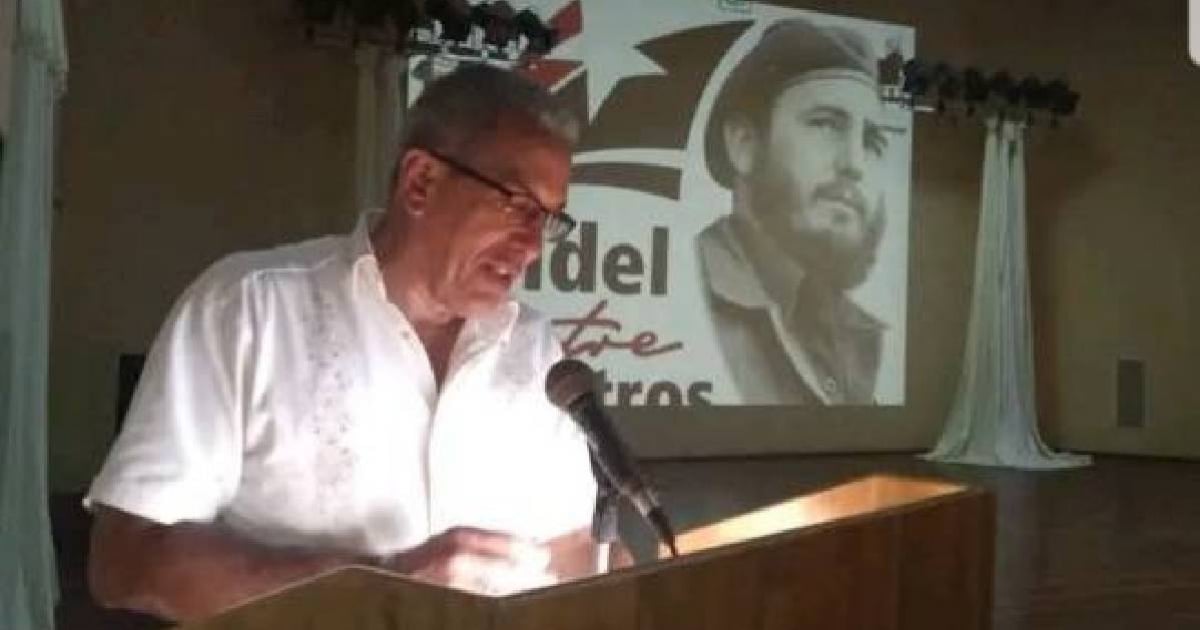
Mario Pérez Márquez, once a prominent figure in Cuba's cultural education sector and former director of Havana's "Eduardo García Delgado" School of Art Instructors, has relocated to Las Vegas. After crossing the southern U.S. border in 2022, he secured permanent residency through the Cuban Adjustment Act, as reported by former students and activists.
A report from Martí Noticias unveils that after many years supporting the Cuban regime, Pérez Márquez left the island and entered the United States via the southern border in 2022.
Currently, he resides in Las Vegas, Nevada, enjoying the benefits of permanent residency granted by the Cuban Adjustment Act.
According to Martí Noticias, upon his arrival in the U.S., the former official erased social media posts and photos linking him to Castro's regime, seemingly attempting to distance himself from his ideological past.
Born in 1963, Pérez Márquez was a notable figure within the cultural and ideological machinery of Castro's Cuba for over a decade. Official sources claim his position was directly "entrusted" to him by Fidel Castro to "train art instructors committed to the Revolution."
He was celebrated by the regime, receiving the Honorary Member Distinction from the José Martí Brigade of Art Instructors and participating in numerous official events alongside leaders from the Communist Party, the Ministry of Education, and the Union of Young Communists (UJC).
Controversial Legacy
Despite his accolades, many former students remember Pérez Márquez's tenure with bitterness. Ex-students and activists label him as "despotic and indoctrinating," responsible for enforcing military discipline and ideological penalties in a school blending art education with political propaganda.
Independent journalist Adelth Bonne Gamboa, a former student, commented from Havana, "He was a fervent anti-imperialist, critical of the U.S. in every way. Loyal to Fidel Castro, whom he claimed to be friends with. And look where he is today."
Bonne shared on social media that Pérez Márquez imposed collective punishments for missing official parades and penalized students who questioned the political content of their lessons. "I'll never forget when he forced us to sing the national anthem in freezing temperatures. We muttered about the cold, and as punishment, he denied us weekend leave," he recalled.
Joining a Growing Trend
Pérez Márquez is part of an increasing number of former Cuban officials, judges, and government personnel migrating to the United States, taking advantage of humanitarian pathways and the favorable migration policies the U.S. offers to Cubans.
Recent arrivals include Melody González Pedraza, a judge from Villa Clara accused of sentencing young 11J protestors, and Arelys Casañola Quintana, a former government leader in the Isle of Youth, both discovered on U.S. soil in 2025.
Frequently Asked Questions About Cuban Migration to the U.S.
What is the Cuban Adjustment Act?
The Cuban Adjustment Act allows Cuban natives or citizens who have been inspected and admitted or paroled into the United States to apply for permanent residency after one year of physical presence in the country.
Why are former Cuban officials moving to the U.S.?
Many former Cuban officials and government workers are relocating to the U.S. to take advantage of the country's humanitarian pathways and migration policies that provide opportunities for a new start, often seeking to distance themselves from their past affiliations with the Cuban regime.