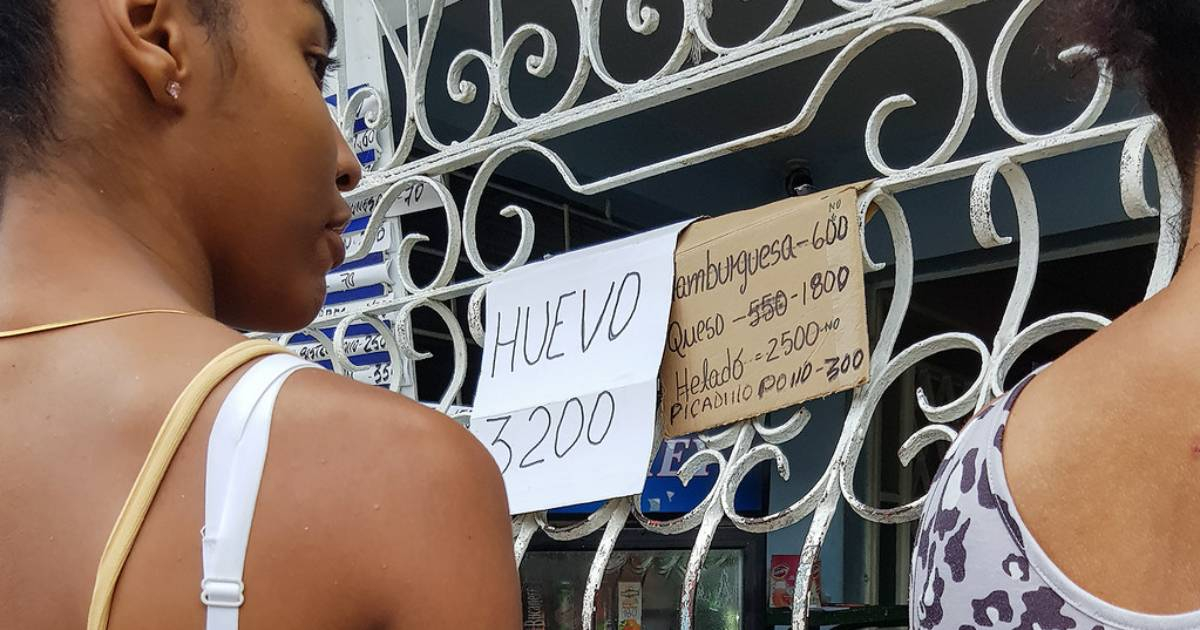
In Cuba, the question of what's on the table for December 24th and 31st is no longer a mere curiosity—it's become a stark indicator of a crisis that has infiltrated even the most intimate traditions: the New Year's Eve dinner.
Comments on two CiberCuba Facebook posts reveal a narrative not of recipes or cravings, but of resignation, prohibitive prices, and a sadness that echoes like a recurring power outage.
"I think I'll spend Christmas Eve and New Year with MDM ground meat... there's nothing else," one person wrote, capturing the sentiment many share: these dates are no longer prepared for, they are endured. Another echoed this sentiment plainly: "More than a luxury, it's an impossible dream."
Amidst the scarcity, humor emerges as a defense mechanism. "I'll be having lemonade for dinner," one user quipped, sparking a wave of irony about "the foundation of everything," as if the Cuban dining table had morphed into a sad meme.
Today, lemons are practically nonexistent in Cuban markets, making this a bitter joke referring to leader Miguel Díaz-Canel's phrase, "lemonade is the foundation of everything," which has become a national meme and emblem of the government's disconnect from daily life. For many, this "lemonade" perfectly encapsulates the complete lack of options during these times.
Some admit they've long since changed their menu out of necessity. "I've already switched to sausages... in sauce," commented one Cuban. And when a "protein" does appear, it's celebrated as a minor victory rather than a tradition. "Having something with protein is enough for me... and I think I'm being quite demanding," admitted another.
Pork, a symbol of family gatherings for decades, is now spoken of as a forbidden word. A Cuban woman summed it up with a weighty phrase: "Pork, for a worker or a retiree, not even in our wildest dreams."
Others point out that only those who raise a pig can hope for a piece; the rest look, calculate, and give up. "I haven't bought it in ages... you have to settle for seeing it and not buying it," said another commenter.
But the hardship isn't limited to food. Comments frequently mention a sense of a sick and exhausted country. The word "chikungunya" appears repeatedly, as if it’s part of the menu. The disease has left residents with pain, stiffness, a lack of medicine, and a pervasive sense of hopelessness.
"I only ask God to let me finish this year alive," one user wrote. Another voice was even harsher: "There’s no joy, no music... it’s like we're ghosts."
Among those clinging to faith, the closing of the year is akin to a plea for health. Some believe "God will provide," while others say that's too much to ask with so many viruses around. As people debate whether "something will show up" or if "the one who fights has," it's clear that for a significant part of the country, these celebrations are no longer measured by what's cooked, but by what one can endure.
Ultimately, the comments depict not a Christmas with a bountiful table, but a nation where the New Year's Eve dinner has become yet another test of endurance. In this trial, many arrive with a bitter certainty: December 24th and 31st will come just the same, but not everyone will have the reason, or the strength, to celebrate.
Challenges of Cuban Holiday Celebrations
What are Cubans expected to eat during the holidays?
Due to the ongoing crisis, many Cubans anticipate eating MDM ground meat, sausages, and eggs, with some jokingly suggesting lemonade as a meal due to the scarcity of ingredients.
Why is lemonade a symbol of scarcity in Cuba?
Lemonade has become a symbol of scarcity due to its reference by leader Miguel Díaz-Canel that "lemonade is the foundation of everything," despite lemons being scarce, highlighting the disconnect between government statements and reality.
How has the food crisis impacted Cuban traditions?
The food crisis has deeply affected Cuban traditions, particularly the holiday meals, with staples like pork becoming a distant dream for many due to high prices and scarcity.