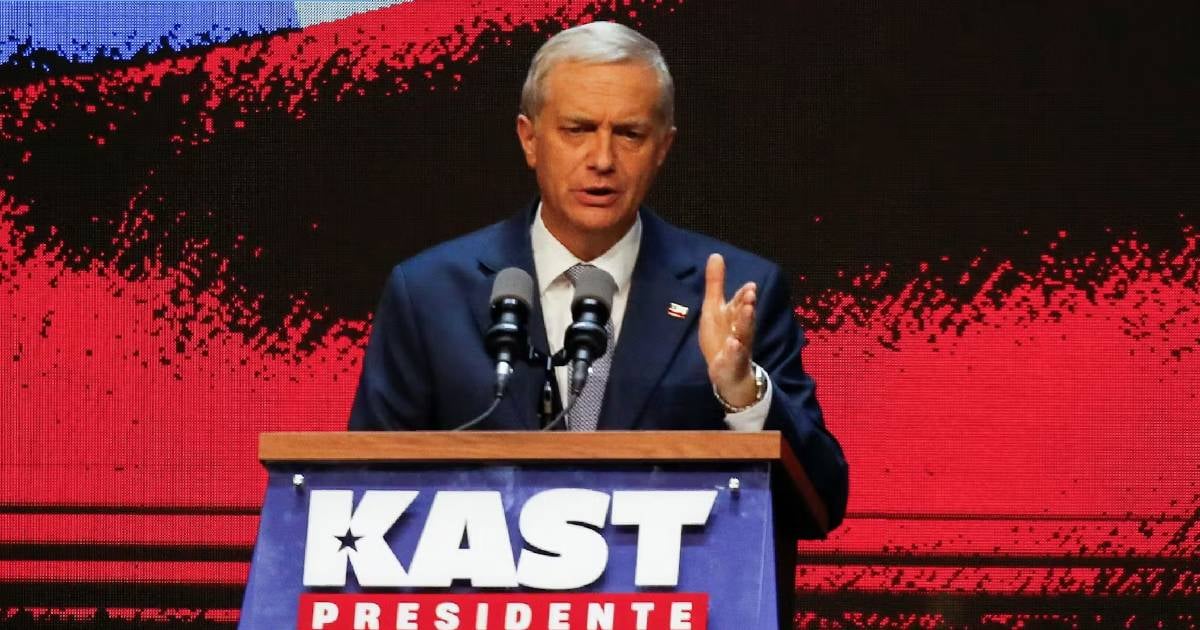
José Antonio Kast, the president-elect of Chile, unveiled a plan on Tuesday to establish a "humanitarian corridor" aimed at deporting migrants residing illegally back to their home countries.
This announcement came during a press conference in Buenos Aires, following a meeting with Argentine President Javier Milei. The meeting was part of Kast's inaugural regional tour after his electoral victory in November, as reported by the news agency EFE.
"We have suggested to various acting presidents the necessity of coordinating to create a humanitarian corridor for the return of these individuals to their respective nations," stated Kast.
The Chilean politician, known for his ultraconservative stance, asserted that migration has "seriously impacted" Chile's social and economic landscape. He claimed that the country has become a magnet for individuals fleeing nations that have devastated their economies. According to Kast, out of the two million migrants currently residing in Chile, at least 300,000 are in irregular situations.
Kast's proposal is consistent with his campaign narrative, which emphasized security and border control, and it has sparked mixed reactions. While some business sectors and conservatives support his idea, human rights organizations have criticized it as "criminalizing migration."
Chile has seen a significant influx of migrants in recent years, primarily from Venezuela, Haiti, and Bolivia. Most of these individuals are seeking to escape the economic and political turmoil in their home countries.
Since 2021, Chile has toughened its immigration policies, implementing collective expulsions and imposing stricter requirements for obtaining legal residency.
During his meeting with Milei, Kast emphasized that his administration aims to "strengthen regional cooperation" on migration and security issues, a priority shared with the Argentine leader.
Kast's proposal aligns with a broader trend in Latin America of tightening immigration policies amid humanitarian and economic crises pushing millions to relocate. This trend has also been influenced by what some describe as the Trump effect, referring to the aggressive immigration stance in the United States.
Countries like Peru, Ecuador, and Argentina have also faced rising numbers of Venezuelan and Haitian migrants in recent years.
Meanwhile, the United Nations and humanitarian organizations have cautioned that establishing "deportation corridors" could violate basic international rights unless voluntary return processes and safe conditions in destination countries are assured.
Key Questions on Chile's Humanitarian Corridor Proposal
What is the purpose of the proposed humanitarian corridor by José Antonio Kast?
The proposed humanitarian corridor aims to facilitate the deportation of irregular migrants from Chile back to their home countries.
How has the international community reacted to the proposal?
The proposal has received mixed reactions. While some sectors back it, human rights organizations criticize it as a potential violation of international rights.
What are the potential risks of creating deportation corridors?
There are concerns that without ensuring voluntary return and safe conditions, deportation corridors might breach basic international rights.