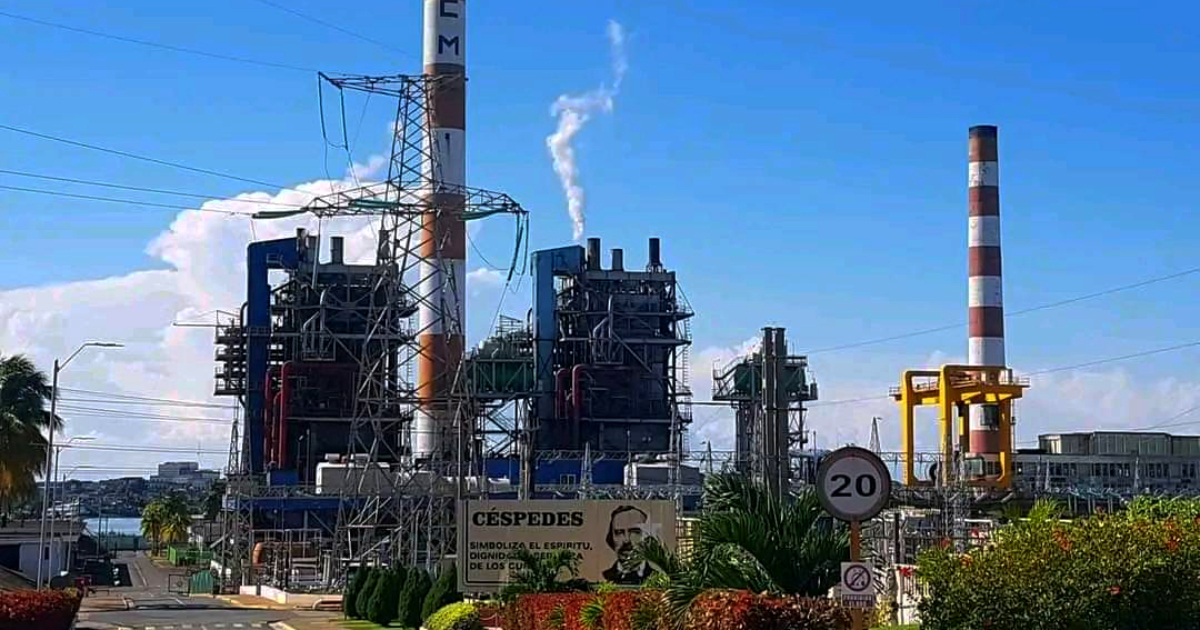
The Cuban Electric Union (UNE) reported on Tuesday that at 4:00 PM, Unit 3 of the Carlos Manuel de Céspedes Thermoelectric Plant in Cienfuegos went offline due to an oil leak in the turbine pedestal.
This latest malfunction further exacerbates the already dire state of the National Electric System (SEN), which has been operating with historical deficits exceeding 1,800 MW in recent days, subjecting a large portion of the country to prolonged and rotating blackouts.
The shutdown of this unit comes as the system is already stretched to its limits, heightening the risk of a nationwide blackout if any other significant failure occurs during the peak evening hours.
So far, the UNE has not specified how long the affected unit will remain out of service. Meanwhile, the Cuban population faces yet another day of energy uncertainty, with a system that is fragile and highly susceptible to cascading failures.
Continuous Failures: A Never-Ending Struggle
Just moments ago, the UNE announced that it had managed to synchronize the motors of Mariel, the floating plant at Regla, and Unit 4 of Energás Boca de Jaruco to the National Electric System, while Unit 8 of the Máximo Gómez Thermoelectric Plant had its boiler ignited.
This announcement on Facebook was presented as a positive sign amid the energy crisis. However, the reality on the streets of Havana starkly contrasts with the official optimism. Dozens of users commented on the UNE's post, stating they were still without power despite the supposed partial recovery in generation.
Massive Outage Worsens Havana's Crisis
This announcement came two hours after a massive outage in the 110 kV electrical networks led to new service interruptions in Havana around 1:32 PM. According to official information, the failure caused the sudden shutdown of several key units, including:
- Unit 8 of the Máximo Gómez Thermoelectric Plant (Mariel)
- Backup motors at Mariel
- The floating plant at Regla
- A machine from Energás Boca de Jaruco
The state company later specified that the event resulted in a total impact of 215 MW in the capital and surrounding areas, further compromising the fragile stability of the SEN.
Record Blackouts and a System on the Brink
This new incident occurs amid the worst energy crisis Cuba has faced in recent years. The country has endured 16 consecutive days with deficits exceeding 1,800 MW, highlighting the structural collapse of the electrical system.
Just the previous day, the maximum impact reached 2,007 MW at 6:40 PM, leaving more than half of the national territory without electricity for several hours. In Havana and the western part of the country, blackouts have become constant, prolonged, and unpredictable, affecting homes, workplaces, hospitals, and essential services.
Uncertainty Looms for Peak Evening Hours
Tuesday's outage threatens to worsen the outlook for the peak evening hours, when the UNE had already anticipated a deficit exceeding 1,900 MW, even before this latest failure.
As of now, the exact causes of the high-tension network failure have not been explained. Meanwhile, thousands of Havana residents face another day of heat, darkness, and frustration, with an electrical system surviving on temporary patches, optimistic announcements, and deepening precariousness.
Understanding Cuba's Energy Crisis
What caused the latest power unit failure in Cuba?
The latest power unit failure in Cuba was caused by an oil leak in the turbine pedestal of Unit 3 at the Carlos Manuel de Céspedes Thermoelectric Plant in Cienfuegos.
How is the current energy crisis affecting Cuban citizens?
Cuban citizens are facing prolonged and rotating blackouts, affecting homes, workplaces, hospitals, and essential services, due to the energy crisis.
What is the current status of Cuba's National Electric System?
Cuba's National Electric System is operating at its limits, with historical deficits surpassing 1,800 MW, making it highly vulnerable to further failures.