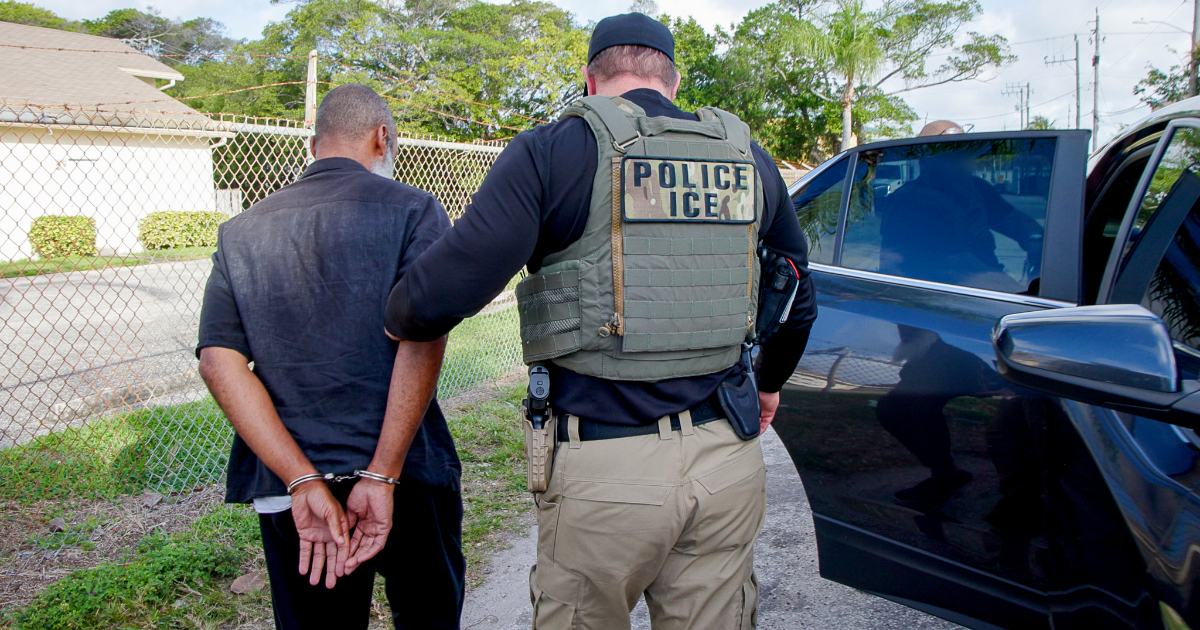
The recent immigration raids in South Florida have not only caused anxiety on the streets but have also ignited a heated debate among Cubans and Cuban-Americans following updates on CiberCuba.
The report titled "Fear Spreads Across South Florida: No One Sleeps Peacefully" triggered hundreds of comments on the outlet's Facebook page. These comments revealed two dominant viewpoints: those who support ICE operations and Trump's policies, and those who criticize them for their harshness and impact on working families.
A Call for Law and Order
About 60% of the comments analyzed expressed support for the raids, emphasizing respect for the law, individual responsibility, and national sovereignty.
"If you have nothing to hide, you have nothing to fear" emerged as the most repeated phrase—used over 40 times—becoming a slogan for those advocating for immigration control.
One notable comment stated, "Every country has the right to enforce its laws. If you enter illegally, you know the risks involved."
Others adopted a moral and civic tone: "I sleep well because I arrived legally and work hard. Those who are illegal know why they are afraid."
This group justified ICE operations as necessary for restoring order after what they described as years of "soft" immigration policies. Many mentioned that Trump is "setting things straight" and criticized Biden's border policies for allegedly bringing in criminals, terrorists, and communists.
The pro-Trump rhetoric, prevalent among Cuban-origin users, linked strict immigration policies with security, authority, and discipline—values they claim were lost under Democratic administrations.
Some even likened undocumented immigrants to those who "abused the system" by seeking welfare or lying on asylum requests. "Many came claiming to escape communism but still support dictatorships. They should be the first to be deported," commented one user.
This narrative blended American nationalism with a moralistic view of immigrants: "The U.S. opened its doors to us, but it's not a free-for-all. You must earn your right to stay."
Fear, Outrage, and Sympathy for the Detained
Conversely, around 35% of comments expressed outrage or concern over the harshness of the raids, particularly their effect on working families, asylum seekers, or those undergoing legal processes.
One comment that garnered numerous reactions summarized this sentiment: "Decent people waiting for their papers, working, with no criminal records, are being arrested mercilessly as if they were animals."
Others emphasized the emotional and religious dimensions: "May God protect the immigrants and make those without compassion reflect"; "I pray for God to cover those seeking a better life with His wings."
This group leaned on humanitarian and familial arguments, reminding that many migrants fled dictatorships—including Cuba's—and that current policies "punish those who came to work."
"Those applauding today forget how they arrived. We were all immigrants once," one comment noted.
Among the most critical comments, a tone of sadness and disappointment toward the country's political direction was evident. "Freedom is dwindling in the land of opportunity," one reader lamented. Another described the situation as "psychological warfare" and "an international disgrace."
Some also accused the raids of being driven by racism and xenophobia, pointing out that "the hatred toward Latinos and immigrants is clear in the faces of those celebrating these raids."
The Indifferent and Sarcastic
A smaller group—around 5% of comments—maintained an ambiguous or humorous stance.
Some mocked the tone of the news ("CiberCDR spreading fear," "I sleep just fine with air conditioning and Netflix") or downplayed the scope of the operations: "I've seen raids, but they only take those with criminal records. The rest sleep peacefully."
Others expressed skepticism toward the media: "Stop amplifying fear. This is just yellow journalism."
In several instances, comparisons to Cuba were used rhetorically, either to minimize the issue ("In Cuba, no one sleeps peacefully, not even during power outages") or to criticize those justifying the raids ("Those applauding this are the same ones who fled fear on the island").
Political Polarization and Cuban Division
The discourse analysis revealed a significant political divide among exiled Cubans. Discussions about ICE quickly turned into personal confrontations and references to Cuban politics.
Comments mixed references to Fidel Castro, Díaz-Canel, Obama, Biden, Marco Rubio, and Trump, creating a dialogue interwoven with exile nostalgia, resentment, and political identity.
While some praised Trump as "the only one who commands respect," others labeled him a "dictator" and "executioner." One comment summed up this divide with bitter irony: "You wanted Trump, take Trump. Get the blonde all the way."
Simultaneously, many users acknowledged that divisions among Cubans weaken the immigrant cause. "We Cubans were never united," wrote one reader. "Sometimes Americans defend immigrants more than we do."
Emotional and Polarized Language
The overall tone of the conversation was highly emotional, combative, and polarized.
Comments in favor of the raids frequently used imperative and moralistic language ("deport them," "follow the law," "self-deport"), while critics appealed to empathy, faith, or historical memory ("remember how we all arrived," "God protect them," "there is no compassion").
Strong ideological terms also surfaced: "fascism," "dictator," "terrorist," "communist," "sensationalist," "traitor." The debate mirrored the political climate among Cuban exiles, where every issue—including immigration—is viewed through the lens of right versus left confrontation.
Conclusion
Reactions to the CiberCuba report demonstrated that ICE raids not only divide migrant families but also the Cuban community in Florida.
For some, they represent the return of order under a strong government; for others, a betrayal of the American dream that once promised refuge to those fleeing repression.
Amid these extremes, one phrase resonated as a synthesis of the debate: "If you have nothing to hide, you have nothing to fear... but those who suffer won't forget."
Understanding the ICE Raids and Cuban Community Reactions
What triggered the debate among Cubans regarding ICE raids in Florida?
The recent immigration raids by ICE in South Florida sparked a heated debate among Cubans and Cuban-Americans, as reported by CiberCuba. The community is divided between those supporting the raids for enforcing immigration laws and those criticizing them for their harsh impact on families and asylum seekers.
How do Cuban-Americans view Trump's immigration policies?
Many Cuban-Americans express support for Trump's strict immigration policies, associating them with security and discipline. They believe these measures are necessary to restore order after what they perceive as lenient policies under previous administrations.
What concerns do critics of the ICE raids have?
Critics of the ICE raids are concerned about the severe impact on working families, asylum seekers, and those undergoing legal processes. They argue that the raids are harsh and lack compassion, affecting people who are working hard and trying to legalize their status.
How is the Cuban community divided on the issue of ICE raids?
The Cuban community is divided, with one side supporting ICE raids as a means of enforcing immigration laws, while the other side condemns the raids for their harshness and impact on human rights. This division reflects broader political and ideological differences within the community.