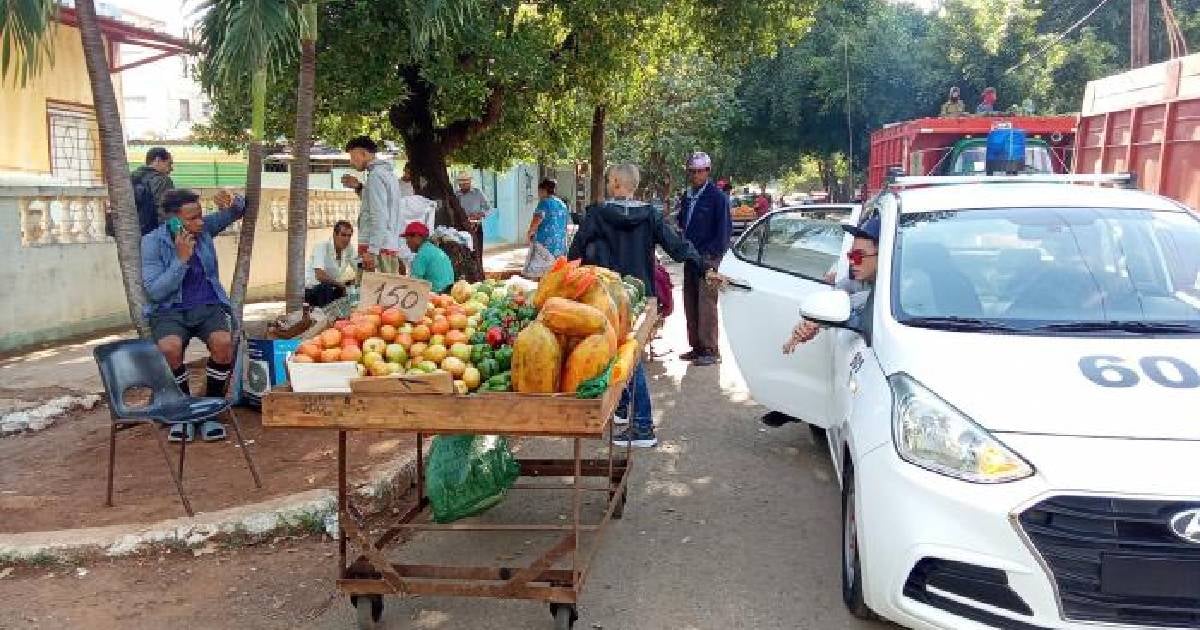
An enforcement operation conducted by the Revolutionary National Police (PNR) alongside the Integral Direction of Supervision and Control (DISC) resulted in the seizure of four food carts and a significant quantity of agricultural produce near the 17th and K Market in Havana's Vedado neighborhood.
According to the state-run outlet, Tribuna de La Habana, this operation took place in the Rampa Popular Council, within the Plaza de la Revolución municipality, as part of what they termed “popular control.”
During this action, authorities imposed 10 fines, amounting to a total of 173,000 pesos, targeting vendors labeled as “illegal resellers.”
Severe Food Shortages Highlighted by Large Seizure
Among the confiscated items were more than a ton of food, including cabbage, tomatoes, malanga, peppers, onions, plantains, guava, avocado, papaya, lemon, potatoes, cucumbers, carrots, pineapples, and bananas, among others. Authorities went as far as specifying the exact weight in pounds and the number of units for each product.
This confiscation occurs amidst a dire food crisis, characterized by chronic shortages, high prices, and limited access for many Cubans, which has led to an increase in informal vendors around state markets.
Social Allocation of Confiscated Goods
Pedro Lizardo Garcés Escalona, the president of the Rampa Popular Council, stated on Facebook that the seized food was allocated to primary schools, a daycare center, and the Family Attention System (SAF) in the area.
He wrote, “The confiscated products were allocated to Arturo Montori and Orlando Pantoja primary schools, the Soldaditos daycare center, and the SAF ‘El Rampeño.’”
Debate Over Law Enforcement and Community Needs
While authorities portray these operations as efforts to combat “illegality,” local residents and consumers often argue that such seizures further diminish the availability of food in areas where state supply falls short.
For many, these measures adversely affect both small vendors and buyers who rely on the informal market to obtain essential goods.
The operation in Vedado is part of a series of similar actions reported in Havana and other provinces, reflecting an administrative crackdown amid a structural crisis in food production and distribution.
Understanding the Impact of Food Seizures in Cuba
What is the reason behind the police operations in Vedado?
The police operations in Vedado are part of efforts by the authorities to enforce laws against illegal selling, targeting unauthorized vendors in an attempt to maintain control over the marketplace.
How do these operations affect local communities?
These operations often reduce the availability of food in local communities, impacting both small vendors and consumers who depend on informal markets for access to essential products.
Where are the confiscated goods redirected?
Confiscated goods are reportedly redirected to local primary schools, daycare centers, and family support systems within the community.