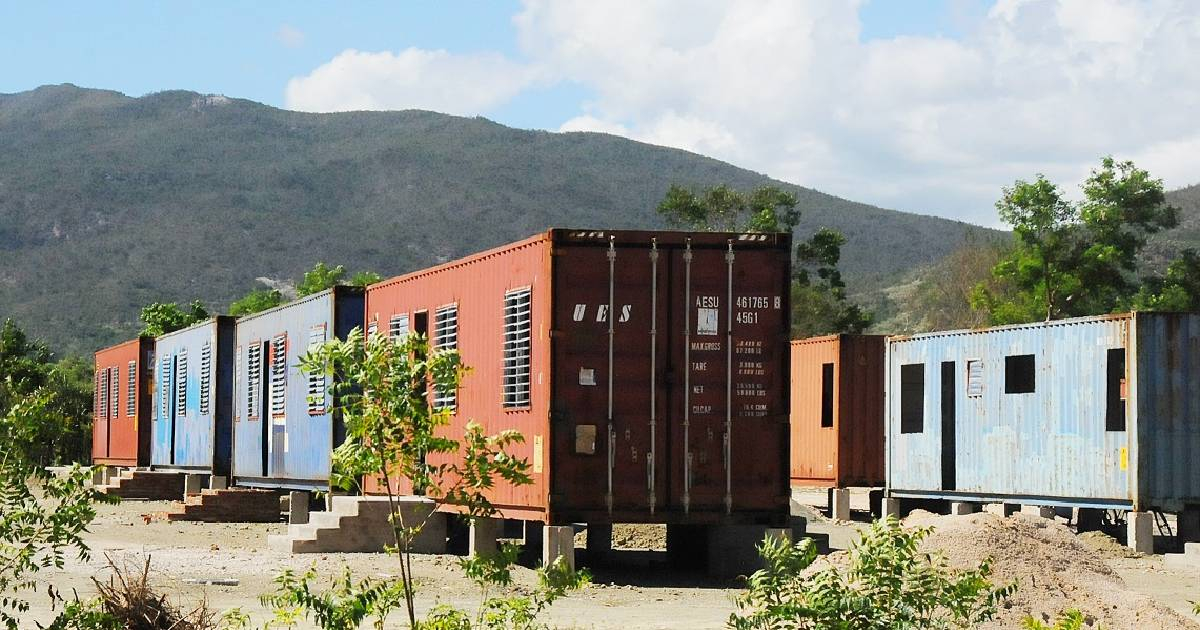
The initiative to transform shipping containers into permanent homes is gaining traction in Guantánamo as a response to the destruction caused by hurricanes Óscar and Melissa. However, this approach is neither expansive nor free; it involves financial burdens, reduced living spaces, and adjustments to the scarcity of resources.
In San Antonio del Sur, the Buena Vista settlement serves as a pilot project for the local development strategy planned until 2030. The first 15 homes constructed from metal containers are being erected here, aimed at families who lost everything after Hurricane Óscar in 2024 and the more recent Hurricane Melissa, according to the official newspaper Venceremos.
One of the beneficiaries, Yaimara Jiménez de Castro Londres, is a mother of two who currently rents in Guantánamo while awaiting her new home, which will replace the wooden house destroyed by the cyclone. Despite her appreciation for the proposal, her mother acknowledges that the new home will be smaller and that the financial relief is overshadowed by the economic sacrifice of paying rent for months.
"We are grateful for this offer because having nothing is worse, and although the country is going through hard times, this effort is appreciated," said Mariela Londres Díaz, Yaimara's mother. "Living in a rental, even at just 2,000 pesos, isn't easy. The new house will be a drastic change because the old one was wooden. Although the container is smaller, it looks safe and comfortable. We hope everything wraps up soon."
Similar situations are seen in other families. Virgen Guibert Ortiz and her mother Lina Ortiz-Mezón, displaced by landslides and floods, accept the challenge of fitting six people into a limited space. "There are six of us, and we'll be cramped, but we'll see how it goes. Right now, having our own roof and home is our biggest need," Guibert stated.
The pressing need for a personal roof outweighs the limitations in space or comfort, a rationale that sees necessity as a valid justification for the solution.
Challenges and Costs of Container Homes
Local authorities admit that the project is not cheap. Adapting the containers requires electrical, hydraulic, carpentry, furniture, and urbanization supplies, all in a context of widespread scarcity. Nevertheless, these homes are not free; they will be provided under a replacement system, and beneficiaries will pay on credit with subsidized prices, as dictated by state housing policy, though the total cost remains unspecified.
The Municipal Housing Directorate defends the initiative as a "quick and resilient" alternative, executed with the collaboration of various companies and brigades from multiple municipalities. The initial delivery of 15 homes is planned, with potential for future expansion of the settlement. However, this expansion remains a promise contingent on resources that are currently not assured.
The Buenavista project highlights a recurring theme in Cuba's housing management: emergency solutions touted as innovative, yet shifting the burden of precariousness onto affected families.
Criticism and Concerns
These container homes, neither free nor spacious, offer basic security against climatic events but also normalize reduced living standards as the inevitable cost of weathering the crisis. The Cuban government is pushing the conversion of shipping containers into homes due to the housing collapse the country faces. The lack of building materials and a deficit exceeding 800,000 homes have led the regime to seek alternative solutions. However, this measure has faced criticism for its haphazard nature and lack of proper structural planning.
Major criticisms focus on inadequate thermal insulation and ventilation in the containers. In Cuba's hot climate, these structures can become "solar ovens," rendering the homes unlivable. Additionally, the lack of proper infrastructure and vulnerability to climate events have sparked discontent among the population.
FAQs about Container Homes in Guantánamo
Why are container homes being used in Guantánamo?
Container homes are being used in Guantánamo as a response to the housing crisis caused by hurricanes Óscar and Melissa. This approach is intended to provide quick and durable housing solutions amid material shortages.
What are the main criticisms of using container homes?
The main criticisms include lack of proper thermal insulation and ventilation, which can make the homes unbearably hot. Additionally, concerns about insufficient infrastructure and vulnerability to climate events have been raised.