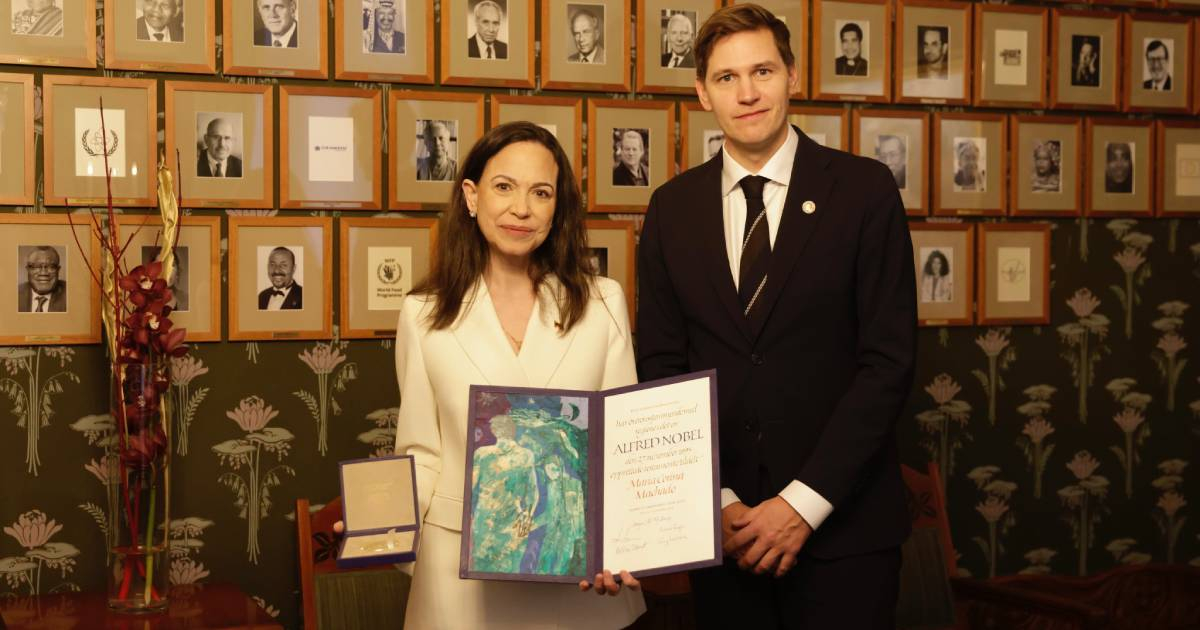
From Oslo, after enduring months of political persecution and living in hiding, Maria Corina Machado delivered a stark warning deeply intertwined with Cuba's recent history.
In an interview with Noticias RCN from Colombia, the Venezuelan opposition leader admitted her country made a significant miscalculation by underestimating the Cuban regime's influence and weight in the region, a mistake they now regret.
“We underestimated the threat posed by the Cuban regime and what losing our freedom would mean,” she stated, reflecting on the 27 years of Chavismo that have plunged Venezuela into one of its most severe crises.
Machado made these statements from Norway's capital, where she traveled to receive the 2025 Nobel Peace Prize, amid heightened international visibility and symbolic significance.
She drew a direct parallel between Venezuela, Cuba, and Nicaragua, acknowledging these countries served as warnings to Venezuelans, yet their experiences were ignored. “We used to say Cuba is Cuba, and Venezuela is not Cuba. Look where we are now,” she remarked during her discussion with RCN Television.
This message carries particular resonance for Cubans both on the island and abroad, who have long heard promises of change while daily life remains marred by a lack of freedom, censorship, and forced exile.
Machado spoke not only with self-criticism but also with empathy. In Oslo, during a media exchange, she explicitly addressed the Cuban people, directly linking both struggles. She asserted that Venezuela's fight for freedom is inherently tied to Cuba's.
“The fight for Venezuela's freedom is the fight for Cuba's freedom,” declared the opposition leader, targeting both Cubans who endure the regime on the island and those who have had to rebuild their lives elsewhere.
She vowed that once Venezuela is liberated, she will also champion the cause of people living under authoritarian regimes, a promise that offers hope to many and presents a political challenge to others.
Machado was warmly welcomed in Norway's capital with cheers, applause, and support from followers who view her as a symbol of democratic resistance.
Her journey out of Venezuela was made possible through a secretive operation due to the risk of arrest, ending over a year of living in the shadows.
In her interview with Noticias RCN, she recounted how the regime tried to silence her by banning her from leaving the country and restricting her internal movements. Far from breaking her spirit, these limitations allowed her to “know Venezuela from within,” strengthening her connection with ordinary people.
From the global stage that the Nobel Peace Prize provides, Machado emphasized that freedom of expression and the protection of institutions are not mere abstract slogans but vital lines of defense, neglecting which leads to a shared fate.
The Influence of Cuba's Regime and Its Regional Impact
How did Maria Corina Machado view the Cuban regime's influence in Venezuela?
Maria Corina Machado stated that Venezuela underestimated the threat posed by the Cuban regime, which significantly contributed to the loss of freedom and the deep crisis in Venezuela.
What parallels did Machado draw between Venezuela, Cuba, and Nicaragua?
Machado indicated that these countries served as cautionary examples for Venezuelans, yet their experiences were overlooked, leading to similar authoritarian challenges in Venezuela.
What message did Machado have for the Cuban people?
She expressed solidarity with the Cuban struggle, affirming that the fight for freedom in Venezuela is linked to the quest for liberty in Cuba, addressing all Cubans whether on the island or in exile.