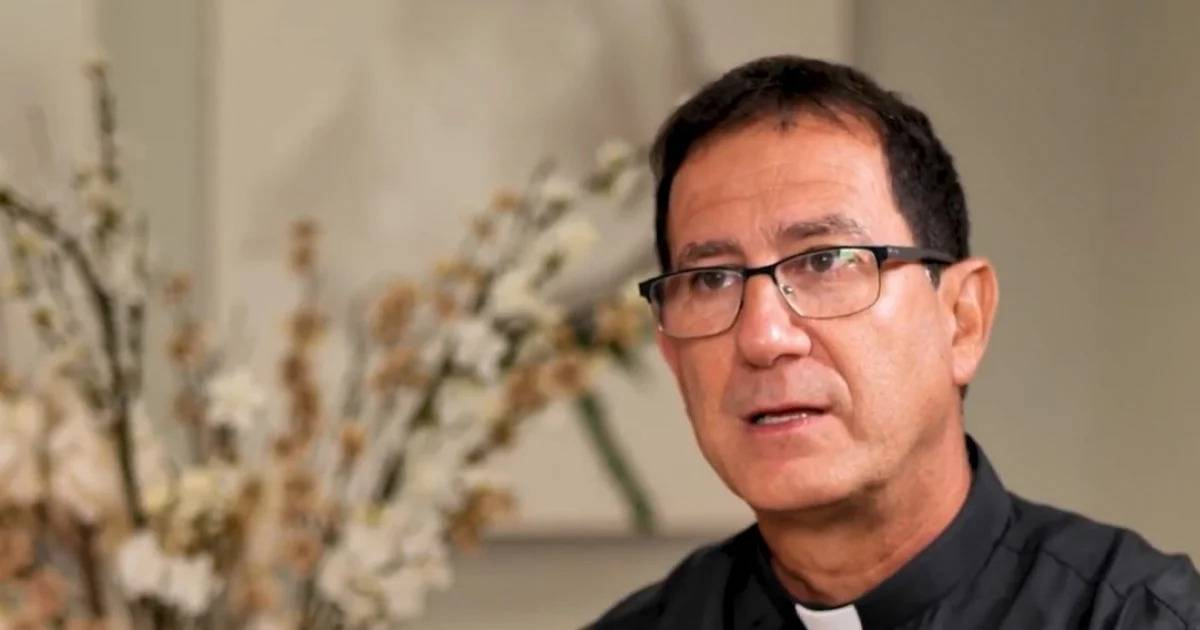
Father Alberto Reyes Pías, a Catholic priest, has shared a powerful and critical reflection on the ongoing situation in Cuba, openly questioning the government's response to recent popular protests.
In a statement posted on Facebook, Reyes highlights that alongside repression, institutional indifference has become one of the regime's most persistent tools in dealing with societal discontent.
The Camagüey-based priest, known for his outspoken criticism, asserts that one of the regime's tactics against any sign of dissent is to simply ignore it.
Amidst the mounting issues—rising illness rates, a healthcare crisis, the collapse of the educational system, and inflation—the government appears to look the other way. When they do respond, it is often with evasion and slogans.
Fr. Reyes focuses his commentary on how the authorities have addressed the latest wave of protests across various parts of the nation.
He criticizes the official attempts to downplay these protests, reducing them to mere nuisances caused by a few disgruntled individuals frustrated by power outages, stripping them of their true political and social significance.
With irony, he adds, "And to finish off the official evasive rhetoric, the perfect note: 'We are working to provide the solutions the people deserve.' In other words, return to your homes, endure, hold on, and stop complaining, because in reality, the situation isn't that terrible, and besides, we'll fix everything soon."
For this priest, reality cannot be nullified by decrees or speeches. The truth in Cuba is evident: the people desire change.
Ignoring the People's Voice
Concluding his reflection, Reyes issues a direct warning: ignoring the populace is not a sustainable, just, or safe solution. The voice of the people remains, and history shows that silencing it does not eliminate the problem; it only exacerbates it.
Below, CiberCuba presents the full text by Father Alberto Reyes:
"I've been contemplating... (140) by Alberto Reyes Pías
The Strategy of Ignorance
I've been pondering 'ignoring' as a response.
Every social movement adopts its own style to tackle the various situations it faces. From the early days of the 'Revolution,' two mechanisms that have been consistently used are to ignore and repress.
We are very familiar with repression. It is triggered suddenly in any situation that threatens the system's stability.
The other mechanism is non-response. Public alarms are triggered by the rising viruses and the deaths they cause; there are no medications, ambulance services, or doctors in many parts of the island; there are no teachers to educate our children, and the gap between wages and the cost of living continues to grow. Yet, when we look to the government for a response, it's as if we encounter a group of smiling people gazing into the void, who, when addressing us, seem to say with curiosity: 'Haven't you realized that the blockade is to blame for everything?' 'Don't you trust that the Revolution will solve everything?' 'Why complain when the solution is to endure and persist like true men and women?'
The latest episode has been the recent public protests occurring in various regions of the country, which continue to multiply.
However, these manifestations 'cannot be classified as protests,' but rather as 'a momentary and very specific expression of discomfort by a few disgruntled individuals due to 'merely' 17 hours without electricity.'
Moreover, it seems no one has realized that the majority of people who took to the streets were not protesting the current situation but were individuals 'supporting the Revolution' rather than questioning the energy crisis or the country's overall status. And those who did protest are simply individuals with 'little resilience.'
And to conclude the official evasive discourse, the perfect note: 'We are working to provide the answers the people deserve.' In other words, go back home, endure, hold on, and stop complaining because the situation isn't that terrible, and besides, we'll resolve everything soon.
No mention of the intense police presence, no acknowledgment of over 60 years spent building that 'better future,' that idyllic, happy, prosperous nation that never arrives while generations waiting for it die, leaving the same misery to their children, no ounce of responsibility from those in power for further sinking this island into oblivion.
But let's not forget that reality isn't something we create by decree. Reality is what it is, and it speaks. And reality says that these people have been expressing a desire for change for years, taking to the streets to claim their right to freedom, expressing discontent in countless ways.
This nation has made it abundantly clear what it wants while being systematically ignored. Although this mechanism has functioned so far, I warn that ignoring the people's voice is not a good approach," concludes the post.
Cuban Protests: Key Questions and Answers
What are the main issues causing protests in Cuba?
Protests in Cuba are primarily driven by economic hardships, power outages, healthcare crises, and a demand for political change.
How has the Cuban government responded to these protests?
The Cuban government has downplayed the protests, attributing them to temporary discomforts and ignoring the broader socio-political grievances.
What does Father Alberto Reyes criticize about the government's approach?
Father Alberto Reyes criticizes the government's use of repression and indifference as tools to ignore and undermine the people's demands for change.